

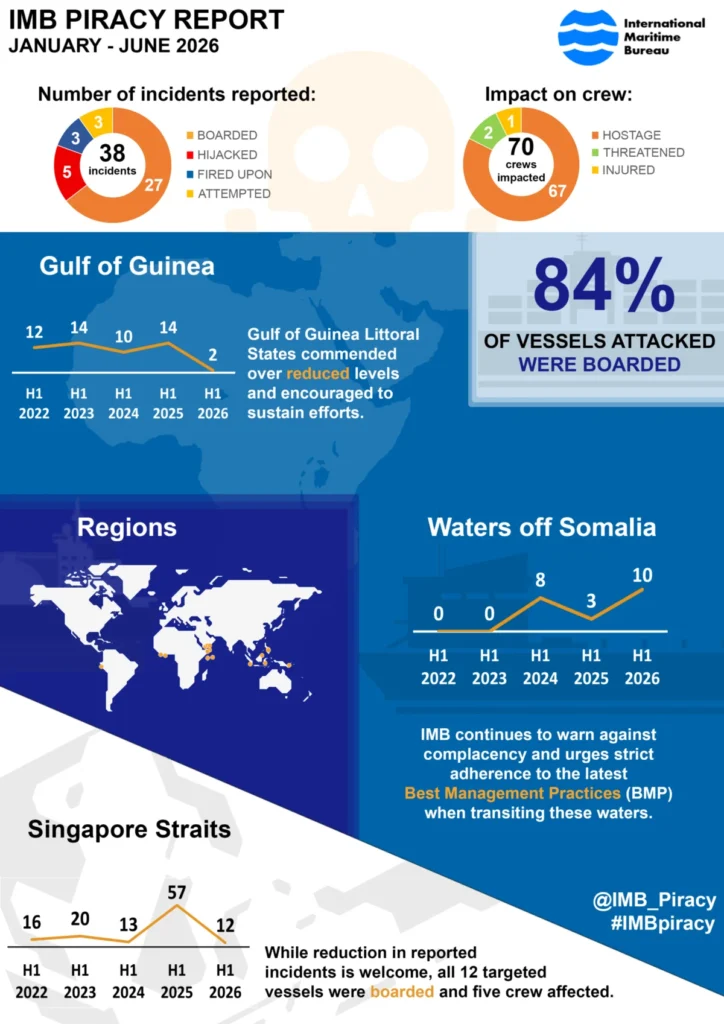
Introduction: The Invisible Shield of International Trade
The vast expanse of the world’s oceans serves as the lifeblood of the global economy, facilitating over 80% of international trade. Yet, beneath the surface of this thriving commercial artery lies a persistent, evolving threat: maritime piracy and armed robbery. For over three decades, the International Maritime Bureau (IMB) Piracy Reporting Centre (PRC) has stood as the primary sentinel against these dangers. Operating from a 24-hour nerve center, the PRC serves as an essential nexus for shipmasters, fleet operators, and global law enforcement agencies, transforming scattered incidents into actionable intelligence.
As global supply chains grow increasingly complex and vulnerable to disruption, the work of the IMB—an initiative of the International Chamber of Commerce (ICC)—has never been more critical. By providing real-time warnings, coordinating emergency responses, and maintaining a rigorous database of criminal activity, the PRC acts as a deterrent and a lifeline for mariners operating in the world’s most perilous waters.
Main Facts: The Mandate of the IMB Piracy Reporting Centre
Established in 1991, the IMB Piracy Reporting Centre was created in response to a surge in violent attacks on vessels in the waters surrounding Southeast Asia. Since its inception, its mandate has expanded into a global mission. The core functions of the Centre can be categorized into three pillars:
- 24/7 Incident Reporting and Response: The PRC functions as a singular, constant point of contact. When a vessel is under threat, the speed of information relay is the difference between safety and catastrophe. The Centre facilitates immediate communication between the ship’s master and regional law enforcement, coast guards, and naval task forces.
- Dissemination of Maritime Domain Awareness: The PRC issues broadcast warnings and email alerts to ships operating in high-risk zones. By alerting crews to the presence of suspicious vessels or recent localized activity, the IMB empowers captains to adjust their routes or heighten their defensive postures.
- Data-Driven Advocacy: The Centre maintains the most comprehensive public database on maritime piracy. This data is not merely for record-keeping; it is used to lobby governments to prioritize maritime security, ensuring that naval resources are deployed in the regions where they are most desperately needed.
Chronology: Thirty Years of Maritime Vigilance
The history of the PRC is a testament to the shifting tides of maritime crime.
- 1991: The IMB Piracy Reporting Centre is formally established in Kuala Lumpur, Malaysia. At the time, piracy was often viewed as a localized issue; the IMB’s creation signaled the start of a coordinated international effort to treat it as a global crisis.
- Late 1990s – Early 2000s: The PRC played a pivotal role in curbing attacks in the Malacca Strait, a crucial global shipping bottleneck. Through intensive reporting and collaboration with regional authorities, the IMB helped force a decline in incidents that once threatened to paralyze trade between Europe and East Asia.
- 2008 – 2012: The emergence of Somali piracy pushed the IMB to the global forefront. The PRC became a critical hub for vessels transiting the Indian Ocean, providing vital updates on the reach of pirate skiffs and the efficacy of Best Management Practices (BMP).
- 2013 – 2020: The focus shifted toward the Gulf of Guinea, where kidnapping for ransom became the preferred method of pirate gangs. The PRC became the leading advocate for increased naval presence in West African waters, working closely with the ICC to keep the issue on the agenda of the United Nations and the International Maritime Organization (IMO).
- 2021 – Present: In the digital age, the PRC has modernized its reporting mechanisms, integrating satellite communication data and enhanced digital alerting systems to combat modern piracy, which now often involves sophisticated technology and faster, more elusive vessels.
Supporting Data: Why Reporting Matters
A common misconception among ship owners is that reporting a "near miss" or a failed attempt at boarding is unnecessary. The IMB maintains that such thinking is a dangerous fallacy. Every incident report—no matter how minor—feeds into the global security picture.
The Power of the "Dark Figure"
In criminal statistics, the "dark figure" refers to unreported crimes. In the maritime domain, if a pirate attempt is not reported, the international community lacks the evidence to demand naval patrols in that sector. When shipmasters report all actual, attempted, and suspected incidents, the PRC can identify "hotspots" in real-time.
For instance, historical data shows that areas previously considered "safe" can suddenly become high-risk due to economic instability or political volatility in nearby coastal states. By analyzing trends in time-of-day, boarding methods, and weaponry, the IMB provides ship owners with the granular data necessary to conduct effective Risk Assessments for their voyages.
Official Responses and Strategic Collaboration
The IMB does not work in a vacuum. Its efficacy is derived from its unique position as a private-sector initiative that maintains the trust of both the shipping industry and sovereign governments.
The ICC’s Institutional Weight
As the institutional representative of over 45 million companies in 170 countries, the International Chamber of Commerce provides the IMB with the political leverage required to engage at the highest levels of international governance. The ICC’s core mission—making business work for everyone, every day, everywhere—is directly supported by the IMB’s efforts to ensure the physical security of the supply chain.
Bridging the Gap
The PRC acts as a bridge between the private sector and public authorities. By providing transparent, neutral, and accurate reporting, the IMB eliminates the "bureaucratic delay" that often hampers maritime security. When the IMB alerts a coastal state’s coast guard, it is doing so with the authority of a recognized, neutral, and highly professional organization, which facilitates a faster, more effective governmental response.
Implications: The Future of Maritime Security
As we look toward the mid-21st century, the nature of maritime crime is expected to evolve further. The intersection of cyber-piracy—where hackers may target a vessel’s navigation systems—and physical armed robbery presents a new frontier of risk.
The Economic Cost of Inaction
The implications of ignoring maritime security are profound. When piracy is left unchecked:
- Insurance Premiums Skyrocket: The cost of "War Risk" insurance is passed down through the supply chain, increasing the price of goods for consumers.
- Humanitarian Crisis: The psychological and physical trauma inflicted upon seafarers during hijacking incidents is incalculable. The IMB’s work is ultimately about the protection of human life.
- Supply Chain Instability: Disruptions in shipping lead to shortages of essential goods, impacting everything from medicine to energy.
A Call to Action for Shipmasters and Owners
The IMB continues to issue an urgent call to all shipmasters and owners: Report everything. The safety of the maritime domain is a collective responsibility. By utilizing the IMB Piracy Reporting Centre as the primary conduit for information, the industry can ensure that the necessary resources—patrol vessels, surveillance drones, and diplomatic pressure—are allocated to the regions where they are needed most.
Contact and Professional Guidance
For those in the shipping industry, proactive engagement with the IMB is a standard operational procedure for vessels operating in volatile waters. The Centre stands ready to assist at any hour, providing the support that crews need when the situation becomes critical.
For further information, collaboration, or to report an incident, please contact:
Michael Howlett
Director, ICC International Maritime Bureau
Tel: +44 207 423 6960
Email: [email protected]
Conclusion: The ICC and the Future of Trade
The International Chamber of Commerce remains committed to the principle that global trade is the most effective driver of peace and prosperity. However, for trade to flourish, the high seas must be secure. Through the continued operation and empowerment of the IMB Piracy Reporting Centre, the ICC ensures that the voices of the millions of businesses it represents are matched by a robust, tangible commitment to security.
As piracy shifts from traditional boarding tactics to increasingly complex, technology-driven threats, the role of the IMB will remain central. It is not merely a reporting body; it is a vital component of the global security architecture. By fostering a culture of transparency and proactive reporting, the IMB and the ICC are ensuring that the world’s oceans remain open, safe, and reliable for all who traverse them. The protection of the high seas is an ongoing journey, and the IMB Piracy Reporting Centre remains the compass by which the industry navigates these dangerous waters.



