

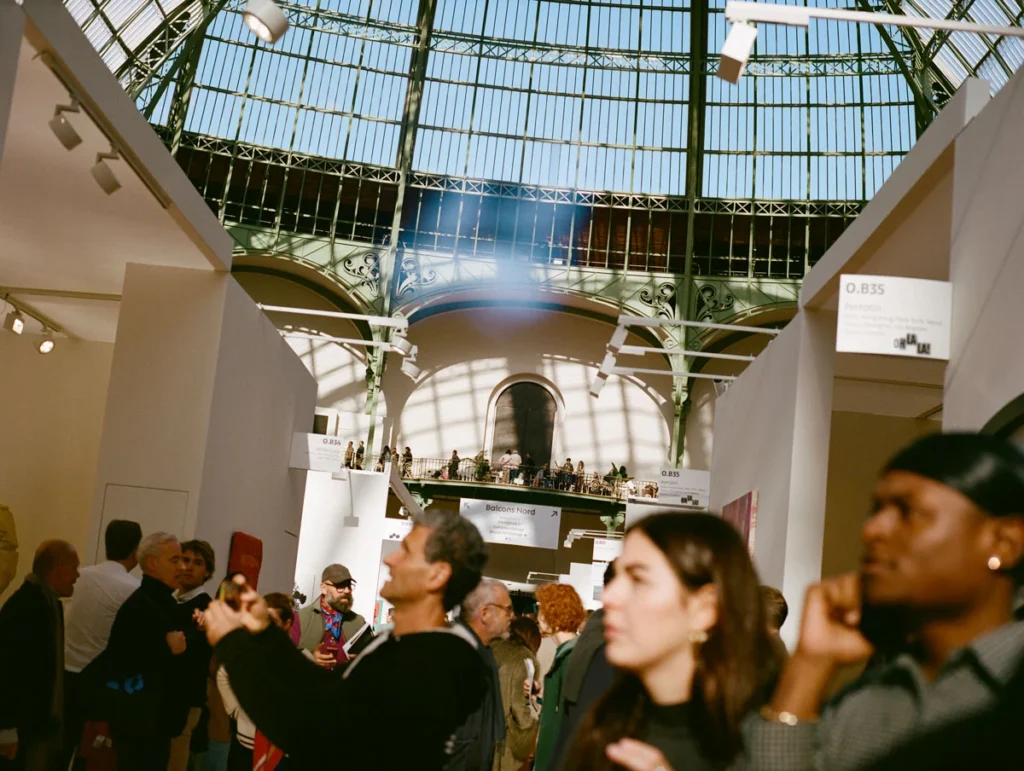
The European art market is currently witnessing a historic recalibration of its gravity. For decades, London stood as the undisputed capital of the European art trade, bolstered by the dominance of Frieze and a robust auction ecosystem. However, the recent emergence of Art Basel Paris has sparked a fierce, yet nuanced, rivalry between the two cities. As the 2024-2025 season unfolds, the narrative is no longer about the decline of one and the rise of the other, but rather a strategic divergence where each city carves out a distinct identity within a volatile global economy.
Main Facts: A Tale of Two Fairs and Two Strategies
The central tension in today’s market revolves around the "double round" of October fairs: Frieze London (and its sister fair, Frieze Masters) and Art Basel Paris. While Paris has rapidly ascended to become the preferred destination for high-value, "blue-chip" secondary market transactions, London is undergoing a strategic pivot back to its roots as a hub for contemporary discovery and studio-fresh production.
Prominent dealer Thaddaeus Ropac, who operates galleries in both cities, recently noted that London had "lost part of the market because Paris became very attractive." This attraction is driven by a combination of factors: the prestigious "blockbuster" museum exhibitions in Paris that draw international—particularly American—collectors, and the logistical ease of trading within the European Union post-Brexit.
Despite this, the "death of London" narrative appears premature. Major players are doubling down on their British footprints. Ropac has renewed his London lease for another decade, and the global powerhouse Hauser & Wirth is currently constructing a massive 15,000-square-foot gallery on South Audley Street in Mayfair. The consensus among elite dealers is that the two cities now function as a single, extended circuit rather than mutually exclusive destinations.

Chronology: From Stagnation to the New Continental Dualism
2021–2022: The Post-Brexit Chill
Following the UK’s formal exit from the European Union, the London market began to feel the friction of new trade barriers. The end of temporary import fee exemptions and the introduction of a 20% VAT on works remaining in the UK created a "red tape" burden that slowed high-volume transactional activity. By late 2022, auction results in London began to reflect a period of stagnation, leading some dealers to question the city’s long-term health.
2022–2023: The Paris Premiere
The rebranding of FIAC into Art Basel Paris (initially Paris+ par Art Basel) acted as a catalyst. The fair’s debut at the Grand Palais Éphémère (and its subsequent return to the renovated Grand Palais) signaled a shift in collector sentiment. Wealthy individuals who once prioritized London in October began splitting their time, or in some cases, bypassing London entirely for the "blockbuster" allure of the French capital.
2024–Present: The Integrated Circuit
In the current cycle, a new pattern has emerged. Rather than choosing one city, American and international collectors are increasingly planning "combined trips." Galleries like Ortuzar from New York now view the two weeks as a single event. "In a way, you can start a conversation in London that you might close in Paris," says Kenta Murakami, a partner at Ortuzar. This chronology marks the transition from a competitive rivalry to a complementary, albeit lopsided, partnership.
Supporting Data: The Economics of the Booth and the Gavel
The divergence between the two cities is most visible when examining sales figures and the cost of doing business.

The Price Gap
Last year’s sales data highlights the "blue-chip" dominance of Paris. At Art Basel Paris, top-tier galleries reported staggering figures:
- Hauser & Wirth: Sold a Gerhard Richter for $23 million.
- Pace Gallery: Sold an Amedeo Modigliani for nearly $10 million.
- David Zwirner: Sold a Ruth Asawa for $7.5 million.
In contrast, the highest reported sales at Frieze London generally hovered in the low seven figures. While London still achieves high auction totals—Christie’s London 20th and 21st-century evening sale totaled $142.9 million compared to a combined $107.4 million for four Christie’s Paris sales—the momentum is with France. Sotheby’s Paris saw a 50% increase in its modern and Surrealist sales last year, including a record-breaking €27 million Modigliani.
The Cost of Participation
For galleries, the choice between London and Paris is a high-stakes financial calculation.
Frieze London Pricing (per square meter):

- Small (30–50 sqm): £597
- XXL (110–130 sqm): £671
- Entry Floor: Approximately £17,910 ($23,657) for the smallest space.
- Ceiling: Up to £87,230 ($115,219) for the largest stands, excluding lighting and furnishing.
Art Basel Paris Pricing:
- Ground Floor: €880–€1,098.50 per square meter.
- Upstairs: €724.5–€849 per square meter.
- Incentives: 25% discount for first-time exhibitors; 15% for sophomores.
Zurich gallerist Eva Presenhuber estimates that participating in a premier fair now requires a total expenditure of $250,000 to $350,000. "You have to sell at least $1 million just to cover that," she noted, highlighting the immense pressure on galleries to bring only "A-grade" material.
Official Responses: Perspectives from the Front Lines
The shift in market dynamics has prompted diverse responses from fair directors, dealers, and advisors, each emphasizing different strengths of the two metropolises.
The Institutional View:
Karim Crippa, Director of Art Basel Paris, characterizes the current era as one of "renewal and evolution." He points to the record 12 shared booths at this year’s Paris edition as a sign of a "collaborative trend" among dealers looking to mitigate rising costs while maintaining a presence in the high-stakes market.

The Dealer Strategy:
Thaddaeus Ropac has adopted a bifurcated approach. At Frieze London, his booth focuses on "fresh contemporary works" from artists like Denzil Forrester and Mandy El-Sayegh, reflecting London’s status as a "city for working artists." In Paris, he pivots to "important historical works" by the likes of Marcel Duchamp and Andy Warhol, catering to the museum-oriented collector base.
The Advisor’s Critique:
Meredith Darrow, a prominent art advisor, suggests that the comparison might be unfair because Paris’s ascent has been so totalizing. "Paris has stolen the thunder of really every art fair, including Basel, Switzerland," she says. Meanwhile, Bernard LaGrange of Gagosian Art Advisory suggests that London’s lower price tags might actually be a "silver lining," allowing Frieze to "go back to being a place where you can discover what’s new and what’s exciting… before it just got a bit stale."
Implications: A New Identity for the London Market
The rise of Paris does not signify the end of London, but it does force a radical redefinition of what the London market represents. The implications of this shift are three-fold:
1. London as the "Incubator"
With the high-value secondary market moving toward the tax-efficient and "glitzy" environment of Paris, London is leaning into its cultural capital. It remains a primary residence for many of the world’s most influential living artists. As Zoe Sperling of Hauser & Wirth London noted, the city’s "cultural pull" remains powerful because it is where the art is made. This could lead to Frieze becoming a more experimental, artist-led fair, distinct from the commercial behemoth that Art Basel Paris has become.

2. The Brexit Tax Barrier
The 20% VAT remains the single greatest hurdle for the UK market. Until there is a policy shift regarding import duties or tax exemptions for art transactions, London will likely continue to struggle to compete for $20 million+ sales. Collectors are increasingly price-sensitive, and a 20% surcharge on a multi-million dollar work is often a deal-breaker.
3. The "A-Grade" Requirement
In an uneven global economy marked by political "panic" and hesitation, dealers can no longer afford to bring "B+" work to fairs. The high cost of participation in both London and Paris means that only the most exceptional works will find buyers. This "flight to quality" means that while fewer works may sell, the works that do move will command significant prices, further bifurcating the market between the ultra-elite and the struggling middle-tier galleries.
In conclusion, the European art market has entered a period of "Continental Dualism." Paris has successfully claimed the crown for luxury and blue-chip historical trade, while London is fighting to reclaim its title as the world’s leading laboratory for contemporary talent. For the global collector, the two cities are no longer rivals to be chosen between, but two halves of a necessary, and increasingly expensive, whole.



