

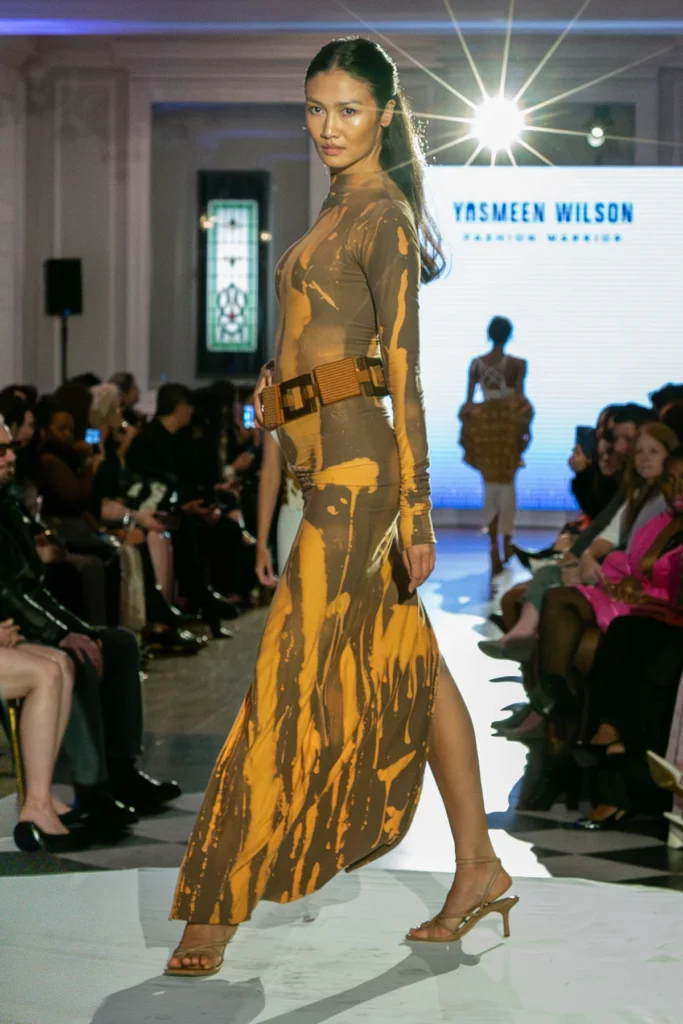
The historic corridors of the Chicago History Museum were transformed into a vibrant nexus of creative ambition this past Thursday. The inaugural Driehaus Alumni Fashion Show did more than simply present clothing; it served as a living archive of Chicago’s evolving fashion ecosystem. By convening eight standout alumni from the Driehaus Design Initiative, the event bridged two decades of local talent, illustrating the transformation of the city’s design landscape from a localized industry to a competitive, globally aware creative force.
A Legacy of Mentorship: The Vision Behind the Runway
The event was the brainchild of Tracey Tarantino, the executive producer of the Driehaus Fashion Awards since 2002 and the current chief executive officer of the Driehaus Design Initiative. For Tarantino, the show was a long-awaited realization of a mission she shared with the late Richard Driehaus, a legendary philanthropist and champion of Chicago’s arts scene who passed away in 2021.
“Richard believed firmly in supporting fashion education at the university level within Chicago,” Tarantino remarked during the evening’s proceedings. “His passion has persisted through the decades, and tonight, we are celebrating the fruits of that labor—watching our award-winning students evolve into the full-fledged, independent designers that define the current Chicago aesthetic.”
The presence of Caroline Driehaus, Richard’s daughter, underscored the continuity of this mission, signaling that while the leadership of the initiative has navigated the transition following the patriarch’s passing, the commitment to Chicago’s emerging talent remains the bedrock of the organization.
The Chronology of Craft: Two Decades of Chicago Style
The runway show featured a curated selection of eight designers, each representing a distinct era of the Driehaus program’s influence. This chronological spread offered a rare glimpse into how the "Chicago look" has shifted over the last twenty years.
The cohort included:

- 2003: Jamie Hayes of Production Mode, a pioneer in the city’s sustainable fashion movement.
- 2008: Julie Mersine Romeli of Mira Couture, a powerhouse in the bridal and custom-design sector.
- 2011: Tamra Ellingson, whose luxury womenswear has carved a niche in the Rogers Park district.
- 2016: Binta Sagale Diallo of Binta Sagale, renowned for high-stakes evening wear and bridal elegance.
- 2019: Adreain Guillory of Ajovang, a demi-couture designer whose work has graced red carpets on stars like Sheryl Lee Ralph and H.E.R.
- 2025: Albina Ikizli, founder of the burgeoning womenswear brand Arzi Inc.
- 2025: Yasmeen Wilson, a rising talent focused on the intersection of heritage craftsmanship and modern sustainability.
- April 2024 (Current): Emma Mendell, the most recent recipient of the first-place and best-construction awards.
The progression from Hayes’ early focus on sustainability to Mendell’s modern, sculptural silhouettes demonstrated a clear trajectory toward more complex, structurally experimental design, reflecting both global trends and the maturing technical skill sets of Chicago-based graduates.
The Runway: A Spectrum of Aesthetic Philosophy
The collections presented were as diverse as the designers’ backgrounds. The runway served as a theater for both the avant-garde and the ultra-refined.
Binta Sagale Diallo presented a floor-length gown that leaned heavily into the theatrical, featuring sparkling embellishments and dramatic feather accents that captured the glamour of Chicago’s socialite scene. In stark contrast, Jamie Hayes showcased a masterclass in modern utility, pairing a leather cropped jacket with an asymmetrical, black-and-white striped skirt that spoke to the intellectual, “no-fuss” elegance often associated with urban creative professionals.
Emma Mendell, the newest star of the Driehaus cohort, displayed a penchant for architectural complexity, sending an off-white, voluminous top down the runway paired with sculptural denim culottes—a look that challenged traditional notions of casual wear. Adreain Guillory of Ajovang provided perhaps the most romantic moment of the evening with a vintage-inspired lace dress featuring a dramatic, ethereal hood.
Reflecting on his creative process, Guillory noted, “I am inspired by classic fairy tales and the idea of transformation—the journey to one’s most authentic self. My pieces are intended to be sculptural yet deeply personal; they speak to the quieter, more introspective side of my design identity.”
Industry Perspectives: The New Reality of Fashion
The event was attended by approximately 200 guests, including key figures from the Chicago History Museum’s Costume Council and renowned designers like Maria Pinto and Sylwia Wilczynska. The presence of these industry veterans added a layer of critical discourse to the evening, particularly regarding the changing landscape of retail.

Maria Pinto, whose work has been worn by cultural icons including Michelle Obama and Oprah Winfrey, offered a sobering assessment of the industry’s current state. “I am direct-to-consumer now, which means I could technically be anywhere,” Pinto explained. “The landscape is completely different from what it was 10 or 20 years ago. Today, the competition is fierce, and there is a saturation of brands that simply didn’t exist when I started.”
This sentiment was echoed by Tamra Ellingson, who highlighted the logistical realities of running an independent label in the current economy. Operating a studio in Rogers Park with a lean team, Ellingson emphasized that the survival of her brand is predicated on the exclusivity of her product. “Everything I do is custom,” she said. “Usually, I don’t make two of anything. It’s the only way to maintain value in a market that is constantly bombarded with mass-produced options.”
Implications for the Future of Chicago Design
The takeaway from the evening was clear: Chicago is no longer content to be a satellite to New York or Los Angeles. Instead, it is cultivating a unique, sustainable, and highly personalized approach to fashion that prioritizes craftsmanship over mass volume.
Pinto’s advice to the emerging designers in the room—to “identify the void”—resonated as the unofficial theme of the night. In an era where the barrier to entry for fashion design has been lowered by digital platforms, the true challenge for designers is no longer creation, but relevance. “Who is your audience? How is she underserved? Why does she need you?” Pinto asked. These questions are the pillars upon which the next generation of Driehaus alumni must build if they are to transition from local success stories to household names.
As the evening concluded, with live sketches by world-renowned fashion illustrator Julija Lubgane—whose portfolio includes work for Dior and Louis Vuitton—capturing the final looks, the message was solidified. The Driehaus Alumni Fashion Show was not merely a retrospective; it was a launchpad. By honoring the past, the initiative has provided the necessary infrastructure for the future, proving that Chicago’s fashion scene is not only alive but evolving with a distinct, thoughtful, and uncompromising vision.



