

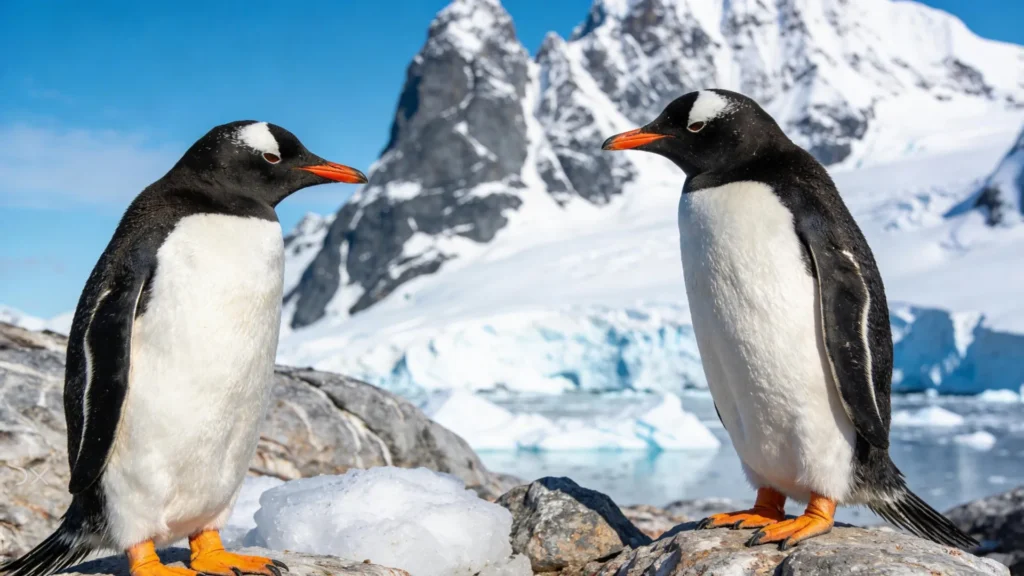
While the four-foot-tall Emperor penguin often dominates the public imagination as the quintessential symbol of the Antarctic, the reality of the genus Pygoscelis is far more complex and geographically diverse. For over a century, the scientific community has grappled with the classification of the gentoo penguin, a bird characterized by its striking white bonnet markings and vibrant orange-red bill. Now, an international coalition of researchers has effectively settled a long-standing taxonomic debate, revealing that what was once considered a single, widespread species is, in fact, a complex of four distinct species.
This landmark study, published in the journal Communications Biology, marks the first time in over 100 years that a new penguin species has been formally identified. The discovery, led by researchers from the University of Chile and the University of California, Berkeley, underscores the power of modern genomic sequencing in uncovering "cryptic species"—animals that appear nearly identical to the naked eye but harbor significant, evolutionary-distinct genetic signatures.
The Taxonomy Debate: A Century of Disagreement
For decades, ornithologists have argued over how to categorize the gentoo penguin. Some researchers historically proposed as many as six subspecies, but the lack of universal consensus left the field in a state of academic limbo. The primary challenge has always been the remoteness of the penguin’s habitat. Gentoo penguins inhabit isolated islands across the Southern Hemisphere, many of which are thousands of miles from any permanently inhabited landmass, making comprehensive biological sampling a logistical nightmare.
To resolve these disagreements, a global team of specialists—coordinated by Juliana Vianna of Andrés Bello National University, Rauri Bowie of UC Berkeley, and Elie Poulin of the University of Chile—embarked on a massive genomic undertaking. By analyzing whole-genome sequences of 64 penguins collected from 10 distinct breeding colonies, the team achieved the most comprehensive sampling of the gentoo range to date.
"There’s probably no species of penguin where the taxonomy has been more debated than the gentoo," says Rauri Bowie, a curator in UC Berkeley’s Museum of Vertebrate Zoology. "For over 100 years it’s been controversial as to how many species or how many subspecies there are. What this paper does is try to address that question using cutting-edge integrative approaches."
Chronology of Diversification: 22 Million Years in the Making
The research provides a fascinating glimpse into the evolutionary history of these flightless birds. Bowie and Vianna, who have spent nearly a decade mapping the evolutionary trajectory of the Spheniscidae family, note that penguins originated in the vicinity of Australia and New Zealand approximately 22 million years ago.
As the lineage branched out, the Emperor and King penguins diverged early, carving out their niches in the Antarctic and sub-Antarctic respectively. Approximately 12 million years ago, the strengthening of the Antarctic Circumpolar Current acted as a "conveyor belt," facilitating the dispersal of other penguin groups into the sub-Antarctic archipelagoes.
The gentoo penguins, however, evolved their own unique strategy for survival. Their diet is remarkably flexible; unlike specialists such as the Emperor or Adélie, which rely heavily on krill, gentoos consume almost anything they can catch, including fish, squid, and cuttlefish. Paradoxically, this dietary flexibility likely drove their speciation. Because they are not forced to migrate long distances for specific food sources, they remained tethered to their breeding colonies, allowing isolated populations to adapt to local environments.
According to the study, the four gentoo species diverged between 300,000 and 500,000 years ago. This process was facilitated by the Antarctic Polar Front, a formidable oceanic boundary where temperature and salinity shifts create a barrier that effectively restricts the movement of marine species, sealing these populations into their own evolutionary silos.
Genomic Evidence and Physical Adaptations
The team, led by University of Chile graduate student Daly Noll, employed thousands of genetic markers known as single nucleotide polymorphisms (SNPs) to map the unique adaptations of each species:
- The Southern Gentoo (Pygoscelis ellsworthi): Inhabiting the Antarctic Peninsula and South Georgia, this lineage is the most numerous. Genomic analysis revealed enrichment in genes related to heat production, lipid storage, and light perception—traits essential for survival in the extreme, high-glare environment of the Antarctic ice.
- The Eastern Gentoo (Pygoscelis taeniata): Found on the Crozet, Marion, and Macquarie Islands, these penguins show genetic adaptations for efficient carbohydrate metabolism and enhanced diving physiology. Their genomes are optimized for oxygen transport and lung development, allowing for longer foraging bouts in nutrient-poor waters.
- The Northern Gentoo (Pygoscelis papua): Restricted to the Falkland/Malvinas and Martillo Islands, this group possesses genomic signatures linked to intense muscle activity and digestion, supporting the sustained physical exertion required for their specific foraging patterns.
- The Southeastern Gentoo (Pygoscelis kerguelensis): The newly recognized species residing on the Kerguelen Islands. Though they resemble the others, their genetic divergence is so profound that they have been elevated to full species status.
Official Responses and Conservation Implications
The formal recognition of these four species carries significant weight for global conservation efforts. Juliana Vianna emphasizes that while the Antarctic-dwelling P. ellsworthi is currently thriving, the sub-Antarctic species face a precarious future.
"In Antarctica, other species—not the gentoo—are threatened by climate change," Vianna explains. "But the gentoo is of most concern in the sub-Antarctic region, an area of widely separated islands governed by numerous countries."
The researchers warn that by 2050, climate models suggest the island-dwelling gentoo species could lose much of their suitable habitat. Unlike the Antarctic gentoo, which may actually expand its range as conditions change, the island-bound populations have nowhere to retreat. Because these islands are highly isolated, these penguins cannot simply "colonize" new areas if their current environments become uninhabitable.
"It’s very important that conservation institutions in all the different countries involved recognize and take appropriate action to save these three gentoo penguin species," Vianna urges. This includes addressing the cumulative pressures of warming oceans, habitat destruction, predation by invasive species like rats and dogs, and competition with commercial fishing operations.
The Future: Beyond Taxonomy
The implications of this study extend well beyond the naming of a new species. The genomic dataset assembled by the team serves as a high-resolution blueprint for understanding how species adapt to environmental stress.
Looking forward, Vianna is already utilizing this genomic data to investigate resistance to avian influenza, a virus currently devastating bird and mammal populations worldwide. By identifying which genetic markers correlate with survival, conservationists may soon be able to prioritize protection for the most vulnerable populations.
"Whole genome sequencing has transformed our ability to not only look at adaptation from a perspective of how things diversify, but it has really important conservation value," says Bowie.
As the world continues to grapple with the accelerating effects of climate change, this study serves as a poignant reminder that even the most well-known creatures may harbor hidden complexities. The gentoo penguin, long treated as a single, common entity, is now recognized as a group of four distinct evolutionary success stories. Protecting them will require a new, globally coordinated approach that respects the unique genetic heritage of each species in their isolated island homes. The era of seeing the gentoo as a monolith is over; the era of targeted, genomic-informed conservation has begun.



