

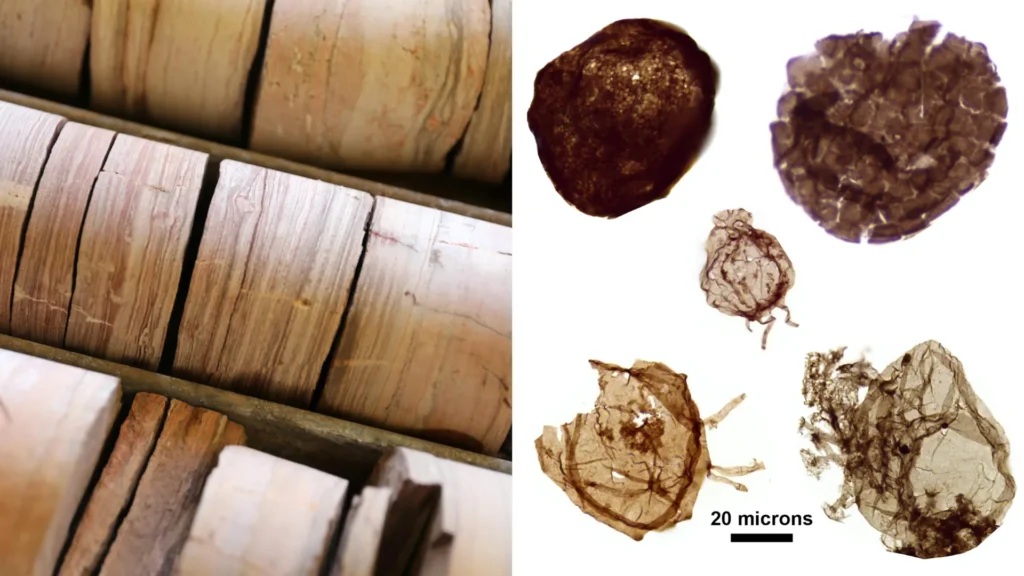
In a sprawling, open-air warehouse in Darwin, Australia, thousands of unassuming cylindrical rock cores sit tucked away in trays, gathering dust under the tropical sun. To the untrained eye, they appear as mere geological remnants of a bygone era of mineral exploration. Yet, hidden within these mudstones—sedimentary layers formed from the compressed muck of prehistoric seafloors—lies the key to one of the most profound biological enigmas in human history: the origin of complex life.
New research, published in the journal Nature, has unveiled that these cores, drilled decades ago by prospectors searching for precious minerals, contain a treasure trove of microfossils. These microscopic remnants, dating back up to 1.75 billion years, are the oldest known fossils of eukaryotes—the cellular ancestors of all plants, animals, and fungi. By analyzing this ancient biological archive, scientists have finally addressed a long-standing debate regarding whether the oxygen-rich environment of early Earth was a prerequisite for the birth of complex life.
The Evolutionary Great Divide
To understand the magnitude of this discovery, one must first appreciate the fundamental divide in the biological world. All life on Earth is categorized into two distinct cellular architectures: prokaryotes and eukaryotes.
Prokaryotes, which include bacteria and archaea, represent the simplest form of life. They are generally single-celled organisms characterized by a streamlined, minimalist cellular organization. In contrast, eukaryotes are marvels of biological complexity. Every animal, plant, algae, and fungus on this planet is built from eukaryotic cells, which feature a distinct nucleus housing genetic material and a suite of specialized, membrane-bound organelles. These organelles function like miniature factories, allowing the cell to perform complex tasks that simple prokaryotes cannot achieve.
The transition from the simple prokaryotic world to the sophisticated eukaryotic realm—the "eukaryotic revolution"—was the defining moment in the history of our planet. It allowed life to move beyond the constraints of simple cellular existence, eventually paving the way for multicellularity, complex organs, and, ultimately, human consciousness. Scientific consensus, bolstered by genetic studies of modern organisms, suggests that this revolution was triggered by a symbiotic "merger" between two prokaryotic microbes: an archaeon and a bacterium. While we understand the how of this union, the where and why—specifically the environmental conditions that favored such a leap—have remained shrouded in mystery for decades.
A Chronology of Earth’s Early Inhabitants
The geological timeline of early life is a testament to the endurance of these microscopic architects. While the Northern Territory fossils in Darwin are the oldest known evidence of eukaryotes, dating back roughly 1.75 billion years, the story of life began long before that.
3.5 to 2.5 Billion Years Ago: The Prokaryotic Reign
For the first billion years of Earth’s history, life was exclusively prokaryotic. During this era, the atmosphere was largely devoid of oxygen, and the oceans were populated by cyanobacteria and other simple organisms that thrived in a "reducing" environment.
2.4 to 1.8 Billion Years Ago: The Great Oxidation Event
The planet underwent a radical transformation known as the Great Oxidation Event (GOE). As photosynthetic organisms began releasing oxygen as a waste product, the atmosphere and oceans began to transition from a state of oxygen-depletion to one of increasing oxygenation.
1.75 to 1.4 Billion Years Ago: The Eukaryotic Emergence
This is the period documented by the Northern Territory cores. During this epoch, the planet was covered by vast inland seas. As these seas shifted and evaporated, they laid down the mudstone layers that would eventually preserve the delicate, microscopic fossils discovered by the research team.
The Modern Era: The "Oxygen Puzzle"
In recent years, the evolutionary timeline has faced challenges. Some researchers have pointed to the discovery of modern "enigmatic" eukaryotes that thrive in low-oxygen, or even anaerobic, environments. This led to a bold hypothesis: perhaps eukaryotes did not require oxygen to evolve, but merely adapted to it later. The new study in Nature provides the evidence needed to settle this debate.
Supporting Data: Peering Through the Microscope
The research team undertook a massive effort to extract biological data from the archived rocks. By processing the mudstone cores stored by the Northern Territory Geological Survey, they identified more than 12,000 individual fossils.
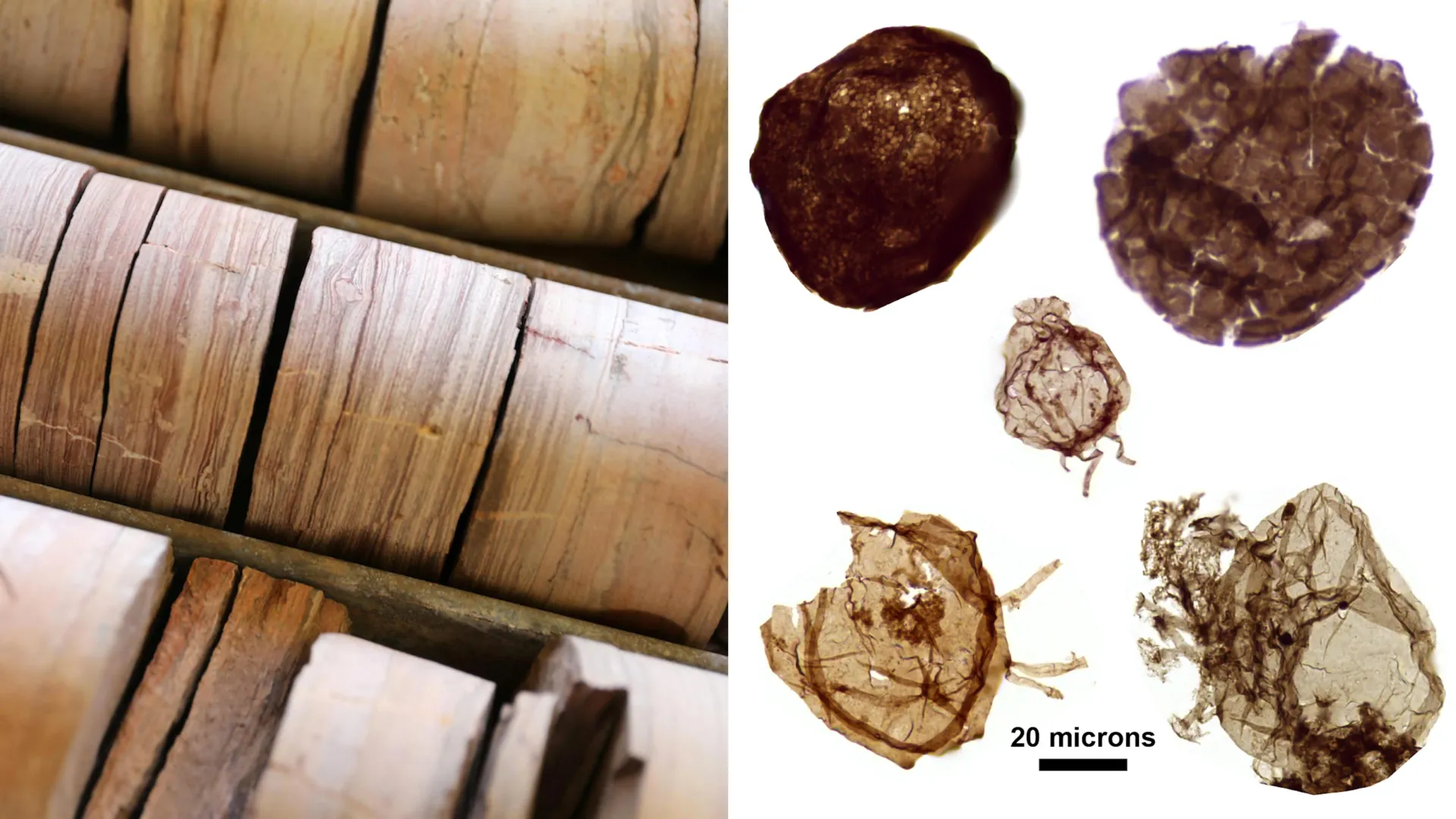
The extraction process was painstaking. The team crushed the mudstone samples and dissolved the minerals using specialized chemicals, leaving behind the organic residue of the ancient organisms. When viewed under high-powered microscopes, these residues revealed a dazzling array of cellular structures.
"We identified over 12,000 specimens," the researchers noted. "But the discovery of the fossils themselves was only half the task."
The team paired the biological findings with geochemical analysis of the surrounding rock matrix. By examining the chemical signatures trapped in the mudstone, they were able to reconstruct the environmental conditions of the seawater at the time of deposition. The results were stark:
- Correlation with Oxygen: Eukaryote fossils were exclusively found in samples that showed clear chemical evidence of oxygenation.
- The Absence in Anaerobic Zones: In samples taken from environments identified as oxygen-free (anoxic), the research team found only simple, prokaryotic fossils.
- Broad Habitat Distribution: The eukaryotes were found across a spectrum of environments, from coastal mudflats to open-sea habitats, but their presence was consistently tethered to the presence of oxygen.
These findings strongly contradict the notion that early eukaryotes were oxygen-independent. Instead, the data supports the traditional theory that aerobic respiration—the process of using oxygen to break down food—was the "energy engine" that enabled the complexity of the eukaryotic cell. Without the high-energy output afforded by oxygen, it appears, the complex machinery of a nucleus and organelles was simply too "expensive" for a cell to maintain.
Implications for the Future of Evolutionary Biology
The implications of this study are profound, reaching far beyond the shelves of a warehouse in Darwin. By confirming the link between oxygen and the emergence of eukaryotes, the researchers have provided a cornerstone for understanding the trajectory of life on Earth.
Refining the "Oxygen Requirement"
This study settles a major debate in the life sciences. While some modern eukaryotes have adapted to live in low-oxygen pockets, these are likely secondary adaptations—exceptions rather than the rule. The foundational "big bang" of complex life was, by all accounts, an oxygen-dependent event.
The Search for Extraterrestrial Life
This discovery has direct consequences for astrobiology. If oxygen is a fundamental requirement for the evolution of complex cells, then our search for life elsewhere in the cosmos should prioritize planets that have undergone an oxygenation phase. It suggests that while simple bacterial life might be common in the universe, complex, multicellular life might be constrained by the geochemical necessity of an oxygen-rich atmosphere.
The Value of Geological Archives
The study also highlights the importance of preserving geological survey collections. The fact that a groundbreaking discovery regarding the origins of life was made using rocks drilled decades ago for mineral exploration serves as a powerful reminder: we have barely scratched the surface of the information contained within Earth’s geological record.
A Legacy of Complexity
As the research team continues to analyze these 12,000 specimens, they are doing more than just documenting the past; they are documenting the blueprint of our existence. Each fossil represents a tiny, failed or successful experiment in the long, arduous process of evolution.
The "eukaryotic revolution" was not a singular event, but a series of adaptations that allowed life to conquer the planet. The Northern Territory fossils provide a snapshot of that process in its infancy. By understanding the conditions that allowed for the first nucleus, the first organelle, and the first complex cell, we gain a clearer understanding of our own heritage.
The mystery of our origins is vast, but with every mudstone core pulled from the shelf and every fossil identified under the lens, the fog begins to lift. We now know that our existence is the result of a symbiotic dance that required the perfect chemical environment—an oxygen-rich world that provided the spark for the fire of life to burn brighter, more complexly, and more beautifully than ever before. The story of complex life, it turns out, was written in the mud of an ancient sea, waiting for us to return and read it.



