

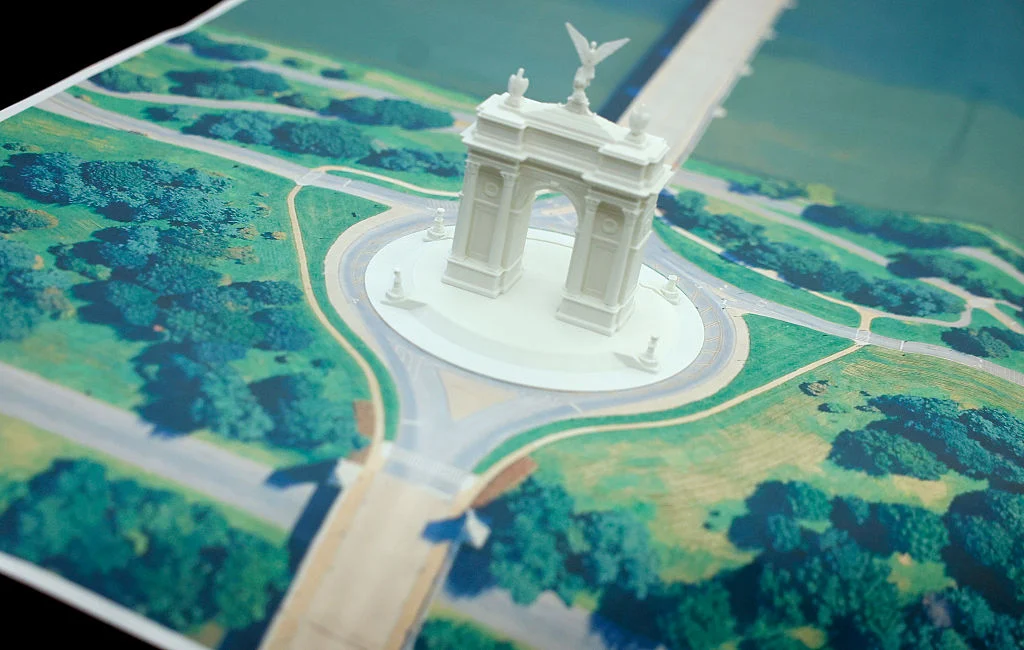
The landscape of the nation’s capital, defined by its deliberate symmetry, solemnity, and carefully curated sightlines, is currently the stage for a profound architectural and bureaucratic battle. On September 29, the American Institute of Architects (AIA) issued a formal, sharp-edged rebuke to the Advisory Council on Historic Preservation (ACHP), signaling a significant escalation in the struggle against the proposed 250-foot "triumphal arch" slated for construction near Arlington National Cemetery.
The AIA’s intervention follows a contentious decision by the ACHP on September 24 to effectively withdraw from the mandatory Section 106 review process. By bypassing this federal oversight mechanism, the ACHP has decoupled itself from the rigorous scrutiny usually required for projects impacting historic sites, choosing instead to engage in private, direct consultations with U.S. Secretary of the Interior Doug Burgum. This maneuver has left architects, preservationists, and military veterans concerned that the federal government is fast-tracking a project that threatens to fundamentally alter the historic fabric of the D.C. monument corridor.
The Section 106 Crisis: A Departure from Protocol
At the heart of the current controversy is Section 106 of the National Historic Preservation Act (NHPA). This statute is a cornerstone of American preservation law, mandating that federal agencies identify, assess, and mitigate the impact of any project they fund, approve, or execute on historic properties. It is designed to act as a democratic safeguard, ensuring that major infrastructure projects do not inadvertently destroy the cultural heritage of the United States.
By opting to bypass this process, the ACHP has signaled a departure from its core mission. According to reporting by The Architect’s Newspaper, the Council intends to bypass standard public and expert consultation phases, moving instead to a direct dialogue with Secretary Burgum, a prominent political ally of President Trump. The AIA’s September 29 letter to Jaime Loichinger, Director of the ACHP, frames this move as a dereliction of duty.
The AIA argues that by abandoning the Section 106 process, the Council is failing to hold the National Park Service (NPS) accountable for the significant adverse effects the proposed arch will have on the surrounding landscape. The AIA contends that the NPS’s current stance—that any alternative location or scale would violate the "fundamental nature" of the project—is a premature conclusion that circumvents the very purpose of the NHPA.
Chronology of the Arch Project
The genesis of the "Triumphal Arch" can be traced back to a holiday event in December of the previous year, when President Trump first floated the concept of a massive monument to commemorate his administration. The proposal, which calls for a 250-foot-tall structure to be situated at Memorial Circle near the gates of Arlington National Cemetery, was met with immediate skepticism by the architectural community.
- December 2025: President Trump introduces the concept of a "triumphal arch" during a seasonal reception, setting the project on a fast-tracked administrative path.
- May 2026: Despite widespread criticism regarding the scale, aesthetic, and location, the Commission of Fine Arts (CFA) grants preliminary approval for the design.
- August 2026: Military veterans and historic preservation groups file a formal lawsuit, arguing that the site selection desecrates the solemnity of the Arlington National Cemetery surroundings.
- Mid-September 2026: A restraining order is filed to block the scheduled groundbreaking, effectively freezing physical construction on the site.
- September 24, 2026: The ACHP announces it will bypass Section 106 protocols to communicate directly with the Department of the Interior.
- September 29, 2026: The AIA releases its formal protest letter, demanding that the ACHP advise Secretary Burgum to halt the project and reconsider its scope and location.
Architectural Dissonance: The AIA’s Critique
The AIA’s critique goes beyond mere bureaucratic procedure, delving into the philosophical and aesthetic implications of placing a 250-foot structure at such a sensitive "hinge" point in the D.C. landscape.
"Washington’s monuments are not a collection of isolated objects," the AIA wrote in their letter to Loichinger. The institute argues that the capital’s layout is a carefully orchestrated sequence of "reciprocal views" and "civic meaning." By inserting a colossal, permanent structure at the entrance to Arlington, the project threatens to overwhelm the visual hierarchy established over two centuries.
Architects and urban planners supporting the AIA’s position point out that the proposed height and bulk of the arch are out of scale with existing memorials. The structure is not merely a piece of public art; it is a permanent change to the topography and sightlines that define the relationship between the national capital and the nation’s most sacred burial ground. The AIA suggests that the ACHP should push for a "genuine analysis" of alternative designs, proposing that a smaller, less visually intrusive structure might fulfill the project’s commemorative goals without compromising the integrity of the Memorial Circle area.
Official Responses and Political Pressure
The project has become a lightning rod for broader political tensions. For supporters, the arch is a bold statement of national pride and a lasting tribute to the administration. For opponents, it is a textbook example of "monumental overreach."
Secretary of the Interior Doug Burgum has remained a steadfast supporter of the project, characterizing the arch as an essential addition to the D.C. skyline. The Department of the Interior has maintained that the project is necessary to achieve the specific vision set forth by the President, often dismissing concerns about site impact as being secondary to the project’s symbolic importance.
However, the opposition is equally firm. The lawsuit filed by military veterans highlights a specific grievance: the proximity of the arch to the burial grounds of those who died in service to the country. Veterans groups argue that the site selection is not merely an architectural error but a moral one, prioritizing a political statement over the quiet, reflective dignity required at the threshold of Arlington.
Implications for Preservation Law
The decision of the ACHP to step back from Section 106 has sent shockwaves through the preservation community. If a federal agency can unilaterally bypass these protections for a high-profile political project, critics argue that the entire framework of the National Historic Preservation Act is rendered toothless.
1. Precedent for Future Projects
If the arch project proceeds without a full Section 106 review, it sets a dangerous precedent. Future administrations could leverage this "direct consultation" loophole to bypass public oversight on any number of controversial developments, arguing that public debate would "hinder the project’s goals."
2. Erosion of Institutional Integrity
The ACHP is intended to be an independent voice for historic preservation within the executive branch. By aligning itself so closely with the Department of the Interior to facilitate a specific political outcome, the Council risks losing the trust of the very organizations—such as the AIA and the National Trust for Historic Preservation—that it relies on for expertise and legitimacy.
3. The Future of the D.C. Monument Corridor
If the project is not relocated or redesigned, it will leave a permanent mark on the nation’s capital. The implications extend to how future generations perceive the "monumental layer" of the 21st century. Will the arch be seen as a grand architectural achievement or as a monument to a moment of deep political polarization?
Conclusion
The standoff between the American Institute of Architects and the Advisory Council on Historic Preservation is more than a technical dispute over federal procedure. It is a fundamental disagreement over how a democratic society should manage its shared history and public spaces. As the restraining order keeps the excavators at bay, the conversation has shifted from the blueprints of the arch to the bedrock of federal law.
For the AIA, the message remains clear: the process of building in a city as significant as Washington, D.C., must be deliberative, inclusive, and respectful of the historic context. As the nation watches, the outcome of this struggle will determine whether the rules of preservation remain a powerful force for protecting our collective heritage or whether they can be easily sidelined by the political mandates of the day.



