

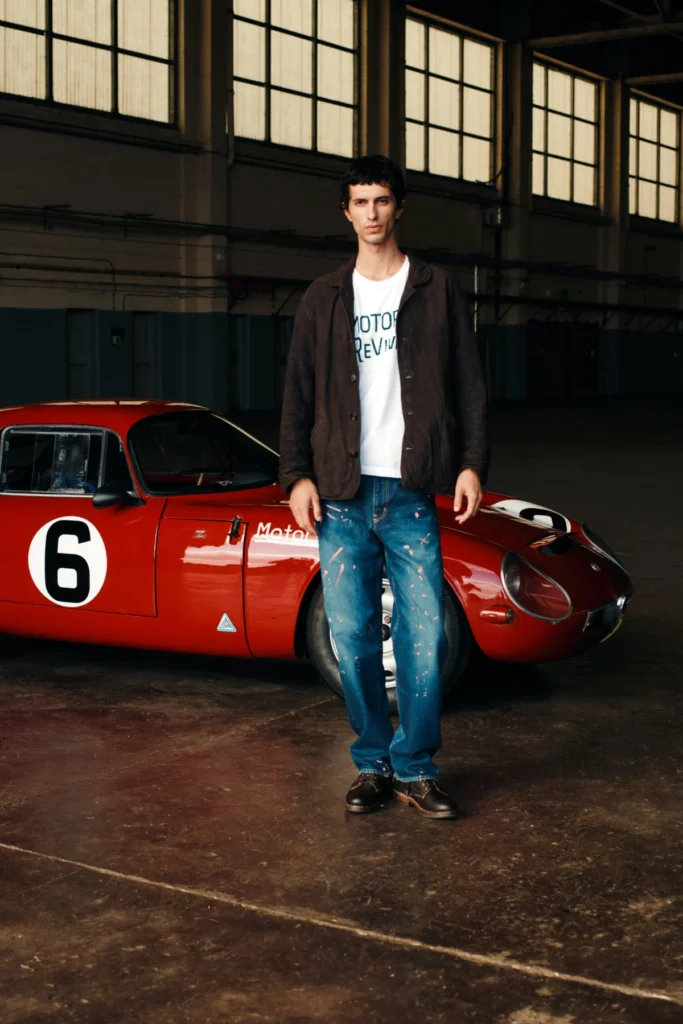
LONDON — In a move that reaffirms the enduring synergy between high-end digital retail and artisanal Japanese craftsmanship, Mr Porter has announced its second exclusive collaboration with the cult-favorite brand Visvim. Titled “Motors Revival,” the 27-piece collection serves as a visceral exploration of founder Hiroki Nakamura’s lifelong fascination with vintage automobiles and the grit and glamour of historic motorsport.
The collection, which spans a significant price spectrum from £210 to £7,130, is not merely a line of clothing; it is a curated homage to the tactile, human-centric nature of mechanical engineering in the mid-20th century. By marrying the rugged aesthetics of the pit lane with the elevated textile innovation that has become synonymous with Visvim, the partnership invites a global audience to experience luxury through the lens of performance, heritage, and uncompromising construction.
The Genesis of "Motors Revival"
The "Motors Revival" collection is a departure from the high-altitude, rugged aesthetic of the pair’s previous collaboration. While the 2018 inaugural partnership drew heavy inspiration from the rock-climbing culture of Yosemite National Park—leaning into 1960s and 70s archival imagery—this new venture is rooted in the personal history of Nakamura himself.
As an avid collector and driver of vintage sports cars, Nakamura has spent years frequenting racing circuits across the globe, not merely as a spectator but as a participant. This intimate relationship with the machine is translated directly into the garment design. The collection features a suite of racer-style jackets, specialized racing-inspired footwear, and vintage-style caps, all meticulously crafted to mirror the aesthetic nuances of classic automotive culture.
Key items in the collection, such as the checked wool and linen-blend down jacket and the heavily embroidered distressed corduroy jacket, highlight the "human touch" that Nakamura considers essential to his design philosophy. According to the designer, the collection seeks to replicate the soul of the era when vehicles were sculpted by hand, emphasizing the intersection of mechanical perfection and artisanal imperfection.
A Chronology of Collaboration: From Yosemite to the Racetrack
To understand the weight of this second collaboration, one must look back at the trajectory of the relationship between Mr Porter and Visvim. Since Mr Porter’s inception, the retailer has championed Japanese design as a core pillar of its luxury offering.
- Pre-2018: Mr Porter establishes itself as a global platform for Japanese labels, with Toby Bateman, then-CEO, identifying Visvim as a brand that stands "quietly apart" from the noise of seasonal trends.
- 2018: The first Mr Porter x Visvim collaboration is launched. A 28-piece collection focusing on outdoor exploration and the history of Yosemite, it sets a high bar for collaborative storytelling.
- 2020–2025: The brand continues to build its reputation on the Mr Porter platform, relying on word-of-mouth and the "convertibility" of its quality—the idea that once a customer wears a Visvim piece, the high barrier to entry becomes irrelevant due to the sheer longevity and comfort of the product.
- 2026: "Motors Revival" is unveiled. The collection represents a shift toward more personal narrative-driven design, leveraging Nakamura’s racing pedigree to create a more intimate aesthetic experience.
Supporting Data: The Economics of Craft
The pricing structure of the "Motors Revival" collection—ranging from £210 for entry-level accessories like graphic T-shirts to £7,130 for premium outerwear—reflects the material-first approach that defines the Visvim brand.
In the luxury market, where synthetic blends and rapid-fire production cycles often dominate, Visvim’s insistence on rare, vintage-process fabrics—such as its signature wool and silk-blend twills—justifies the premium cost. The data suggests that Mr Porter’s core customer base is increasingly moving away from logo-driven status symbols and toward "quiet luxury" and "authentic craft."
Toby Bateman has frequently noted that Visvim’s appeal is consistent regardless of the economic climate. By prioritizing the "authenticity of inspiration"—whether that inspiration stems from American workwear heritage or traditional Japanese textile techniques—the brand avoids the volatility of fashion trends. For Mr Porter, this partnership serves as a strategic anchor, proving that a digital-first retailer can effectively sell high-investment, artisanal goods that require the consumer to understand the "why" behind the price tag.
Official Responses: The Philosophy of the Hand-Finished
For Hiroki Nakamura, the "Motors Revival" project was an exercise in capturing a disappearing feeling. "The car from that period, especially, everything is made by hand," Nakamura remarked during the launch. "It’s just a craft. It’s a human touch."

This sentiment is echoed by the leadership at Mr Porter. Toby Bateman, reflecting on the partnership, emphasized that the collaboration is less about creating a "trend" and more about expanding the wardrobe of a collector.
"Visvim is about the material and fabric first," Bateman said. "Then, closely followed by the authenticity of inspiration—whether that’s American heritage or Japanese fabric heritage. This time, the inspiration is more personal, and it’s Nakamura’s love of motorsport. So this capsule reflects the style of the car pit, I would say."
Bateman further shared his personal affinity for the collection, highlighting the corduroy jacket embroidered with "Motors" on the back as the standout piece. He noted that the success of the brand on the Mr Porter platform is a testament to the "convertibility" of the product. "When you own some Visvim pieces and wear them, you get it," Bateman stated. "You get the quality of the fabric, and the construction and the style are timeless and effortlessly cool."
Implications: The Future of Retail and Artisanship
The "Motors Revival" collaboration carries several implications for the future of luxury menswear retail.
1. The Rise of "Personalized" Collaborations
As consumers become more skeptical of corporate-led collaborations that feel superficial, the "Motors Revival" model—rooted in the genuine, documented hobbies and life experiences of the designer—sets a new standard. It moves away from the "logo-slapping" era of collaborations and toward a "narrative-driven" era.
2. The Longevity of Japanese Craft
Visvim’s success on Mr Porter proves that there is a sustainable, scalable market for products that are designed to age. By focusing on materials that improve with wear, both companies are tacitly pushing back against the "throwaway culture" of fast fashion. This shift is critical for retailers aiming to position themselves as curators of "investment-grade" fashion.
3. The Digital-Physical Bridge
While the collection is sold through a digital portal, the messaging is entirely focused on the physical—the weight of the wool, the texture of the corduroy, and the mechanical feel of the racing jackets. Mr Porter’s ability to communicate these sensory details through digital imagery and storytelling is what allows them to command such high price points without the benefit of a brick-and-mortar tactile experience.
4. Cultural Cross-Pollination
The fusion of American racing culture with Japanese textile engineering demonstrates how global design languages are evolving. Nakamura’s work does not just replicate the past; it interprets it through a Japanese sensibility, creating something entirely new. This "cross-pollination" is likely to become a dominant theme in high-end design, where regional aesthetics are blended to create products that feel simultaneously familiar and exotic.
In conclusion, the "Motors Revival" collection is more than a seasonal drop; it is a manifestation of a partnership built on mutual respect for the slow, intentional process of creation. As Mr Porter and Visvim continue to refine their collaborative efforts, they provide a blueprint for how luxury retail can maintain its relevance by anchoring itself in the timeless, the human, and the expertly crafted. For the collector of fine garments, this is not just an acquisition of clothing—it is an invitation to participate in the ongoing, hand-finished history of one of fashion’s most enigmatic brands.



