

Introduction: The Billion-Dollar Waste Dilemma
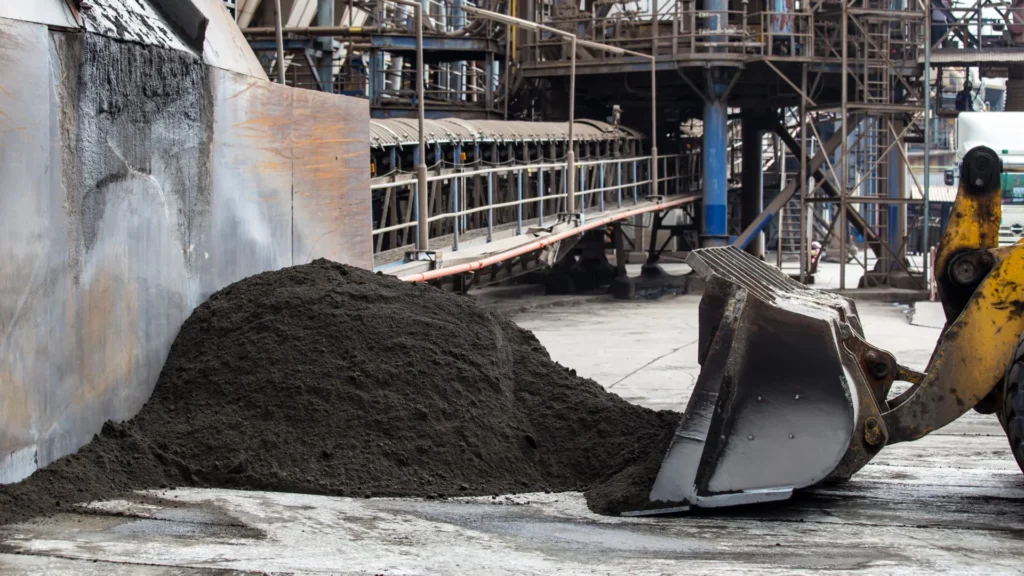
For decades, the industrial landscape of the United States has been defined by what it discards. Coal ash, red mud, and mine tailings—the inevitable byproducts of power generation, aluminum production, and mining—have long been relegated to the status of environmental liabilities. These massive waste streams occupy thousands of acres, often sequestered in impoundment ponds and landfills, posing significant ecological risks while holding vast, untapped economic potential.
However, a paradigm shift is underway. A multi-institutional research team, spearheaded by the Worcester Polytechnic Institute (WPI), has secured a $3.3 million grant from the National Science Foundation’s (NSF) prestigious Growing Convergence Research program. Their mission is ambitious: to unlock the "hidden" wealth within industrial waste—specifically silica, rare earth elements (REEs), and other critical minerals—using the biological ingenuity of the natural world. By mimicking the way sea sponges and diatoms build structures, these researchers aim to replace energy-intensive, chemical-heavy industrial processes with elegant, bio-inspired solutions.
Chronology of the Initiative
The road to this $3.3 million award represents the culmination of years of theoretical research and the growing urgency of supply chain security.
- Pre-2022: Initial discussions among researchers at WPI and partner institutions regarding the untapped potential of silicate-rich waste.
- 2023: Formation of the interdisciplinary coalition, spanning fields from geochemistry to artificial intelligence (AI).
- 2024: Official announcement of the NSF Growing Convergence Research award, marking the beginning of a five-year, two-phase development cycle.
- 2025–2027 (Phase I): Computational modeling, AI-driven molecular design, and fundamental experiments in biosilicification and metallurgical extraction.
- 2028–2029 (Phase II): Scaling the laboratory successes into pilot-scale industrial applications and conducting economic feasibility studies.
Supporting Data: The Hidden Treasure Trove
The economic justification for this project is staggering. The modern world is built on silicon-derived materials, which are essential for semiconductors, concrete, glass, and ceramics. Traditionally, the production of these materials requires extreme temperatures and harsh chemical solvents, resulting in a massive carbon footprint.
Simultaneously, the waste generated by these very industries contains high concentrations of silicon and rare earth elements. Rare earth elements are the "vitamins" of the modern technology sector, essential for everything from electric vehicle batteries to advanced guidance systems and national defense technology.
One recent estimate published in the journal Resources, Conservation and Recycling suggests that there are approximately 11 million tons of rare earth elements currently trapped in U.S. coal ash landfills. At current market valuations, this represents a staggering $8.4 billion in assets—a figure nearly eight times larger than the nation’s total current raw domestic reserves. By tapping into these "urban mines," the United States could significantly reduce its reliance on foreign imports and diminish the need for destructive new mining operations.
Official Responses and Strategic Vision
Leading the charge is Mingjiang Tao, an associate professor in WPI’s Department of Civil, Environmental, and Architectural Engineering. For Tao, the project is about more than just extraction; it is about systemic transformation.
"Recovering critical minerals is only part of the opportunity," Tao stated. "We want to develop a process that uses as much of each waste stream as possible, separating strategically important elements while converting the remaining material into useful products. That whole-material approach could fundamentally change how industries manage waste and obtain essential resources."
The project relies on a high-level convergence of expertise:
- Mingjiang Tao (Lead PI): Overseeing biosilicification—the process by which organisms naturally form silica—and bio-enabled metallurgy.
- Carrick Eggleston (Co-PI): A geochemistry expert, Eggleston is tasked with mapping the chemical reaction pathways. His work focuses on the dissolution and repolymerization of silicates, essentially "teaching" the waste how to break down and rebuild itself under mild, environmentally friendly conditions.
- Yan Wang (Co-PI): A pioneer in battery recycling and sustainable manufacturing, Wang is spearheading the development of the specific bio-engineered methods required to pull rare earth elements out of the complex chemical matrix of industrial sludge.
"Our goal is to look at the process in reverse," says Eggleston. "Instead of using heat to force a reaction, we are looking at the molecular scaffolding that biology uses to achieve the same result at room temperature."
Looking to Nature: The Biomimetic Approach
The project’s core innovation lies in its reliance on biological blueprints. Diatoms (microscopic algae) and sea sponges are masters of silica management. They extract dissolved silicon from seawater to construct intricate, glass-like skeletons with near-perfect efficiency and zero waste.
The research team aims to replicate these biological mechanisms using "bio-scaffolds"—specialized molecules designed to bind with specific elements within coal ash or mine tailings. By deploying these molecules, the team hopes to catalyze the separation of minerals without the need for the high-heat furnaces or concentrated acids typically required in metallurgy.
AI and Computational Acceleration
Because nature’s processes are complex, the team is utilizing artificial intelligence to narrow the search space. Traditional chemistry experiments can take months or years to yield results. By using advanced computational modeling, the team can predict how specific proteins or biomolecules will interact with silicon-rich industrial waste before they ever step into a laboratory. This "in silico" approach accelerates the discovery of new catalysts and reaction environments, allowing for a more agile development process.
Implications: A New Era of Circular Manufacturing
The implications of this research are far-reaching, touching upon national security, environmental protection, and economic resilience.
1. Strengthening Supply Chains
By securing a domestic supply of rare earth elements, the U.S. can shield its clean-energy and defense industries from global supply chain shocks. Recovering these materials from waste turns a liability into a strategic asset.
2. Decarbonizing Industry
If successful, the technology could reduce the energy intensity of material production by an order of magnitude. Replacing high-heat industrial processes with bio-mediated, room-temperature reactions would drastically reduce the CO2 emissions associated with the production of concrete, glass, and semiconductors.
3. Transforming Waste Management
The "whole-material approach" championed by the WPI team suggests a future where the concept of "waste" becomes obsolete. In this model, a coal ash pond is not a hazardous site to be monitored; it is a feedstock repository. When the silica is extracted and transformed into high-value construction materials, the original landfill footprint can be reclaimed, and the environmental impact of current waste storage is mitigated.
Educational and Broader Impact
The project is not strictly an industrial or academic endeavor; it is also a training ground for the next generation of engineers. WPI students will be integrated into the research at both the graduate and undergraduate levels. Through the university’s immersive STEM experience, these students will work alongside experts from George Mason University, UC San Diego, UMass Amherst, and the University at Buffalo.
By connecting researchers, industry partners, policymakers, and educators, the project aims to establish a "silicon-based materials ecosystem." This ecosystem would provide the regulatory and economic framework necessary to scale these laboratory-born technologies into real-world applications.
Conclusion: Bridging the Gap
The transition from a linear, "take-make-waste" economy to a circular, bio-inspired one is perhaps the greatest challenge of the 21st century. The WPI-led team’s initiative serves as a powerful proof-of-concept that biology may hold the keys to industrial sustainability. By leveraging the same mechanisms that have allowed life to thrive on Earth for billions of years, humanity may finally find a way to reconcile its industrial appetite with the health of the planet.
As the team moves into the first phase of the project, the eyes of the scientific community remain fixed on their progress. If they succeed, the landfills that currently scar the landscape may soon be viewed not as the final resting place of industrial waste, but as the foundations for a cleaner, more resource-secure future.



