

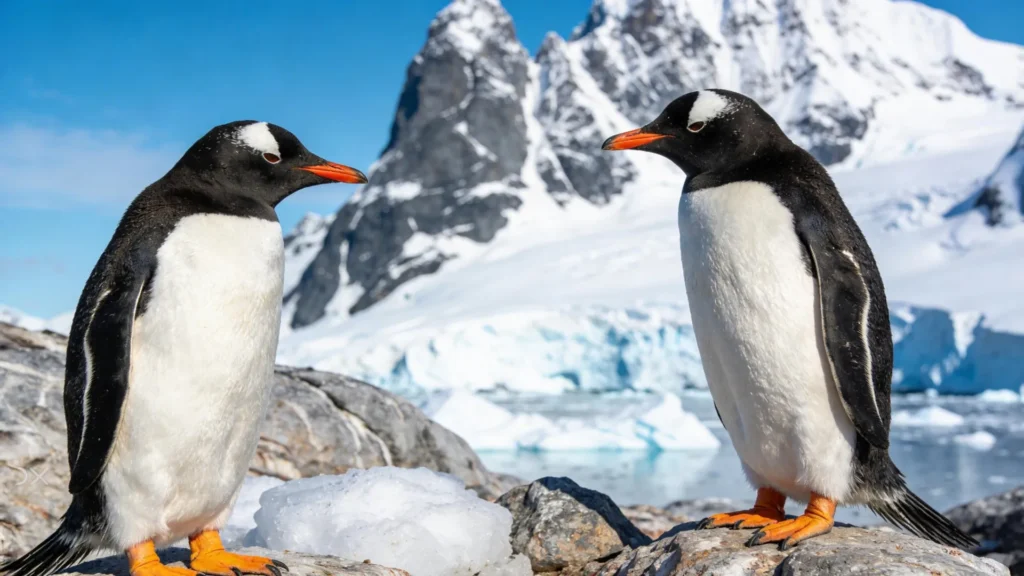
While the four-foot-tall Emperor penguin often serves as the charismatic poster child for Antarctic wildlife, the reality of the penguin family is far more complex and geographically diverse than previously understood. For over a century, scientists have debated the taxonomy of the gentoo penguin (Pygoscelis papua), a bird iconic for its bright orange-red bill and white bonnet-like head marking. Now, an international research team has finally settled the dispute, utilizing cutting-edge genomic analysis to confirm that what was once considered a single species is, in fact, four distinct evolutionary lineages.
This breakthrough, published in the journal Communications Biology, marks the first time in over 100 years that a new penguin species has been formally described. By synthesizing whole-genome sequencing with behavioral and physical observation, the study offers a masterclass in modern taxonomy, revealing that the isolation of the Southern Hemisphere’s remote islands has driven profound evolutionary divergence.
The Chronology of a Scientific Mystery
The debate surrounding gentoo classification is nearly as old as modern ornithology. Because gentoo penguins are widely distributed across the sub-Antarctic—often inhabiting islands separated by thousands of miles of frigid, treacherous ocean—researchers have long suspected that these populations might be drifting apart genetically. However, the physical similarities between the birds were so striking that they were historically lumped into a single species, with various sub-species proposals failing to achieve universal consensus.
For decades, the challenge remained a matter of logistics. The Kerguelen Islands, or "Desolation Islands," are situated nearly 2,000 miles from the nearest permanently inhabited landmass, making comprehensive field studies nearly impossible for early naturalists.
The turning point arrived when an international consortium led by researchers at the University of Chile and the University of California, Berkeley, launched a sweeping genomic project. By collecting 64 whole-genome sequences from 10 distinct breeding colonies, the team finally achieved a comprehensive geographic sample. This data allowed them to move beyond the subjective "looks-like" approach of 19th-century taxonomy and into the precise realm of molecular biology. The study confirmed that these birds have been diverging for roughly 300,000 to 500,000 years, a process driven by geographic barriers and the harsh environmental filter of the Antarctic Polar Front.
Supporting Data: Decoding the Genomic Blueprint
The genomic analysis, led by University of Chile graduate student Daly Noll, relied on thousands of single nucleotide polymorphisms (SNPs)—tiny variations in the DNA sequence that serve as markers for evolutionary change. This approach allowed the researchers to move beyond superficial appearance and identify the specific "tools" each population evolved to survive in its unique climate.
Adaptation to Extreme Environments
The genetic findings reveal a remarkable story of local adaptation:
- The Southern Gentoo (Pygoscelis ellsworthi): Residing in the Antarctic Peninsula, this lineage thrives in extreme cold. Their genomes show a high concentration of genes associated with heat production, lipid storage, and specialized light perception. The latter is likely an evolutionary response to the intense glare of Antarctic ice and the extreme shifts in photoperiod during the polar winter.
- The Eastern Gentoo (Pygoscelis taeniata): Found on the Crozet, Marion, and Macquarie Islands, these penguins have evolved for deep-water performance. Their genetic profile shows adaptations for efficient carbohydrate metabolism and enhanced oxygen transport, which allow them to remain submerged for longer durations while foraging in nutrient-poor waters.
- The Northern Gentoo (Pygoscelis papua): Confined to the Falkland/Malvinas and Martillo Islands, this lineage shows genomic enrichment in genes linked to muscle excitation and heart contraction, supporting the sustained physical demands of their specific hunting behaviors in the South American sub-Antarctic.
- The Southeastern Gentoo (Pygoscelis kerguelensis): This newly recognized species, discovered on the Kerguelen Islands, stands as the highlight of the research. While physically similar to its cousins, its genetic divergence is so significant that it has been elevated to full species status.
This divergence was further reinforced by the "flexibility" of the gentoo diet. Unlike specialized predators that rely solely on krill, gentoos are opportunistic feeders, consuming fish, squid, and crustaceans. This dietary plasticity allowed them to remain tethered to their home islands rather than migrating, which in turn accelerated the process of speciation through long-term geographic isolation.
Implications: A Looming Conservation Crisis
The classification of these four distinct species is not merely an academic milestone; it is a critical alert for conservationists. By identifying these groups as separate species, the researchers have fundamentally changed the stakes for environmental management.
"It’s very important that conservation institutions in all the different countries involved recognize and take appropriate action to save these three gentoo penguin species," says Juliana Vianna, a senior author and professor of ecosystems and environment at Andrés Bello National University.
The study used climate modeling to project the suitability of habitats by 2050. The results are sobering. While the Antarctic Pygoscelis ellsworthi is expected to maintain or even expand its range as the region warms, the sub-Antarctic species face an existential threat. These birds are essentially "island-locked." If their local environment becomes unsuitable due to rising temperatures or shifting prey populations, they have nowhere to go. Unlike terrestrial animals that can migrate across land bridges, these penguins are trapped by the very geography that helped them evolve.
Official Responses and the Future of Taxonomic Study
The scientific community has hailed the study as a triumph of integrative biology. Rauri Bowie, a professor of integrative biology at UC Berkeley and a curator at the Museum of Vertebrate Zoology, emphasized that the controversy surrounding the gentoo penguin was perhaps the most enduring in all of penguin taxonomy. "What this paper does is try to address that question using cutting-edge integrative approaches," Bowie noted.
The implications of this work extend far beyond the classification of one bird. The genomic dataset assembled by the team provides a foundational map for future conservation efforts. Vianna is already applying these genomic tools to analyze how penguin populations might survive the current global outbreak of avian influenza. By identifying the specific genetic markers that confer disease resistance, researchers hope to prioritize populations for protection.
The study serves as a stark reminder that our understanding of the natural world is constantly evolving. As climate change accelerates, the "cryptic" diversity hidden within remote island populations may be lost before we even have the chance to name it. The recognition of the four gentoo species underscores the necessity of high-level, international cooperation in the face of a rapidly changing planet.
As the researchers conclude, the genomic revolution has provided us with a new lens through which to view the natural world—one that is essential for protecting the biodiversity that remains. The gentoo penguin, once thought to be a single, common species, now stands as a symbol of both the incredible resilience of life and the fragility of isolated ecosystems in a warming world.



