

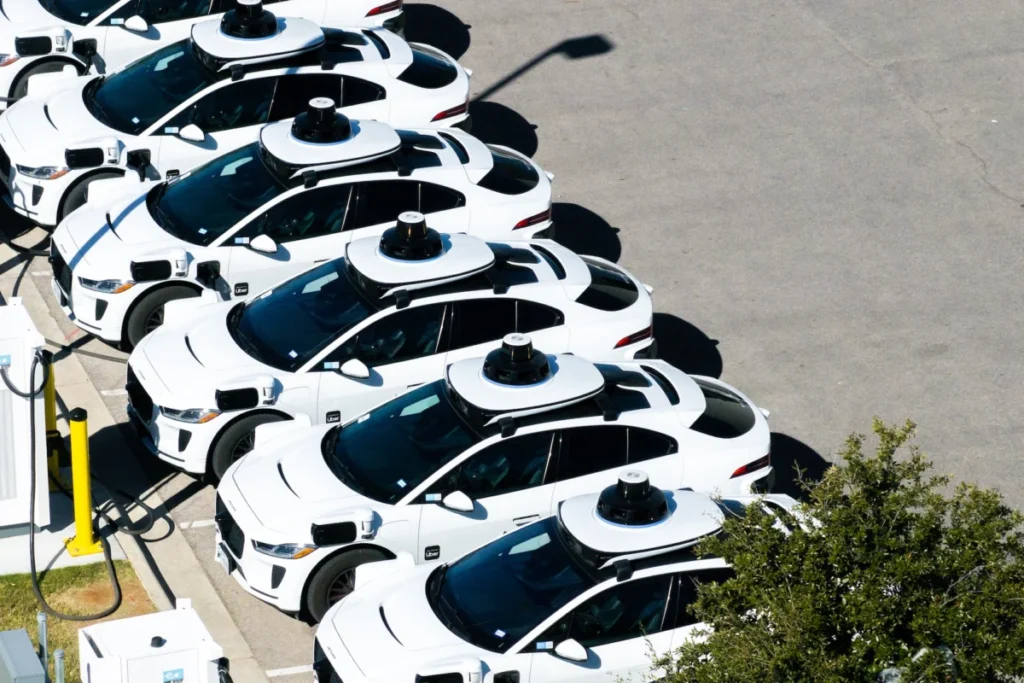
In the high-stakes theater of autonomous vehicle (AV) development, few companies have navigated the transition from experimental testing to commercial ubiquity as effectively as Waymo. Once a research project within Google’s secretive "X" division, the Alphabet-owned enterprise has transformed into a commercial powerhouse. Today, the company reports a staggering 500,000 paid robotaxi rides every week, a figure that serves as a powerful testament to the public’s growing comfort with self-driving technology.
However, beneath the headline-grabbing metrics of rapid expansion lies a more nuanced story of geographic concentration. While Waymo has officially launched services in 15 U.S. cities—a massive jump from its three-city footprint just one year ago—the bulk of its fleet remains tethered to a strategic "sunbelt" strategy. By analyzing fleet registrations and supply chain logistics, it becomes clear that Waymo is not merely spreading its cars thin across the nation; it is laser-focused on dominating specific, high-density corridors, led by an aggressive influx of a new, purpose-built vehicle platform.
The Geography of Autonomy: A Two-State Core
At first glance, Waymo’s expansion map looks like a nationwide rollout. From the sun-drenched streets of Los Angeles to the tech-forward corridors of Austin and the rapidly growing markets in Florida, the company’s white Jaguar I-Pace electric SUVs have become a common sight. Yet, a closer examination of its roughly 4,000-vehicle fleet reveals a distinct centralization: approximately 80% of those vehicles are currently concentrated within California and Texas.
California, the company’s ancestral home, remains the primary hub for testing and iteration. Given that Waymo is headquartered in Silicon Valley and has spent over a decade cultivating relationships with local regulators and a tech-savvy demographic, this concentration is logical. California offers a high barrier to entry—both regulatory and social—that Waymo has successfully cleared, creating a "moat" that competitors struggle to bridge.
However, the real story of the past few months is Texas. In a remarkable sprint, Waymo has increased its Texas-based fleet by 49% in just three weeks. According to data from the Texas Autonomous Vehicle Fleet Tracker, the company had 1,102 autonomous vehicles registered in the Lone Star State as of September 24. This surge is not accidental; it is the physical embodiment of a deliberate scaling strategy that prioritizes the dense urban centers of Austin, Dallas, Houston, and San Antonio.
Chronology of a Scaling Sprint
To understand how Waymo reached this inflection point, one must look at the timeline of its commercial maturation:
- September 2023: Waymo operates in a limited capacity in Phoenix, Los Angeles, and San Francisco. The fleet is almost entirely comprised of the Jaguar I-Pace.
- March 2025: A landmark partnership with Uber is finalized, allowing users in Austin to hail Waymo vehicles via the Uber app. This marks a critical shift in the company’s go-to-market strategy, moving away from a standalone app toward integration with established mobility platforms.
- Summer 2025: The Texas fleet experiences a period of "steady-state" growth, hovering around 600 to 700 vehicles as the company fine-tunes its operations and service coverage in the state.
- September 2025: The "Ojai" effect takes hold. The influx of new, Chinese-manufactured Zeekr minivans—rebranded as "Ojai"—causes the Texas fleet to surge toward the 1,100-vehicle mark. These vehicles now represent roughly one-third of the total Texas fleet.
This rapid acceleration signals that Waymo has moved beyond the "prototype" phase of its business. The company is no longer just proving that the technology works; it is proving that it can be deployed at scale, managed as a fleet, and integrated into the daily logistics of major metropolitan areas.
The Ojai Platform: Engineering for Mass Adoption
The centerpiece of Waymo’s scaling strategy is the "Ojai," a modified version of the Zeekr RT minivan. Developed by Geely Holding Group—the parent company of Volvo—the Ojai is built on the SEA-M platform, an architecture specifically engineered for robotaxis and autonomous logistics.
The Ojai is a departure from the luxury-leaning Jaguar I-Pace. Its interior is utilitarian, designed for durability and ease of cleaning, ensuring it can withstand the wear and tear of a ride-hailing service that operates 24/7. Furthermore, the vehicle features an upgraded rider interface and deep integration with Google’s Gemini AI, which functions as an in-car assistant, providing a more intuitive and helpful experience for passengers.
The supply chain process for the Ojai is equally fascinating. The base vehicles arrive in the U.S. stripped of any Chinese connected-car hardware, a move designed to satisfy stringent U.S. cybersecurity and national security regulations. Once they land, the vehicles are transported to Waymo’s Arizona factory, where the proprietary sixth-generation "Waymo Driver" self-driving system is installed and calibrated.
Economic Implications: Tariffs and the Path to Profitability
The decision to utilize a Chinese-built platform is not without its complications. Under current U.S. trade policy, vehicles manufactured in China face steep import tariffs. This adds a significant cost burden to every Ojai that enters the country.
Industry analysts at MoffettNathanson have noted that Waymo appears willing to absorb these costs in the short term, viewing them as a necessary investment in achieving long-term profitability. By securing a reliable, purpose-built vehicle platform that can be deployed quickly, Waymo is prioritizing market share over immediate margin expansion. Shipping records indicate that Waymo is on track to import roughly 5,100 Ojai vehicles by the end of 2025.
This strategy suggests that Waymo is betting on the "economies of scale" model. By flooding the market with these custom-built minivans, the company can lower the cost per ride, increase availability, and solidify its position as the de facto provider of autonomous transportation. If the Ojai proves as durable and reliable as expected, the initial tariff costs may be offset by significantly lower maintenance and operational expenses compared to retrofitted passenger SUVs.
The Future: Beyond the Sunbelt
While California and Texas currently command the majority of Waymo’s resources, the horizon is already expanding. Florida is emerging as a critical third pillar in the company’s growth strategy, with active operations in three cities. Similarly, Las Vegas is expected to see a significant influx of Ojai vehicles as the company seeks to capitalize on the unique, high-traffic nature of the tourism-dependent market.
As Waymo moves toward its goal of becoming a national utility for mobility, the focus will likely shift from "where can we launch?" to "how many rides can we fulfill?" The success of the Ojai platform will be the primary variable in that equation. If the company can continue to navigate the geopolitical tensions surrounding Chinese manufacturing while maintaining its safety record, it may soon achieve the kind of ubiquity that once seemed like science fiction.
Ultimately, Waymo’s trajectory reflects a broader evolution in the autonomous vehicle industry. The era of the "one-off" test vehicle is over. We have entered the era of the fleet—managed by sophisticated AI, integrated with consumer platforms like Uber, and built on standardized, scalable hardware. For the millions of riders who now use the service, the technology is becoming invisible, which is perhaps the greatest sign of progress yet. The challenge for Waymo in the coming years will be to maintain this momentum, manage its aggressive expansion, and ensure that the convenience of a robotaxi ride remains safe and affordable for the masses.



