

In the fast-paced world of home renovation and new construction, the term "wholesale" has become a double-edged sword. For those searching for wholesale kitchen cabinets in Jacksonville, FL, the digital marketplace is often cluttered with conflicting terminology. Is a "wholesale" price truly a reflection of factory-direct savings, or is it merely a marketing euphemism for low-quality, budget-tier products?
For homeowners, contractors, and property developers in Northeast Florida, distinguishing between these two realities is not just a matter of semantics—it is a financial necessity. A poor decision at the cabinetry stage can lead to thousands of dollars in hidden costs, structural failures, and weeks of project delays. This comprehensive guide dissects the mechanics of the wholesale cabinet industry, offering a blueprint for securing high-quality materials at competitive prices.
The Economics of "Wholesale": What Does It Really Mean?
In the cabinetry industry, true wholesale pricing occurs when the supply chain is truncated. Traditional retail showrooms operate on a model that incorporates significant overhead: premium storefront real estate, large sales staffs, and elaborate, high-maintenance displays. These costs are inevitably passed on to the consumer in the form of retail markup.
Conversely, a genuine wholesale cabinet supplier functions as an authorized distributor or a direct arm of the manufacturer. By operating with leaner overhead and focusing on volume distribution, these suppliers can offer products at a significantly lower price point without sacrificing material integrity.
The Marketing Trap
The danger for the consumer lies in the "discount reseller." Many companies label their inventory as "wholesale" to capture search engine traffic, despite operating as standard retailers with marked-up pricing. Often, these entities offer low-grade products—utilizing particleboard or thin veneers—that fail to meet the rigorous demands of a modern kitchen environment. Recognizing the difference is the first step in successful procurement.
Identifying a Legitimate Wholesale Partner
When evaluating a supplier in the Jacksonville area, specific indicators differentiate a reputable wholesaler from a discount storefront.
1. Direct Manufacturing Ties
A true wholesaler should be able to articulate their relationship with the manufacturing facility. Are they an authorized factory outlet? Do they have a direct line to the production floor? If a supplier is vague about the origin of their cabinets, it is a red flag.
2. Standardized Quality Assurance
Reputable wholesalers provide clear, verifiable specifications regarding their materials. Look for mentions of "all-plywood construction" (APC) rather than MDF or particleboard. High-quality wholesale suppliers will provide documentation on the wood species, finish durability, and the quality of hardware, such as soft-close hinges and drawer slides.
3. Supply Chain Consistency
For developers and contractors, the ability to source identical materials months or even years down the road is critical. A reliable wholesaler maintains consistent product lines, ensuring that a kitchen cabinet installed in a model unit today will match the inventory available for future phases of a project.
Why Northeast Florida Demands Quality Control
Jacksonville, along with the surrounding Duval, St. Johns, and Clay counties, is currently experiencing a period of unprecedented residential growth. With this surge in development comes an influx of lower-tier cabinet resellers aiming to capitalize on the high volume of new construction.
For local builders, this presents a unique risk. If a supplier cannot guarantee consistent finishes and structural specs across large orders, the consequences are severe. A "punch list" item—a common stage in the construction process where minor flaws are addressed—can turn into a logistical nightmare if the cabinets in a 20-unit development are not uniform. The time lost waiting for replacement doors or matching stain colors can derail project schedules and erode profit margins.
Pre-Purchase Checklist: A Practical Strategy
Before signing an order, it is essential to conduct a rigorous vetting process. A low price tag is only beneficial if the product stands the test of time.
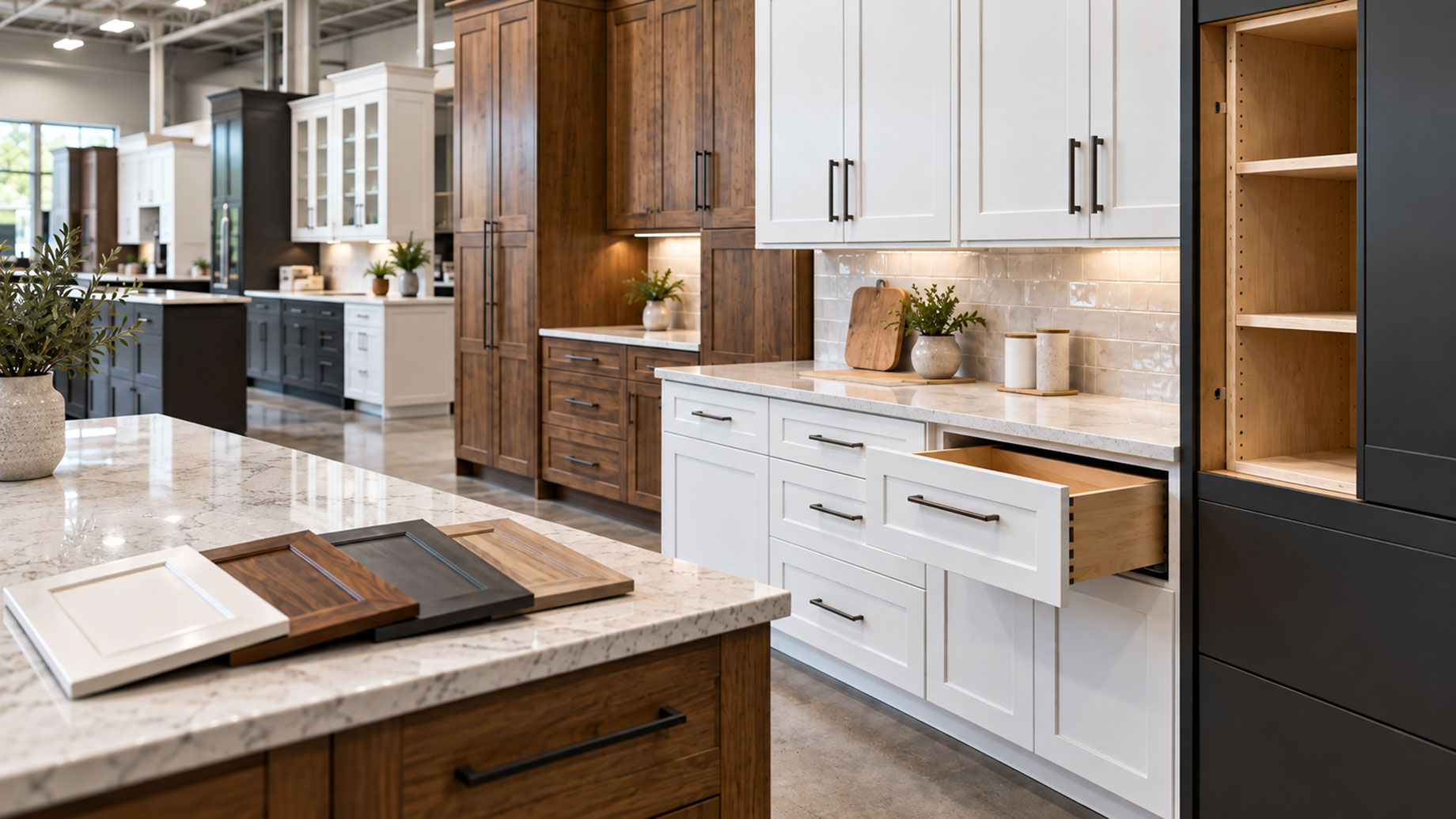
- Request Technical Specs: Do not settle for "durable." Ask for the thickness of the plywood boxes, the type of joinery used (e.g., dovetail drawer boxes are a hallmark of quality), and the brand of the hardware.
- Evaluate the Warranty: A warranty is a testament to the manufacturer’s confidence in their product. A reputable wholesaler will provide a transparent, written warranty that covers finish, structural integrity, and hardware.
- Inspect Samples: If possible, visit the showroom to handle the samples. Open the drawers, test the soft-close mechanisms, and inspect the finish under varied lighting.
- Verify Lead Times: In the construction industry, time is money. Ask for firm, documented lead times. A low price is irrelevant if the product is backordered for three months.
Structural Considerations: Framed vs. Frameless Cabinets
A major decision point for wholesale buyers is the choice between framed and frameless construction.
Framed Cabinetry
Framed cabinets, common in traditional American kitchens, feature a face frame attached to the front of the cabinet box. This adds significant structural rigidity and allows for a variety of door-mounting options. They are a preferred choice for homeowners seeking a classic, timeless aesthetic.
Frameless (Full-Access) Cabinetry
Frameless cabinets, often referred to as European-style, lack a face frame. The doors attach directly to the sides of the cabinet box. This design maximizes interior storage space and provides a sleek, minimalist aesthetic. They are particularly popular in modern or contemporary designs where clean lines are a priority.
Choosing between the two should be dictated by the kitchen’s architectural layout and the desired design outcome. Neither is objectively superior; however, the quality of construction within these categories remains the ultimate decider of value.
Avoiding the "Penny-Wise, Pound-Foolish" Pitfall
Even the most experienced contractors and homeowners can fall into traps when shopping by price alone. Common mistakes include:
- Ignoring Hardware Quality: The hinges and glides are the parts of the cabinet that undergo the most wear. If a supplier saves money by using low-end hardware, the cabinet will fail prematurely.
- Overlooking Finish Processes: A high-quality finish is essential for the humid Florida climate. Ask about the finishing process—multi-step, UV-cured finishes are significantly more resilient than basic sprayed coatings.
- Failure to Plan for Installation: Many wholesale orders arrive "Ready-to-Assemble" (RTA). If you are not equipped to assemble them, ensure you have a professional installer lined up who is comfortable working with the specific brand of cabinetry you purchased.
Frequently Asked Questions
Is wholesale cabinet quality inherently lower than retail?
Absolutely not. The term "wholesale" refers to the business model and the distribution channel, not the material quality. A reputable wholesaler sources from the same manufacturing plants as high-end retailers. The difference is found in the absence of retail markup and the elimination of middle-men.
What is the average savings range?
While savings vary, buyers can typically expect to save 20% to 40% compared to retail showroom prices, particularly on larger orders. By eliminating the overhead of a retail storefront, wholesalers pass those margins directly to the customer.
Do wholesalers cater to individual homeowners?
Yes. While many wholesalers prioritize volume orders from builders and contractors, most are happy to work with individual homeowners. The key is to find a supplier that provides the same level of customer service to a single-kitchen project as they do to a large-scale development.
What should I ask before signing a contract?
Always inquire about the specific plywood grade, the type of drawer joinery, the warranty terms, and the inclusion of hardware. Furthermore, verify if the quote provided is "all-in" or if there are additional costs for shipping, handling, or assembly.
Final Thoughts: Securing Your Investment
The kitchen is the heart of the home, and cabinetry is its most significant investment. While the temptation to prioritize the lowest price is understandable, the long-term cost of replacing sub-par cabinets far outweighs any initial savings.
For residents and builders in the Jacksonville area, the path to a successful renovation lies in partnering with a transparent, quality-focused supplier. By prioritizing construction details, clear communication, and reputable manufacturing, you ensure that your project is not only visually stunning but structurally sound for years to come.
Companies like ProCraft Cabinetry exemplify the wholesale model by bridging the gap between professional-grade quality and accessible, factory-direct pricing. By offering both framed and frameless options, reinforced with high-quality plywood construction and durable hardware, such suppliers provide the stability that the Jacksonville market demands. As you embark on your project, remember that the goal is not just to buy cabinets—it is to invest in the longevity and value of your home.