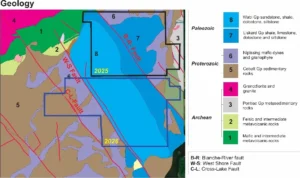

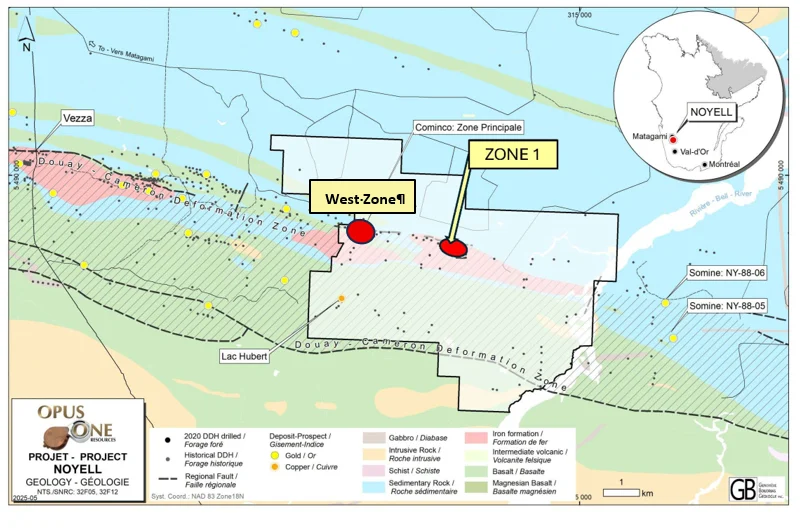
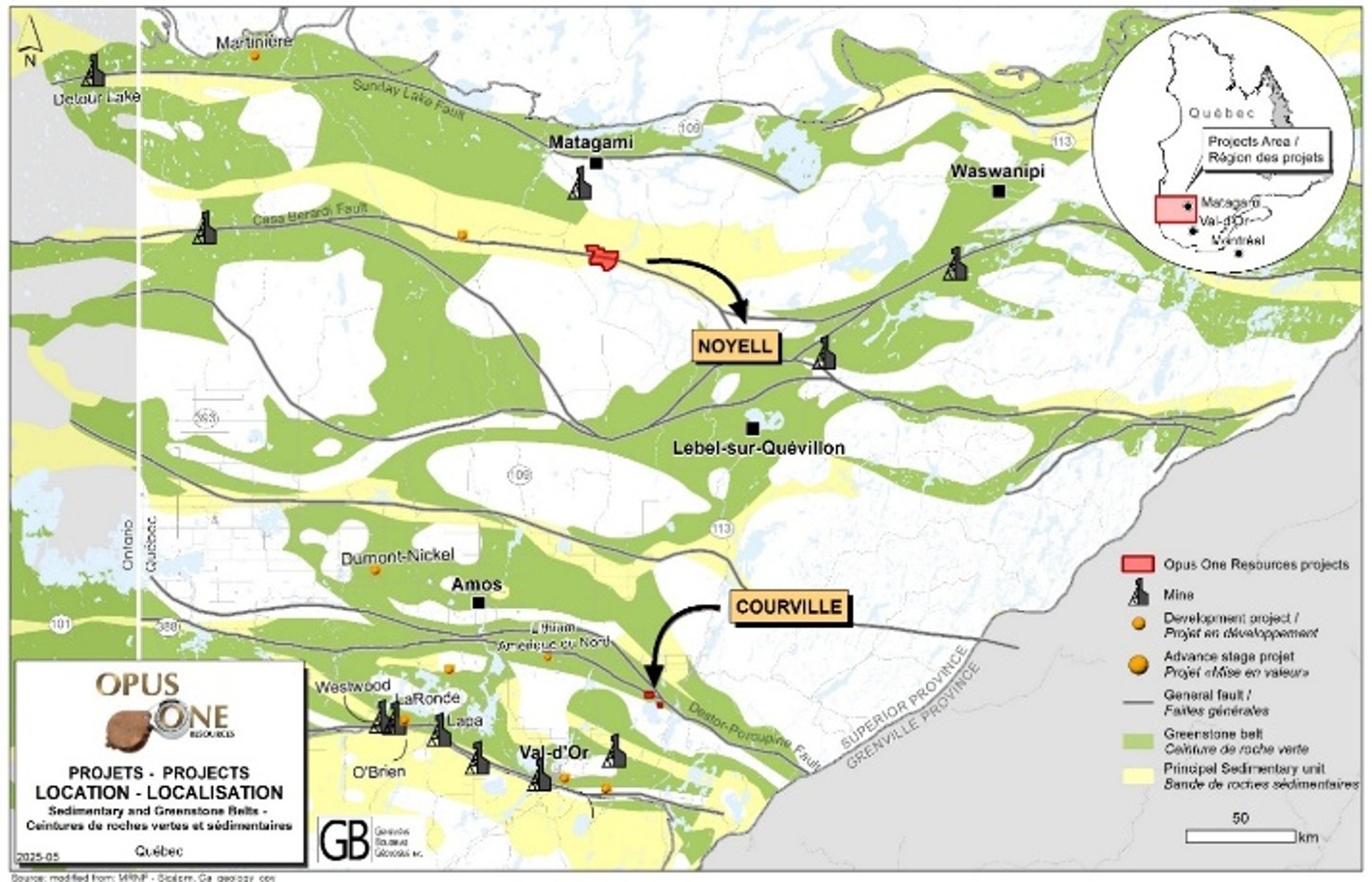
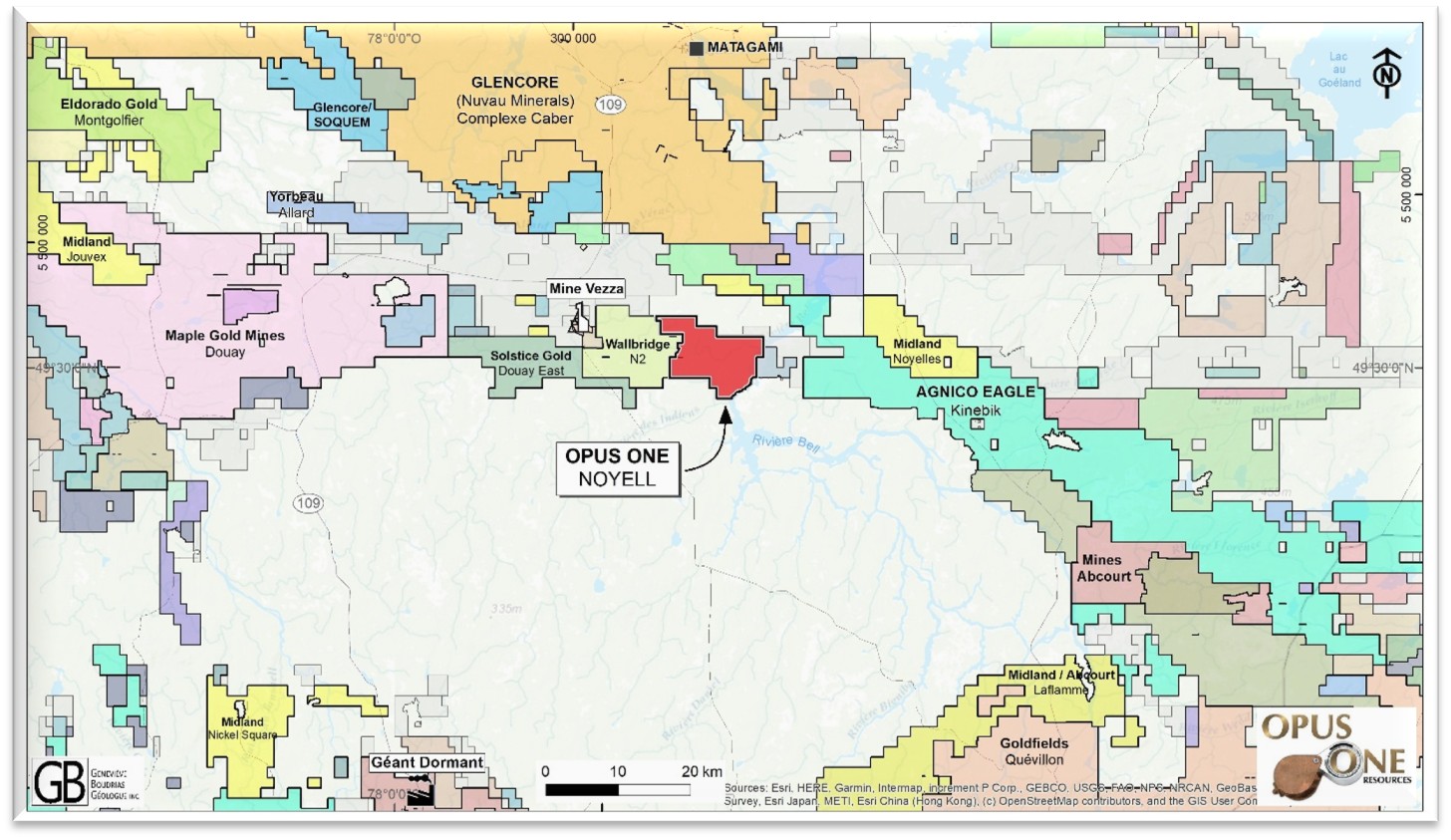
Opus One Gold Corp. (TSX-V: OOR) has officially concluded its 2026 drilling program at the 100%-owned Noyell Gold Property, located in the prolific Abitibi Greenstone Belt near Matagami, Quebec. The results of this campaign represent a transformative moment for the company, effectively extending the known vertical reach of the Zone 1 gold system and validating a secondary, high-potential exploration target at Zone West.
By successfully tracing the Zone 1 structure to a depth of 750 metres, Opus One has confirmed that the system remains open at depth, setting the stage for aggressive follow-up exploration. This report details the geological findings, the technical data underpinning these results, and the company’s strategic roadmap for the upcoming year.
Main Facts: A Deeper Understanding of the Noyell System
The 2026 drilling program was designed with two primary objectives: to test the vertical continuity of the established Zone 1 gold deposit and to initiate systematic exploration at the newly identified Zone West.
The most significant takeaway from the year’s activity is the confirmation that Zone 1 is a robust, continuous mineralized structure extending from the surface to at least 750 metres vertical depth. Unlike many projects that face structural pinch-outs or grade degradation at depth, the Noyell property has shown consistent geological strength.
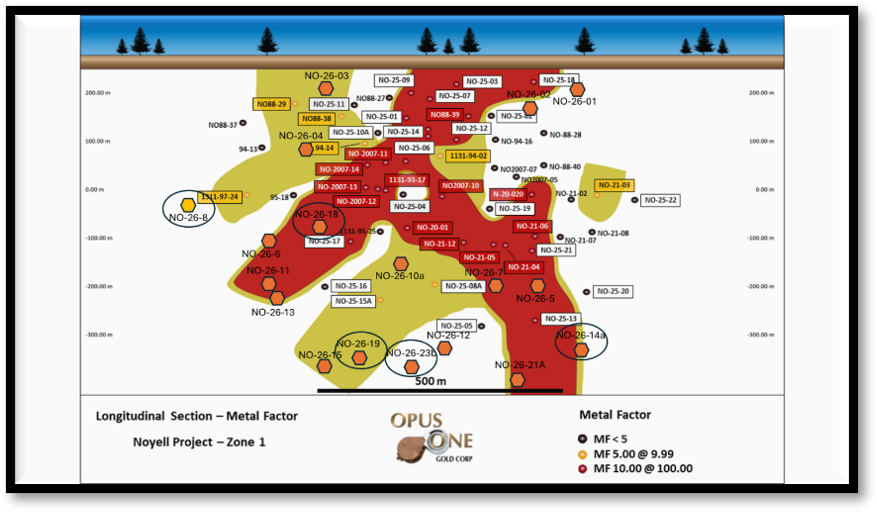
The eastern portion of Zone 1, in particular, has emerged as a high-priority "shoot" for further development. This area was highlighted by hole NO-26-21a, which yielded an impressive 4.92 g/t gold over 11.37 metres (9.08 metres true width) at a depth of 700 metres. When compared to shallower, high-grade hits—such as the 8.22 g/t gold over 8.5 metres reported earlier in the year—the geological team is confident that the system is not only deep but maintains its grade integrity.
Chronological Overview of the 2026 Campaign
The 2026 program was executed in phases, beginning with the evaluation of the western flank of Zone 1 and moving into deeper testing of the eastern core.
- Q1-Q2 2026: Initial drilling focused on testing the lateral and vertical extent of Zone 1. Results from early holes, including the high-grade intercept in NO-26-07, provided the company with the confidence to push deeper.
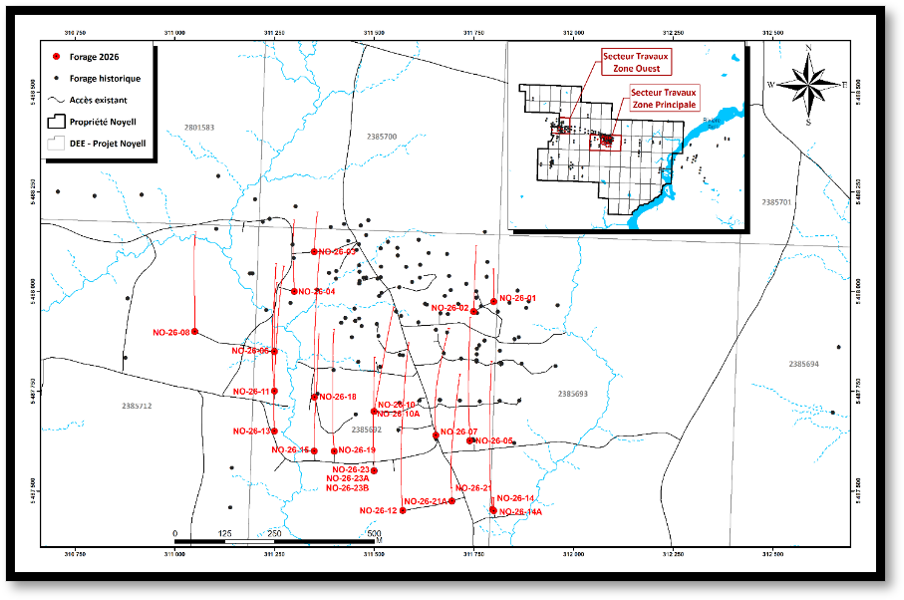
- Mid-2026: Exploration shifted 3 kilometres west to the "Zone West" prospect. A total of 1,467 metres of drilling across five holes confirmed gold mineralization over 800 metres of strike, marking this as a major secondary discovery.
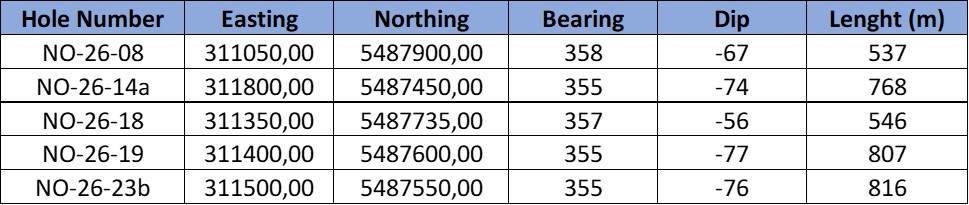
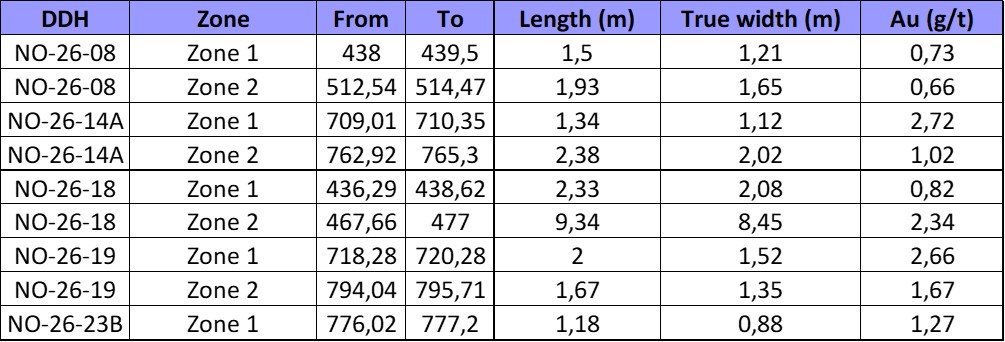
- Q3 2026 (Final Results): The final five holes of the program (NO-26-08, NO-26-14a, NO-26-18, NO-26-19, and NO-26-23b) were processed. While some holes provided clarity on where the mineralized trend does not continue (specifically in the western extension of Zone 1), the data proved instrumental in refining the structural model. Notably, hole NO-26-18 uncovered a surprising 2.34 g/t gold over 9.34 metres in Zone 2, a zone previously considered secondary, now necessitating further study.
Supporting Data and Technical Analysis
The rigor of the 2026 program is reflected in the technical precision of the final assay results. All drilling utilized NQ-sized core, with samples processed at the AGAT certified laboratory in Val d’Or.
The "Deep Vector" in Zone 1
The company’s focus is now heavily weighted toward the eastern shoot. The vertical continuity is best illustrated by the relationship between hole NO-26-07 and NO-26-21a. These holes, drilled on the same cross-section, prove that the high-grade gold mineralization persists through a 200-metre vertical interval. The persistence of these grades at 700+ metres depth significantly derisks the project, suggesting that the Noyell property possesses the structural architecture of a long-life gold asset.
The Emergence of Zone West
While Zone 1 is the flagship, the discovery at Zone West cannot be understated. The geological environment here is distinct, characterized by a mix of sheared sedimentary and volcanic rocks. With gold intercepted in all five exploratory holes, the company has identified a new 800-metre strike length that is virtually untouched below 300 metres.
Official Responses: CEO Perspectives
Louis Morin, President and CEO of Opus One Gold, expressed immense satisfaction with the data integration.
"The 2026 program has materially advanced our understanding of Noyell," Morin stated. "A year ago, our drilling had identified Zone 1 to approximately 500 metres. We have now followed the mineralized structure down to 750 metres, and most importantly, it remains open. We believe we have identified the principal vector to be followed deeper."
Morin emphasized that the company’s strategy for the next phase of work is clear: "The objective is straightforward: follow the strongest portion of Zone 1 deeper while beginning to systematically define the scale and potential of Zone West. We now have two distinct areas at Noyell where additional drilling can expand our mineralized footprint."
Strategic Implications: Looking Toward 2027
The integration of the 2026 drill database is currently underway. The geological team, led by a focus on structural interpretation, is looking to answer three key questions before the next drill mobilization:
- Shoot Geometry: Can the eastern high-grade shoot be defined with higher precision to optimize future drill targeting?
- Zone 2 Potential: Does the unexpected 2.34 g/t intercept in hole NO-26-18 represent a localized anomaly or a significant new mineralized shoot within the broader Zone 2?
- Zone West Expansion: How does the structural package in the western sector connect with the broader Abitibi geological trends, and how deep does the mineralization truly extend?
Why This Matters for Investors
For shareholders and market observers, the 2026 campaign represents a de-risking of the Noyell Property. By moving from "discovery" to "definition," Opus One is transitioning into a phase where the scale of the asset can be better quantified.
The Abitibi Greenstone Belt is world-renowned for its high-grade gold deposits. The ability of a junior explorer to confirm consistent, deep-seated mineralization suggests that the Noyell property is not merely a surface showing but a substantial system.
QA/QC and Professional Governance
To maintain the highest standards of transparency, Opus One implemented a rigorous QA/QC program. For every nine regular samples, one control sample—consisting of a certified blank or material of known gold grade—was inserted. All data has been reviewed and approved by Pierre O’Dowd, P.Geo, an independent qualified person under NI 43-101.
The company’s commitment to professional data management ensures that as the project advances toward potential resource estimation, the historical data remains robust and defensible.
Final Thoughts
As Opus One Gold Corp. moves into the next chapter of the Noyell Property’s development, the combination of a proven, deep-reaching gold system and a fresh, promising secondary zone positions the company well within the competitive landscape of the Abitibi region. With a clear technical roadmap and a validated geological model, Opus One appears well-prepared to execute its mission of unlocking the full value of its Quebec-based assets.
Disclaimer: This article is for informational purposes only and does not constitute financial advice. Investors should conduct their own due diligence and consult with professional advisors before making any investment decisions. The information provided is based on public disclosures by Opus One Gold Corp. and may be subject to future revisions.