
In the cavernous, industrial expanse of the Brooklyn Storehouse, a space that typically echoes with the grit of the Brooklyn Navy Yard, Catherine Holstein orchestrated a quiet revolution. For her Spring collection, the creative force behind Khaite—a brand that has defined the "stealth wealth" and "New York cool" aesthetic for the better part of a decade—stepped away from the oversized, structural silhouettes that catapulted her to international stardom. Instead, she invited the fashion world into a realm of extreme intimacy, delicate handwork, and unabashed romance.
"Everybody who knows me was saying, ‘This is actually the most you collection,’" Holstein remarked backstage, her demeanor reflecting the lightness of the clothes that had just graced the runway. If previous seasons saw Holstein flirting with softness, this latest iteration was a full-throttle dive into the feminine, marked by an obsession with the mechanics of dressmaking and a nostalgic nod to the silhouettes of the 1920s through the 1940s.
The Chronology of the Show: A Study in Sensuality
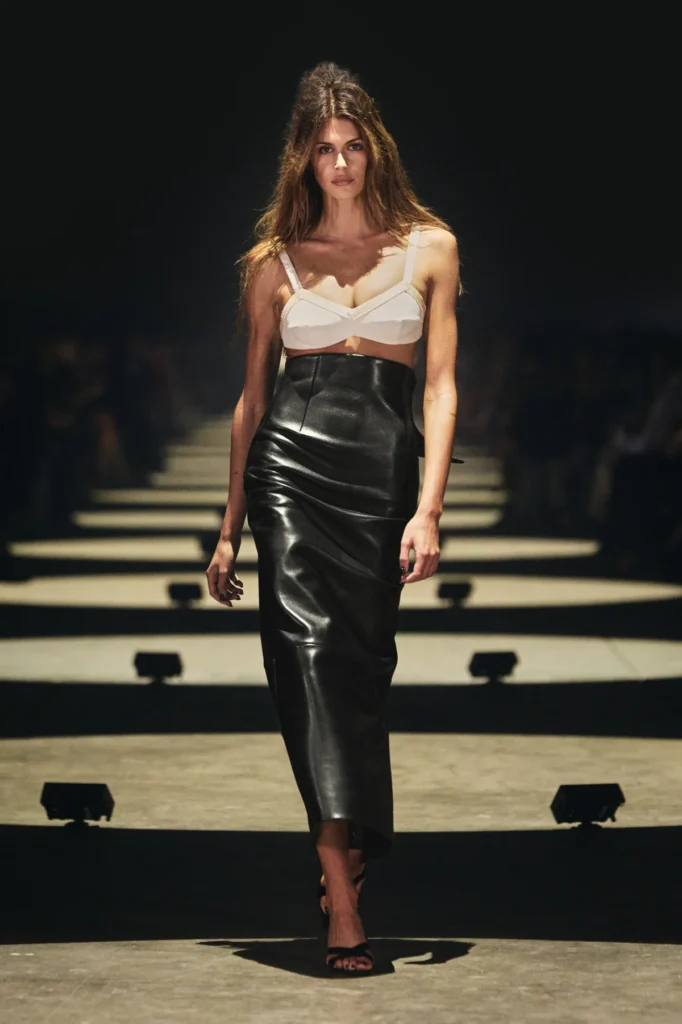
The show opened with a striking statement of intent. Supermodel Kaia Gerber emerged in a crisp, white bra paired with an ultra-high-waisted, impeccably tailored leather skirt. The garment, which featured a sharp back waist split, served as a masterclass in construction; it revealed the intricate, handmade corsetry tucked beneath the surface—a detail that, while invisible to the casual observer, defined the garment’s structural integrity.
As the show progressed, the narrative shifted from the structured to the ethereal. Models with exaggerated, teased "bedhead" hair drifted down the runway, their styling evoking the private, vulnerable moments of undressing. Minidresses appeared to slip off shoulders; nighties-meet-slips clung to the body as if caught mid-motion. The atmosphere was one of quiet ceremony—the daily ritual of getting dressed, elevated to a high art form.
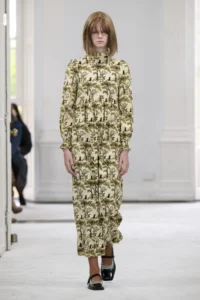
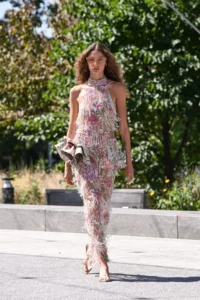
The collection’s evolution was rhythmic. It moved from the rigidity of leather—shrunken, sharp, and commanding—to the fluidity of sheer button-ups and flounced skirts. Crinoline, often a hidden element of couture, was brought to the forefront, repurposed as delicate belts that cinched floral, hand-embroidered dresses. The contrast was deliberate: the raw, industrial backdrop of the Brooklyn Navy Yard served as the perfect foil for the fragile, intricate beauty of the clothing.
Supporting Data: The Anatomy of a Garment
For Holstein, this collection was not merely an exercise in style; it was a "labor of love." The creative process for Spring was an inverted one: the silhouette was the final consideration, not the first.
"I’m very passionate about making beautiful things and making clothing and handwork," Holstein explained, pointing to the hidden craftsmanship in the pieces. "I wanted all these special moments that you didn’t even see, but once you open up the clothing, everything is finished by hand, everything."
The sheer volume of labor required for this collection sets it apart in an era of rapid-fire fashion production. Many hours were poured into individual garments, with a focus on interior finishings that would satisfy the most discerning of couture clients. This "inside-out" approach resulted in a collection that rewards the wearer’s curiosity.
The aesthetic influences were equally deep-seated. The airy robe de style-esque dresses, adorned with delicate bib embroideries, were born from memories of the Gritti Palace in Venice. Holstein, who frequents the location with her husband, found herself drawn to the city’s inherent dichotomy—a place where the weight of history meets the cutting-edge of contemporary art. That tension between the old world and the new, the structural and the soft, provided the collection with its intellectual backbone.
The Shift: Moving Away from the Oversized
Perhaps the most significant development in the Khaite Spring collection is the pivot away from the "oversized" trend that has dominated global fashion for years. Holstein, who has spent the last four years balancing the demands of motherhood with the rigors of running a high-fashion house, noted that her personal relationship with clothing has fundamentally changed.
"I am such a romantic at heart," she shared. "It’s also the way I dress too. I think because I’ve had babies for the last four years, I’ve been grabbing whatever and not thinking about it again. Now that I’m over that period and my body is finally going back, I was finding I wanted to shrink silhouettes a lot more."
For a brand that has been a leading proponent of the boxy, cool, and effortless oversized coat or jacket, this move toward "shrunken" proportions is a bold departure. The leather jackets in the new collection, while still commanding, feature exaggerated, high shoulders that hug the frame rather than swallowing it. This "anti-oversize" look represents a return to the body—a celebration of form that feels both timely and refreshing.
Official Responses and Industry Implications
The industry response to the collection has been one of reverence, particularly regarding Holstein’s decision to prioritize craftsmanship over sheer spectacle. By focusing on the "ceremony of getting dressed," Holstein has signaled a broader shift in luxury fashion: a move toward "quiet" luxury that isn’t just about high-quality materials, but about the hidden labor that makes a garment feel truly bespoke.
Critics noted that the collection serves as a stabilizer for the brand. In an market currently obsessed with logomania and viral moments, Khaite remains committed to a narrative of substance. The implications for the brand’s future are clear: Khaite is positioning itself not just as a label for the "cool girl," but as a house of construction and technical excellence.
Furthermore, the collection highlights a growing fatigue with the "baggy" aesthetic. By moving toward lingerie-inspired silhouettes and tighter, more precise tailoring, Holstein is likely setting a trend that will ripple through the luxury sector for the next several seasons.
The Philosophy of the Modern Romantic
Ultimately, the Spring collection is a mirror of its creator. It is a dialogue between the practical demands of modern life and the enduring, romantic impulses of the human spirit. The decision to move away from the safety of the oversized silhouette is a vulnerability in itself—an admission that, like the women who wear her clothes, the designer is in a state of constant transition.
As the lights dimmed at the Brooklyn Storehouse, the message was clear: the future of fashion lies in the details. By focusing on the hand-stitched corsetry, the precise placement of crinoline, and the intentionality of every seam, Catherine Holstein has created a collection that does not need to shout to be heard. It is a collection that demands a closer look—not because it is loud, but because it is beautiful, finished, and deeply, authentically human.
For Khaite, this is not just another seasonal offering; it is a declaration of maturity. It is the work of a designer who has found her voice and is no longer afraid to lean into the intimacy of her own perspective. Whether through the Venice-inspired embroidery or the sharp, shoulder-focused leather, the collection serves as a reminder that the most radical act in fashion today might just be the quietest one: the pursuit of perfection, one stitch at a time.