
In the hyper-kinetic world of venture capital, where "thought leadership" is often measured by Twitter follower counts and podcast appearances, Deven Parekh stands as a deliberate outlier. As a managing director at Insight Partners—a heavyweight firm overseeing $90 billion in assets—Parekh has spent 26 years cultivating a strategy that prioritizes performance over publicity. While the industry’s loudest voices chase trends in real-time, Insight Partners has quietly built a formidable portfolio, including stakes in the vanguard of the artificial intelligence revolution: OpenAI and Anthropic.
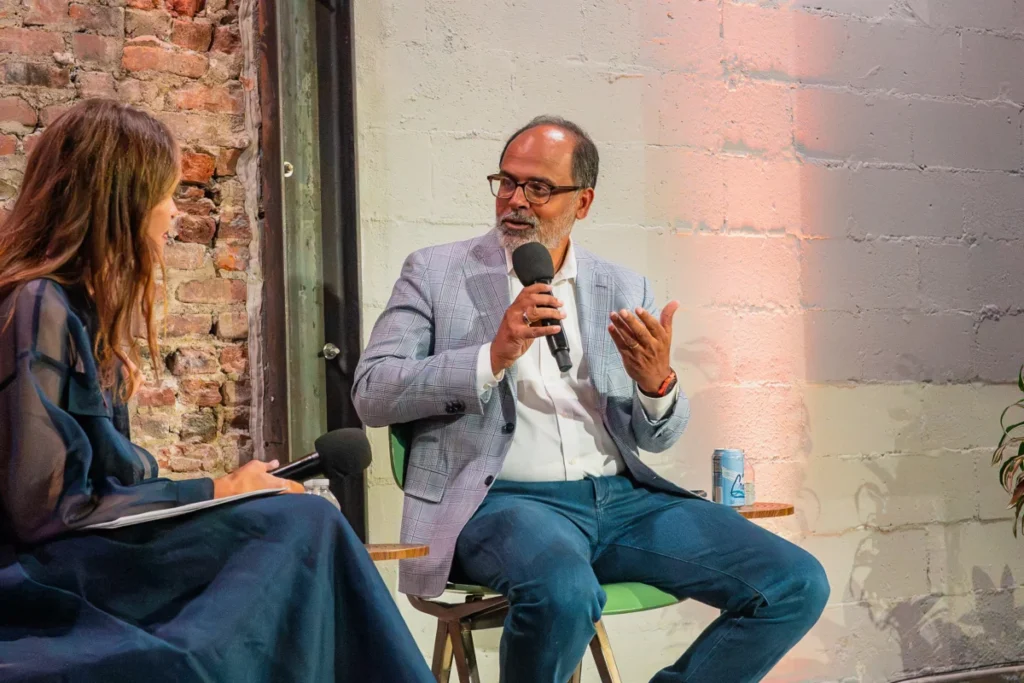
In a candid, wide-ranging discussion at TechCrunch’s StrictlyVC event in New York, Parekh offered a rare window into the firm’s philosophy, its stance on AI existential risk, and the sobering reality of market cycles in the post-2021 era.
The AI Paradox: Risk, Reward, and Reality
The tech industry is currently grappling with a growing divide regarding the trajectory of artificial intelligence. Following the high-profile resignation of an Anthropic researcher who warned of the dangers of self-improving AI, the debate over "AI safety" has reached a fever pitch.
Parekh, however, maintains a pragmatic, long-term outlook. "Sure, there’s a risk some non-state actor gets access to an open-source model and creates a biological weapon," he acknowledged. "But there’s an even higher probability we get a massive decrease in the time it takes to develop new drugs and cure diseases. I’ll take that bet."
Drawing on his experience as a board member for NYU Langone, Parekh pointed to the tangible, immediate benefits of AI in healthcare. He noted that the ability to process 50 million patient records to predict life-threatening conditions like heart attacks demonstrates the "net-net" positive impact of the technology. For Parekh, the risks associated with AI—much like the advent of drone warfare or previous technological shifts—are manageable, provided the focus remains on the societal benefits, such as scaling medical care for an aging global population.
Strategy and Discipline: Why Insight Stays Quiet
With $90 billion under management, Insight Partners is one of the world’s most influential investors, yet it remains conspicuously absent from the noise-heavy discourse of modern VC. For Parekh, this is entirely intentional.
"Every venture capitalist thinks they’re an expert on everything now—epidemiology during COVID, geopolitics during the Iran war," Parekh noted. "Our attitude has been: Let the portfolio do the talking. We have to communicate enough that people know who we are, but our performance should speak for itself."
This restraint extends to the firm’s investment strategy. Eschewing the trend of "fixed" allocation, Insight remains fluid, adjusting its exposure to early-stage, growth, and buyout opportunities based on the temporal realities of the market. "Buyouts aren’t great right now—rates are high, debt markets aren’t receptive to software, and exit multiples have come down," he explained. Consequently, the firm hasn’t executed a major buyout since 2024, shifting its focus toward smaller, earlier-stage bets where it can nurture winners like Wiz—a company where the firm began with a Series A check and scaled its investment as the company proved its worth.
The Geography of Talent and the "Legora" Lesson
While globalization has leveled the playing field for much of the software industry, Parekh admits that the "AI infrastructure" sector remains stubbornly concentrated in San Francisco.
"My 23-year-old son, also a VC, is moving there because he says you can’t invest in AI without being there," Parekh shared. However, he noted that the geography of investment depends on the vertical. Financial services talent remains anchored in New York, allowing for a more geographically diverse approach to "vertical AI."
The firm is not infallible, as evidenced by its pursuit of the AI legal-tech firm Legora. Despite partner Jeff Horing flying to Stockholm to personally pitch the founder, Insight ultimately lost the deal to General Catalyst. Parekh was refreshingly blunt about the outcome: "I don’t know the specific reason, but I think they sold their value proposition better than we sold ours that time. It’s a big world; we don’t need to win every deal."
The Concentration Risk: Why Diversification Still Rules
As OpenAI and Anthropic continue to command a massive share of total VC funding, the industry is increasingly concerned about concentration risk. Parekh remains skeptical of funds that stake their entire existence on a single high-profile winner.
"I’m an LP in other funds, and I know two funds right now—raising their entire fund in a month—whose pitch is literally, ‘35% to 40% of this fund is going into one of those two companies,’" Parekh said. He argues that while those companies may succeed, historical data overwhelmingly rewards diversification over a long time horizon. Insight’s approach is to think in terms of "ten funds, not one."
This discipline extends to the firm’s relationship with competitive investments. While once considered a "taboo" in venture capital, holding stakes in both OpenAI and Anthropic has become a necessity for large-scale investors. As these companies require massive capital infusions—$30 billion to $100 billion—they have outgrown the ability to demand investor exclusivity.
The Liquidity Mandate: Returning Cash to LPs
Perhaps the most critical takeaway from the interview was Parekh’s emphasis on liquidity. He criticized the modern trend of funds raising massive amounts of capital without returning any of it to Limited Partners (LPs).
"The bigger issue is a lot of funds raised a lot of money and haven’t returned any of it to LPs," he noted. "Many first- and second-time funds won’t raise a next fund because they didn’t prioritize liquidity."
Parekh emphasized that "DPI" (Distributed to Paid-In Capital) is the ultimate metric of success. Over the past two years, Insight has returned more than $20 billion to its LPs through strategic sales and IPOs. He advises founders to consider de-risking, even if they believe their company’s value will continue to climb. "You don’t have to sell everything; de-risk 10 or 20%," he suggested. "You can’t compound $40 billion at 50% every two months for two years without becoming the world economy. That math doesn’t work."
Future Outlook: The IPO Wave
As the industry looks ahead, Parekh anticipates a significant shift in public market activity. With heavyweights like SpaceX, Anthropic, and OpenAI potentially heading toward public listings within the next 18 months, the landscape for "growth" companies will fundamentally change.
"The real question is when the next tier of companies goes public, and what bar that sets," Parekh said. He warns that when public investors witness companies ballooning to $65 billion in just four years, the standard for what constitutes an "exciting" growth company will be reset.
Conclusion: The Long Game
As Insight Partners continues to navigate the complexities of AI, high interest rates, and the evolving expectations of LPs, its strategy remains anchored in a simple, if difficult, truth: performance is not a sprint. By avoiding the pitfalls of over-concentration, prioritizing liquidity for LPs, and maintaining a disciplined, non-dogmatic approach to market cycles, Parekh and his team are betting that the quiet approach will continue to outlast the loudest hype cycles.
For founders and investors alike, Parekh’s message is clear: the market will correct, the hype will dissipate, and those who have focused on building sustainable value—and providing returns to their backers—will be the ones left standing.