On the morning of December 4, 2024, the streets of Manhattan became the stage for one of the most surreal and violent episodes in recent American history. Outside the midtown hotel hosting the annual investor conference for UnitedHealth Group, a masked assailant approached CEO Brian Thompson. In a calculated, clinical display of violence captured on high-definition surveillance footage, the shooter ended Thompson’s life before disappearing into the urban sprawl on a Citi Bike.
The ensuing flight of the suspect, Luigi Mangione, would eventually lead to a quiet capture in Pennsylvania, facilitated by a fast-food employee whose subsequent internet infamy highlighted the bizarre, decentralized nature of modern justice. Yet, the physical act of the assassination was only the beginning. As the story unfolded, it triggered a seismic shift in the American digital psyche—a collision of systemic resentment toward the healthcare industry, dark, nihilistic humor, and an unprecedented heroization of an accused killer.
The Anatomy of an Incident: A Chronology of the Hunt
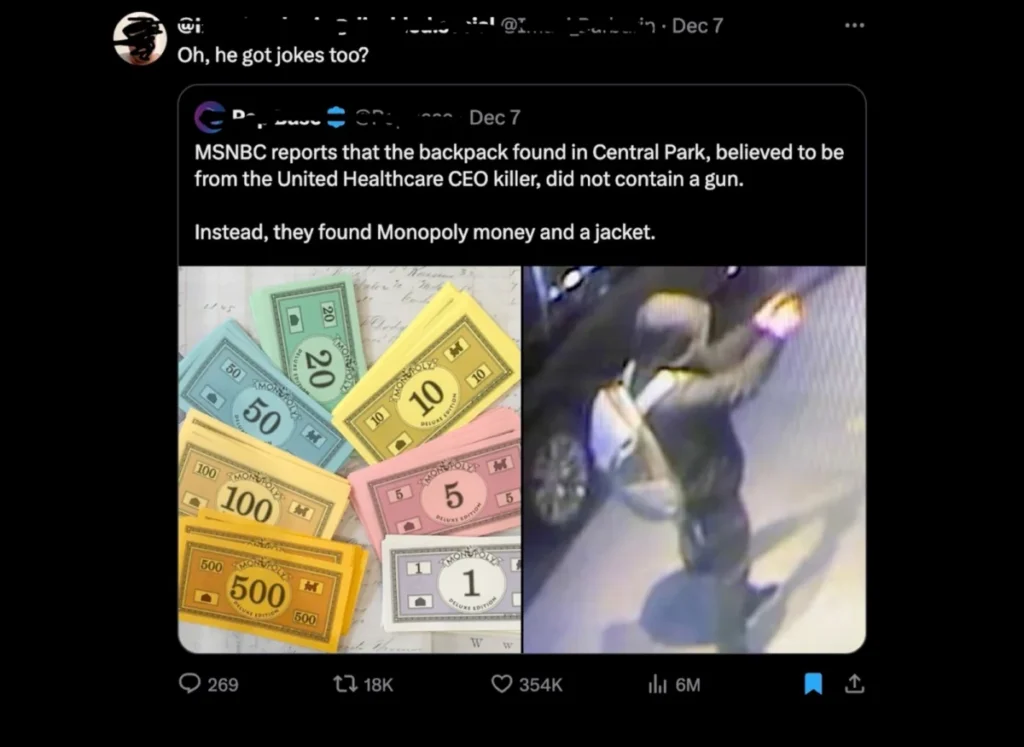
The investigation into the death of Brian Thompson moved with the frantic pace of a 21st-century true-crime saga. Following the shooting, investigators found a backpack discarded in Central Park containing Monopoly money—a grim, theatrical calling card that served to underscore the shooter’s disdain for the corporate elite.
Mangione, whose distinct physical appearance and history of chronic pain from a spinal injury became central to his public narrative, eventually fled to Pennsylvania. His arrest was marked by a bizarre twist: a McDonald’s worker identified him, leading to his apprehension. The internet’s response was immediate and vitriolic; the employee was subjected to a barrage of one-star reviews from online observers who viewed the act of turning in the suspect as an affront to their own frustrations with the American medical system.
By August 14, 2026, Mangione had formally pleaded guilty to two federal charges of stalking, offering a chilling, concise admission: "I shot Mr. Thompson in Manhattan, and he died." A federal trial, which promises to be a focal point for debates on corporate accountability, is scheduled for January 2027.

Deny, Defend, Depose: Art as an Archive of Rage
Among those observing the digital wildfire was Los Angeles-based filmmaker and artist Stanya Kahn. As the news broke, Kahn began an intensive process of documentation, screen-grabbing the rapid-fire, often ephemeral commentary erupting across social media platforms. The result is her latest video installation, Deny, Defend, Depose (2026).
The 30-minute film serves as an archival autopsy of the public response to the assassination. The title is drawn from the phrases scratched into the bullet casings recovered from the scene—a direct, linguistic attack on the insurance industry’s bureaucratic mechanisms of denying care to prioritize profitability.
The film begins with the stark, original surveillance footage of the shooting, before transitioning into a relentless, rhythmic stream of social media posts. To maintain the privacy of the commentators, Kahn utilizes a digital pen tool to obscure names and avatars, creating a haunting, anonymous chorus of the American public. The visual feed is set to a pulsating acid/jungle soundtrack featuring contributions from Acid Arab, Baseck, Caterina Barbieri, and others, effectively mirroring the chaotic, high-stress atmosphere of the internet in the immediate wake of the crime.
The Unlikely Folk Hero: Psychological Implications
Why did an accused assassin garner such fervent support from segments of the public? According to Kahn, the phenomenon was less about the individual and more about the symbolic weight he carried.
"If he had killed children, no one would have said, ‘He’s got good bone structure,’" Kahn noted in an interview with ARTnews. "He became an outlet for political frustration."

The sexualization of Mangione—his "hotness" becoming a meme—was a political performance. By projecting desire onto the man who ended the life of a high-ranking corporate executive, the public was expressing a deep-seated, systemic rejection of the status quo. The fact that the murder weapon was a 3D-printed euthanasia pistol—a tool originally designed for livestock—only added a layer of grotesque, industrial irony to the narrative.
Kahn’s work underscores the role of "humor as a gateway." In her view, the jokes circulating online were not merely signs of desensitization, but a coping mechanism for a population feeling increasingly marginalized by the "cavernous gap" between the one percent and the remaining 99 percent.
The Intersection of Art and Activism
Kahn’s approach to the project has been intentionally grassroots. During the premiere at the Los Angeles non-profit Human Resources, the artist sold T-shirts featuring the project’s title. In a move that aligns the artistic endeavor with the cause of the disaffected, all proceeds from ticket and merchandise sales are being donated to GoFundMe campaigns established to help individuals struggling with healthcare costs.
The project is slated for further screenings in September and October, with the artist currently exploring options to bring the work to New York. For Kahn, who has previously explored themes of the "wasteland of images" in works like No Go Backs, this project is her most visceral engagement with contemporary civilization to date.
Official Responses and Systemic Realities
While the public response has been one of dark catharsis, the corporate and legal sectors have remained focused on the cold realities of the criminal justice process. The assassination has prompted renewed scrutiny of the "UnitedHealth" model and the broader insurance industry, though official corporate statements have largely focused on mourning the loss of a leader and ensuring the safety of personnel.

The legal proceedings, meanwhile, are set to continue well into 2027. The federal trial of Luigi Mangione will likely be a lightning rod, forcing the courts to balance the gravity of the assassination against the cultural backdrop of a nation where systemic failures in healthcare have created a climate of extreme volatility.
Conclusion: The Mirror of the Screen
As we look toward the 2027 trial, Deny, Defend, Depose serves as a crucial artifact of this period. It asks difficult questions about the nature of empathy in the digital age. When violence becomes a viral sensation, and a suspect is transformed into a folk hero, the boundary between political critique and moral decay becomes dangerously thin.
Stanya Kahn’s work does not necessarily offer answers, but it provides a space for reflection. Through her lens, the assassination of Brian Thompson is not just a murder; it is a manifestation of a society that has reached a breaking point. As one viewer noted after a screening, "It’s the piece we need to see right now." Whether that need stems from a desire for justice or a grim fascination with our own societal collapse remains the central, haunting question of our time.