The global art market continues to demonstrate a complex interplay of institutional recognition, strategic commercial expansion, and high-value secondary market activity. From the inclusion of marginalized voices in mega-gallery rosters to the continued migration of blue-chip dealers toward burgeoning regional hubs like West Palm Beach, the industry is currently navigating a period of significant recalibration. Recent announcements regarding major representation shifts, significant auction estimates, and the rise of "market darlings" underscore a landscape that is both rewarding established legacies and aggressively betting on the energy of youth.
Main Facts: A Season of High-Profile Transitions
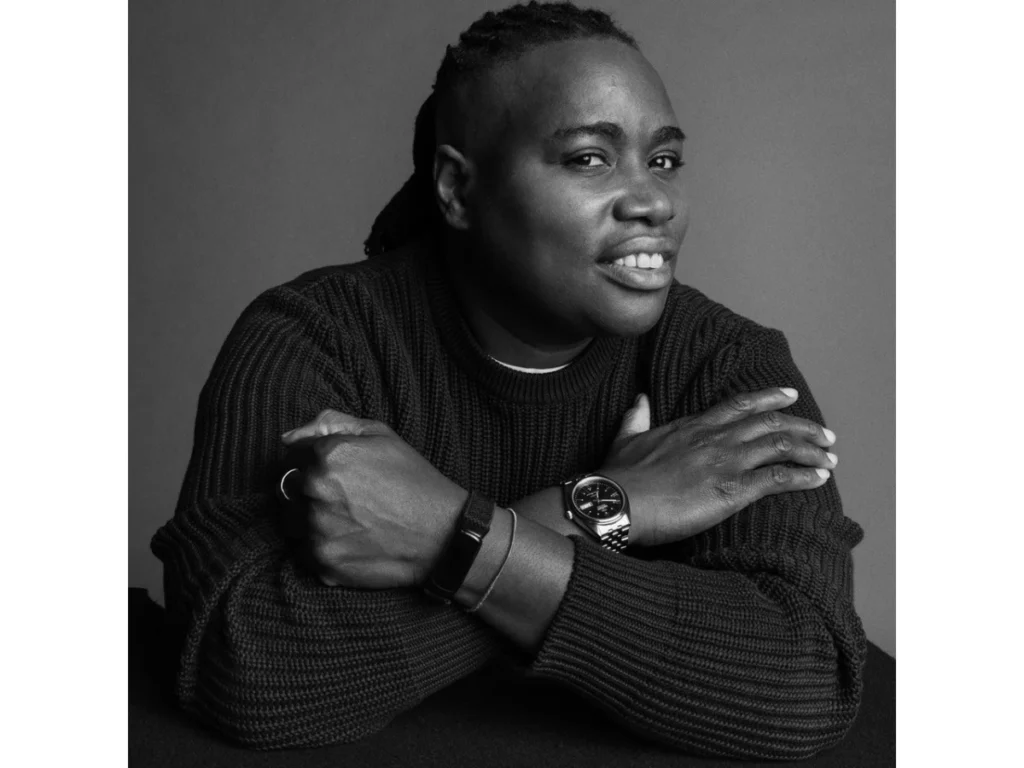
The autumn art season has been marked by a series of high-stakes industry moves that signal shifting power dynamics within the gallery ecosystem. Perhaps most notable is the announcement that Leilah Babirye, the Ugandan-born sculptor whose work has become a cornerstone of contemporary dialogues on queer identity and African heritage, has joined Salon 94. This move, executed in partnership with Gordon Robichaux and Galerie Max Hetzler, places Babirye within the orbit of one of New York’s most influential contemporary art platforms just as her institutional profile reaches its zenith.
Simultaneously, the commercial footprint of major dealers is expanding geographically. Eric Firestone, a dealer synonymous with the rediscovery of post-war American artists, has announced his fifth location, this time in West Palm Beach, Florida. This expansion follows a broader trend of galleries following their collector base to the Sun Belt, moving beyond the traditional seasonal "pop-up" model toward permanent, year-round operations.
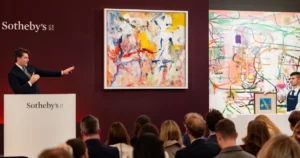
In the secondary market, the upcoming sale of the Peter Simon collection at Christie’s London is poised to be a bellwether for the health of the high-end auction sector. With a high estimate of $172 million across nearly 200 lots, the sale features blue-chip staples including Francis Bacon, Piet Mondrian, and Barbara Hepworth. This auction arrives at a time when the market is seeking stability through proven historical value.
Furthermore, the "market darling" phenomenon remains a central topic of debate, epitomized by the meteoric rise of 32-year-old London-based painter George Rouy. As he prepares for his first New York solo exhibition with Hauser & Wirth, the industry is closely watching whether his rapid ascent from obscurity to mega-gallery representation is a sustainable trajectory or a symptom of a speculative market.
Chronology of Developments: From Emerging Recognition to Institutional Power
The current momentum behind these artists and galleries is the result of years of strategic development.
The Ascent of Leilah Babirye
Leilah Babirye’s career trajectory is a testament to the power of institutional support. Her work, which utilizes ceramic, wood, and found objects to explore the concept of a "queer underground" in the face of political persecution, has gained rapid traction. In 2024 alone, she was featured in the Venice Biennale and is currently the subject of a major survey at the Institute of Contemporary Arts (ICA) Boston. Her addition to Salon 94’s roster represents the final step in her transition from a celebrated niche artist to a global contemporary powerhouse.
Thảo Nguyên Phan and the Global Reach of Kiang Malingue
The representation of Thảo Nguyên Phan by Kiang Malingue further illustrates the market’s deepening interest in Southeast Asian narratives. Phan, based in Ho Chi Minh City, has spent the last decade building a body of work that deconstructs Vietnam’s colonial history and environmental challenges. Her career reached a turning point in 2018 when she won the Han Nefkens Foundation – Loop Barcelona Video Art Award and participated in the Rolex Mentor and Protégé initiative under the tutelage of legendary artist Joan Jonas. Her new representation signals a concerted effort by galleries to bridge the gap between regional excellence and international commercial visibility.
The Rise of George Rouy
George Rouy’s timeline is particularly compressed. Just a decade ago, Rouy was largely unknown. By 2023, he had set an auction record at Christie’s London of approximately $195,619. In 2024, Hauser & Wirth—one of the world’s "big four" galleries—announced his representation. At 32, he is one of the youngest artists on their roster, having already completed solo shows in London and Los Angeles. His upcoming New York debut is the culmination of a three-year period of intense market acceleration.
Supporting Data: The Economics of the Move
The scale of these industry shifts is best understood through the financial and logistical data accompanying them.
- The Simon Collection ($172 Million): The Peter Simon collection, spread across three sales at Christie’s, is anchored by Francis Bacon’s Figure in Movement (1978). Estimated at £14 million to £18 million ($19 million–$24.4 million), this single lot represents the enduring premium placed on late-period Bacon works. The collection also includes works by Andy Warhol and Willem de Kooning, reinforcing the "Top 200 Collectors" status Simon has held since 2005.
- The Firestone Footprint: Eric Firestone’s move to West Palm Beach marks his fifth physical location. This expansion reflects the data-driven reality that high-net-worth individuals are increasingly spending significant portions of the year in Florida, a trend that accelerated during the pandemic and has shown no signs of reversing.
- George Rouy’s Auction Performance: Rouy’s 2023 record of $195,619 is significant not just for its amount, but for the speed at which his secondary market has matured. His works now routinely command six-figure sums, a rare feat for an artist in his early thirties.
- Institutional Grants: SculptureCenter’s "In Practice 2027" commissions for six artists (Jianxin Tian, Thomas Tait, Anastasia Sosunova, Ash Moniz, Max Popov, and Jessica Wilson) represent a critical, though smaller-scale, financial infusion into the experimental sector, ensuring a pipeline of new talent for the next decade.
Official Responses and Market Context
The responses from galleries and foundations highlight the strategic intent behind these moves.
Salon 94 and its partners, Gordon Robichaux and Galerie Max Hetzler, have emphasized a collaborative model for Leilah Babirye. This "partnership representation" is becoming increasingly common, allowing galleries to share the logistical and promotional costs of an artist whose career spans multiple continents.
In Chicago, Anthony Gallery has bolstered its leadership by hiring Sibylle Friche as a director. Friche’s pedigree—including tenures at Rhona Hoffman and a partnership at Document—brings a level of veteran experience to the gallery founded by Isimeme “Easy” Otabor. This move is seen as an attempt to professionalize and scale a gallery that sits at the intersection of contemporary art, fashion, and streetwear.
The Romare Bearden Foundation has chosen to honor Howardena Pindell with the Artistic Legacy Award. This recognition, according to the foundation, celebrates her "extraordinary career as an artist, educator, writer, and pioneering force." Pindell’s career, which has long blended rigorous abstraction with pointed social critique, is currently seeing a massive resurgence in both the primary and secondary markets as institutions seek to rectify historical omissions of Black female artists.
Regarding the meteoric rise of George Rouy, the artist himself has offered a candid perspective on the "market darling" label. Speaking to Curbed, Rouy stated, "I’m not naïve. I’m ready for it. I want to do it now while my body has the energy for it." This pragmatic approach suggests a new generation of artists who are acutely aware of the market’s "pump and dump" risks but choose to lean into the momentum of mega-gallery support.
Implications: Regional Shifts and the "Mega-Gallery" Effect
The current flurry of activity carries several long-term implications for the art world.
The Institutionalization of the "Market Darling"
The rapid absorption of artists like George Rouy and Leilah Babirye into mega-galleries suggests that the window between "emerging" and "blue-chip" is narrowing. While this provides artists with unprecedented resources early in their careers, it also places immense pressure on them to maintain a high level of production to satisfy global demand. The "mega-gallery effect" can cement an artist’s legacy, but it also risks commodifying their work before it has had the chance to evolve naturally.
West Palm Beach as a New Nexus
Eric Firestone’s expansion into West Palm Beach, located near the Norton Museum of Art, signifies the town’s evolution from a retirement enclave into a sophisticated cultural hub. As more galleries establish permanent roots there, West Palm Beach is positioned to rival Aspen and the Hamptons as a primary site for high-value transactions outside of New York and London.
The Resilience of the Estate and Collection Market
The $172 million estimate for the Peter Simon collection indicates that despite fluctuations in the contemporary "ultra-contemporary" sector, there remains a robust and hungry market for established 20th-century masters. Collectors are increasingly looking for "safe harbor" assets—works by artists like Bacon and Mondrian that have a proven track record of value retention.
A Focus on Identity and Legacy
The honors bestowed upon Howardena Pindell and the representation of Thảo Nguyên Phan reflect a broader industry mandate to diversify the canon. These moves are not merely philanthropic; they are market-driven responses to a collector base that is increasingly interested in narratives of colonial legacy, queer identity, and environmental justice.
In conclusion, the art market in late 2024 is defined by a dual-track strategy: the aggressive pursuit of young, high-energy talent and the calculated liquidation of blue-chip estates. As galleries expand their geographic reach and artists navigate the complexities of instant fame, the industry remains a volatile but vibrant mirror of global economic and social shifts.