PARIS — In the heart of the world’s fashion capital, the intersection of commerce and fine art has long been a storied, if sometimes tenuous, relationship. Yet, for Sophie Delafontaine, the artistic director of the iconic French leather goods house Longchamp, art is not merely an accessory to design—it is the very architecture of her creative process.
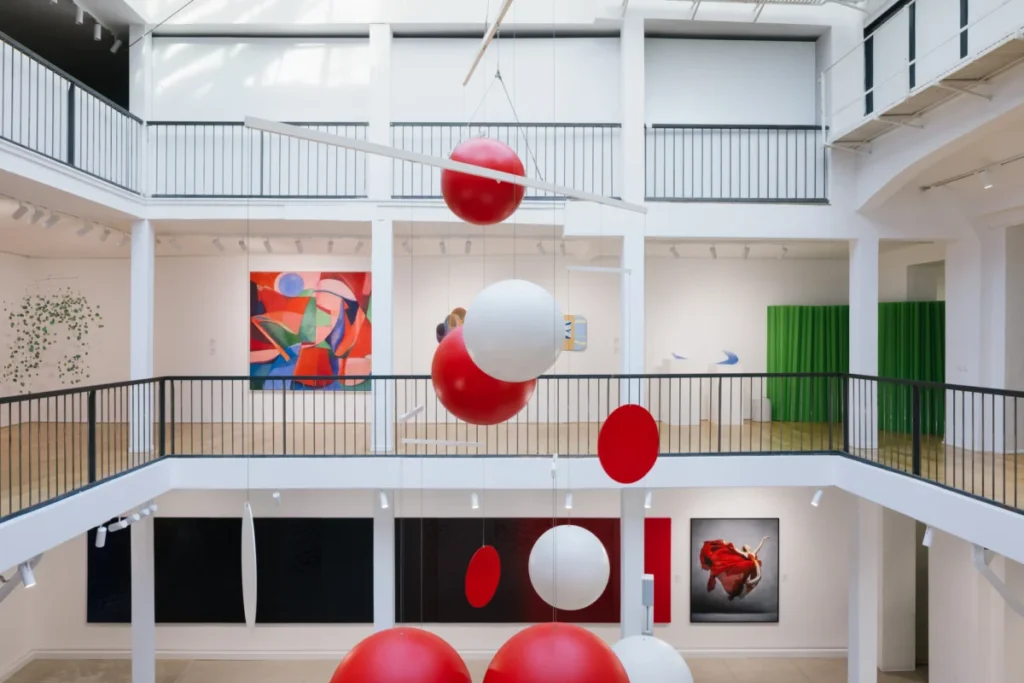
This philosophy culminated recently in the inaugural Longchamp Art Festival, a three-day, free-to-the-public cultural showcase in Paris that served as a profound testament to the brand’s enduring commitment to the creative arts. Bringing together nearly 30 international visionaries, the festival spanned a multidisciplinary spectrum of painting, sculpture, photography, music, and digital art, effectively transforming an all-white, minimalist Parisian venue into a kaleidoscopic immersion of human expression.
The Genesis of Inspiration: A Palette Rooted in Art
For Delafontaine, the genesis of every collection is a sensory exercise in color. During a panel discussion at the festival, she pulled back the curtain on her methodology.
“When I start the collection, I always start by the color palette,” Delafontaine revealed. “And honestly, often it is art that helps me to build that palette.”
This is not a recent pivot for the house. Longchamp, founded in 1948 by Delafontaine’s grandparents, has always been anchored in a family legacy that values craftsmanship alongside aesthetic curiosity. Together with her brother, Jean Cassegrain, the company’s CEO, Delafontaine maintains a constant, active engagement with the global art scene. The pair are frequent fixtures at international galleries, art fairs, and exhibitions, always scouting for talent whose vision aligns with the brand’s identity.
Chronology of a Cultural Connection
The relationship between Longchamp and the arts is not a marketing trend but a deep-seated tradition. The timeline of this engagement is a rich tapestry of collaborations that have defined the brand’s evolution:
- 1948: The foundation of Longchamp by the Cassegrain family, establishing a legacy that would later prioritize the marriage of leather craftsmanship and artistic vision.
- 1971: A pivotal moment for the house, marking its first formal artist collaboration with French painter Serge Mendjiski, who was commissioned to design a bag. This set the precedent for decades of creative partnerships.
- 2004: The brand collaborated with British contemporary artist Tracey Emin. This project was a watershed moment for the company’s technical capabilities; the complex nature of Emin’s patchwork designs required Longchamp to invest in entirely new machinery and manufacturing techniques.
- 2012: The brand released a high-profile campaign featuring supermodel Coco Rocha, directed by the acclaimed dancer and choreographer Blanca Li, bridging the worlds of high fashion and performance art.
- Recent Years: The company has continued to push boundaries, partnering with figures such as Sarah Morris, whose work required the house to work with specialized porcelain manufacturers to perfect the printing of her graphic patterns onto black leather.
- Present Day: The debut of the Longchamp Art Festival, organized in tandem with performing arts curator Olivier Bassuet, marks the brand’s most ambitious cultural project to date.
Supporting Data: The Anatomy of a Collaboration
The success of Longchamp’s artistic endeavors lies in the brand’s willingness to subordinate its manufacturing processes to the needs of the art. Delafontaine emphasizes that these collaborations are not merely aesthetic; they are educational.
“Each collaboration has increased our know-how,” she noted.

When working with Sarah Morris, the brand’s quest for fidelity to the artist’s vision necessitated a deviation from traditional leather-working techniques. By sourcing porcelain-printing methods and adapting them for the surface of black leather, Longchamp demonstrated that the "know-how" of the house is dynamic.
Furthermore, the brand’s approach to selecting collaborators is strikingly egalitarian. In an era obsessed with influencer statistics and social media follower counts, Delafontaine maintains a refreshing perspective. Regarding her recent work with Brussels-based textile artist Caroline Hélain, Delafontaine noted that Hélain was surprised to be approached by a global luxury house.
“No matter whether she’s well known or how many followers she has on Instagram, the only thing that mattered was that I really fell in love with her use of color,” Delafontaine said.
Official Perspectives: The Philosophy of the Abstract
During a recent conversation with Géraldine Sarratia, host of the Le Goût de M podcast by Le Monde, Delafontaine reflected on the symbiotic relationship between her personal taste and the direction of the company.
“I don’t know if it’s Longchamp which inspires my taste, or my taste which inspires Longchamp, but we are so linked that it’s a mix of everything,” she remarked.
Delafontaine describes her preferred aesthetic as “graphic, pure, abstract, and colorful.” She explains that she gravitates toward abstract art because it refuses to dictate a narrative, allowing the observer the freedom of personal interpretation. Pointing to a Xavier Veilhan mobile suspended above the festival audience, she noted, “You can imagine so many things looking at that, so it’s very inspiring.”
This desire for open-ended interpretation is reflected in the festival’s curation. By including works by Elias Crespin, Maya Hayuk, and Sarah Morris alongside live DJ sets and dance performances, the house created a space that was intentionally non-commercial in its immediate atmosphere.
The Broader Implications for Luxury
The Longchamp Art Festival represents a growing trend in the luxury sector: the "cultural gift." As consumers, particularly Gen Z and Millennials, increasingly seek value beyond the physical product, luxury houses are moving away from traditional retail-centric marketing.

1. The Shift to Experiential Luxury
By opening a free, three-day event to the public in Paris, Longchamp is signaling a transition from "luxury as possession" to "luxury as experience." The festival acts as a brand-building exercise that fosters community rather than just transactions.
2. Democratizing Access
The attendance of high-profile celebrities—including French actress Juliette Binoche, Zoey Deutch, and South Korean stars Jung So-min and Kim Se-jeong—at the opening party highlights the brand’s global appeal. However, by making the event free and open to the public, the brand effectively democratizes the luxury experience, making the "Longchamp world" accessible to those who might admire the art without necessarily purchasing a Pliage bag.
3. The Role of the Creative Director as Curator
Delafontaine’s role is evolving. She is no longer just a designer of handbags; she is a curator of the brand’s cultural identity. By involving performing arts curator Olivier Bassuet, she is ensuring that the house remains at the center of the creative dialogue, not just the fashion dialogue.
4. Technical Innovation through Art
The historical evidence suggests that Longchamp’s commitment to art is a primary driver of technical R&D. By constantly challenging their artisans to execute the visions of complex artists like Emin and Morris, the company forces its own manufacturing capabilities to evolve, ensuring they remain at the cutting edge of material science and production.
Conclusion: A Legacy in Motion
As the lights dimmed on the final day of the Longchamp Art Festival, the message from the house was clear: Longchamp is not standing still. The festival was not an end point, but rather a reflection of a brand that views its future through the prism of its past.
For Sophie Delafontaine, the journey of designing a collection is the journey of an artist. Whether it is the bold, graphic lines of a painting or the intricate movement of a kinetic mobile, the inspiration remains the same. By bridging the gap between the studio and the street, Longchamp is reinforcing its position not just as a titan of French leather goods, but as a vital contributor to the contemporary cultural landscape.
As the brand looks toward the future, one thing remains certain: as long as there is art to be found, there will be a color palette, a technique, and a story waiting to be woven into the fabric of the next Longchamp collection. The festival may have concluded, but the dialogue between the house and the artistic community has only just begun.