In a cinematic landscape increasingly dominated by spoilers and hyper-marketing, the Telluride Film Festival achieved the near-impossible this past Sunday. As a capacity crowd of 650 theatergoers filed into their seats, phones surrendered to security pouches, the atmosphere was thick with the kind of collective anticipation reserved for high-stakes secrets. The audience knew only three things: the film ran nearly three hours, it had never been screened publicly, and its enigmatic creators were seated somewhere in the darkness among them.
When the screen finally illuminated, it revealed You Can See Everything, a staggering new documentary from the collaborative minds of Nathan Fielder and Lance Oppenheim. The subject is arguably the most scrutinized figure in modern corporate history: Theranos founder Elizabeth Holmes.
The Premise: Thirty-Four Days of Uncertainty
You Can See Everything is a granular, claustrophobic examination of the 34-day window preceding May 2023, the date on which Holmes reported to federal prison to begin her 11-year sentence for defrauding investors. The film captures the surreal, liminal space Holmes inhabited as she transitioned from a Silicon Valley titan to a convicted felon.
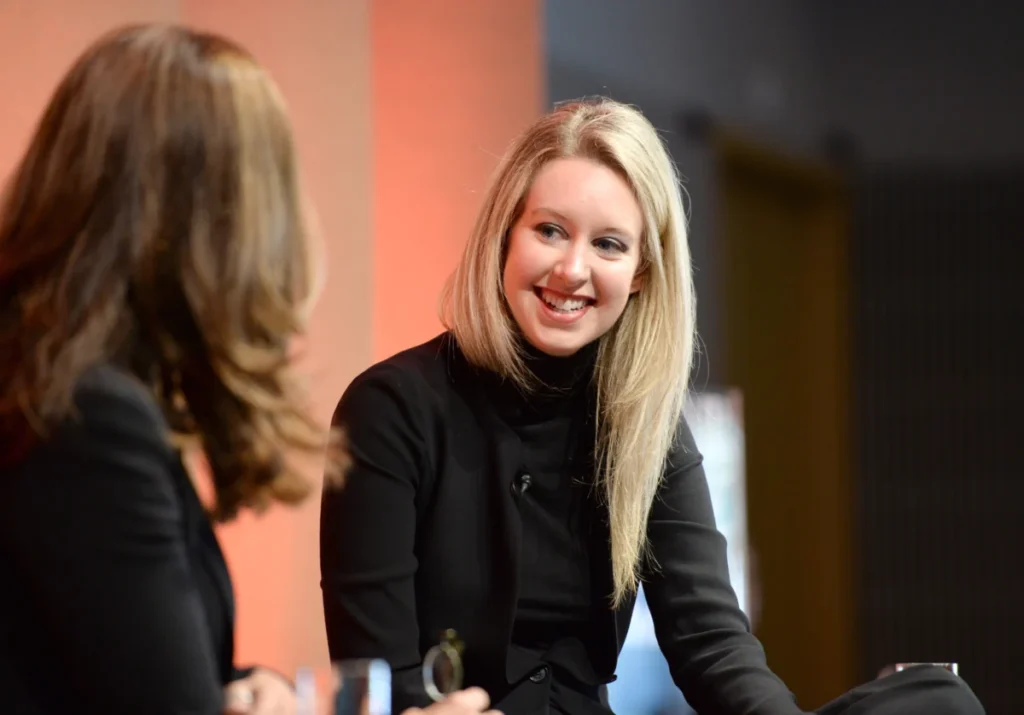
The access secured by Fielder and Oppenheim is unprecedented. Fielder, known for his signature brand of uncomfortable, meta-documentary storytelling, reportedly lived in the guest house of the residence shared by Holmes and her husband, Billy Evans, during the filming period. This proximity offers a rare, unflinching look at the mundane reality of a woman whose public image was once defined by black turtlenecks and visionary promises, now reduced to the quiet, agonizing wait for incarceration.
Chronology: From Silicon Valley Darling to Federal Inmate
To understand the weight of the footage captured in You Can See Everything, one must contextualize the trajectory of Holmes’s legal odyssey.
- 2003–2014: The Rise. Holmes founds Theranos, promising a revolution in blood diagnostics. The company reaches a valuation of $9 billion.
- 2015: The Collapse. John Carreyrou’s investigative work in The Wall Street Journal exposes the fallacies of the company’s "Edison" technology.
- 2018: The Indictment. Holmes and former partner Ramesh "Sunny" Balwani are charged with federal fraud.
- January 2022: The Conviction. A jury finds Holmes guilty on four counts of wire fraud and conspiracy.
- November 2022: The Sentencing. Judge Edward Davila sentences Holmes to 135 months (11.25 years) in prison.
- May 2023: The Surrender. Holmes reports to the Federal Prison Camp in Bryan, Texas.
- February 2024: The Appeal Failure. The Ninth Circuit Court of Appeals rejects her bid to overturn the conviction and shorten the sentence.
The film effectively picks up in the final, desperate weeks leading to that May surrender, documenting the psychological toll of a life unraveling in real-time.
Supporting Data: The Legal Quagmire
The documentary arrives at a precarious moment in the legal history of the Theranos case. While the film focuses on the human element, the backdrop remains the cold, rigid structure of the American judicial system.
Following the rejection of her appeals in early 2024, Holmes shifted her legal strategy toward executive clemency. As of the latest update from the Department of Justice, her petition to President Donald Trump remains "pending." This status signifies that the application has cleared the initial administrative hurdles and is currently under active review.
Legal experts remain divided on the likelihood of a commutation. Commutations are historically rare for white-collar crimes of this magnitude, particularly when the fallout involved significant financial loss to investors. However, the pending nature of the petition adds a layer of "current event" urgency to the documentary, positioning it not just as a historical post-mortem, but as a living document of a woman still fighting for her freedom.
The A24 Factor and the "A-List" Mystery
The industry buzz surrounding the film is further amplified by its distribution partner, A24, which has scheduled an October release. A24 has built its reputation on elevated, auteur-driven cinema, and You Can See Everything fits perfectly within their portfolio of provocative, character-driven narratives.
Perhaps the most significant point of discussion coming out of Telluride, however, involves the unexpected inclusion of an A-list actress in the narrative. Reports from the screening suggest that this actress is not merely a subject of an interview, but becomes an active participant in the story itself, blurring the lines between documentary observation and staged performance. Whether this is a narrative device, an exploration of celebrity, or a commentary on the "performance" of innocence, it has already secured the film’s status as the most talked-about documentary of the year.
Implications: The Ethics of Access
The presence of Nathan Fielder in the guest house raises inevitable ethical questions regarding the documentary form. Fielder has built a career on interrogating the power dynamics between filmmaker and subject. By moving into the home of a convicted fraudster, he has pushed the boundary of "fly-on-the-wall" filmmaking into something far more intrusive and, perhaps, more revelatory.
Is This Exploitation or Empowerment?
Critics are already debating whether the film serves as a platform for Holmes to rehabilitate her image or as a trap set by directors looking to expose the banality of her deception. By documenting her in the quiet moments—eating, packing, speaking with her husband—the film forces the audience to confront the human being behind the villainous caricature.
The Cultural Legacy of Elizabeth Holmes
The enduring fascination with Holmes speaks to a larger cultural obsession with the "tech-bro" archetype and the gendered dynamics of Silicon Valley. For years, the public has digested her story through news reports, podcasts, and dramatized series like The Dropout. You Can See Everything is the first project that dares to capture the silence that followed the noise. It asks the audience to sit with the aftermath, forcing a reckoning with the consequences of ambition when it is untethered from reality.
Official Responses and Industry Outlook
While representatives for Holmes have remained largely silent, the industry reaction to the Telluride premiere has been near-unanimous in its praise for the film’s audacity. Academy analysts are already whispering about potential nominations, citing the film’s unique access and the technical prowess of its cinematography.
"This is not a traditional ‘talking head’ documentary," noted one critic following the screening. "It is an exercise in endurance—both for the people on screen and for the audience watching them. It feels like we are watching the final act of a Shakespearean tragedy, but one where the stage is a suburban living room."
As the October release date approaches, the film is expected to ignite intense debate regarding the role of media in shaping the narrative of public figures. Will the documentary serve to humanize a figure widely considered a pariah, or will it confirm the public’s darkest suspicions about her character?
Ultimately, You Can See Everything appears to be an essential watch, not necessarily because it provides new facts about the Theranos scandal, but because it provides a new way to look at the woman at the center of it. In a world where the truth is often obscured by spin and PR, Fielder and Oppenheim have delivered a film that demands we look closer, even when the image is uncomfortable.
As the pending clemency petition continues to hover over the reality of Holmes’s prison term, the film arrives as a sobering reminder that for the victims of Theranos, the damage remains permanent, while for Holmes, the narrative is still being written—one frame at a time. Whether this documentary will be the final word on the matter remains to be seen, but as of this week, it is certainly the only word that matters.