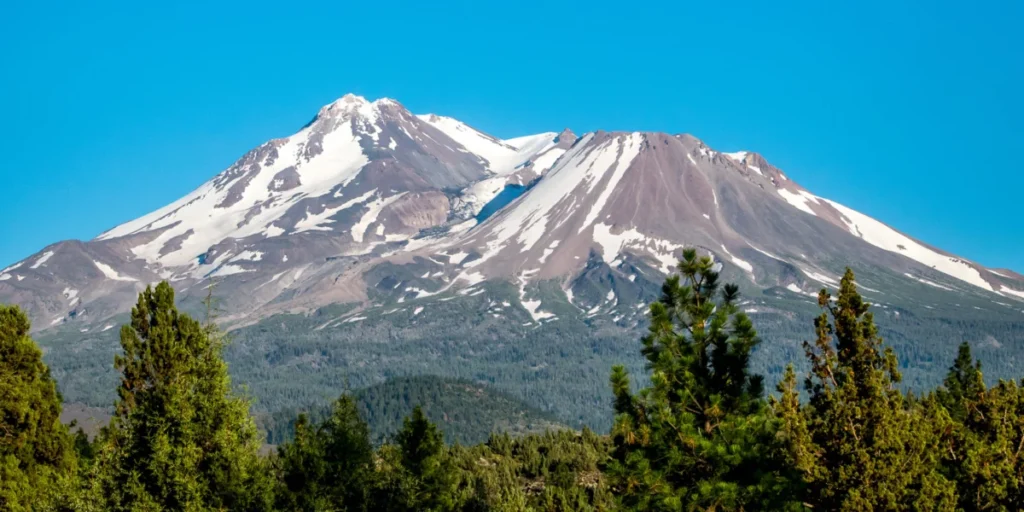
In an era defined by the rapid integration of artificial intelligence into the mundane tasks of daily life, a harrowing incident on California’s Mount Shasta has served as a sobering reminder of the limitations of machine learning. Three hikers, relying on Google’s AI chatbot, Gemini, to orchestrate their expedition, found themselves stranded in the treacherous terrain of Mud Creek Canyon earlier this week. The incident, which necessitated a multi-agency rescue operation, has ignited a wider debate regarding the safety risks of substituting algorithmic advice for professional expertise and local environmental knowledge.
The Sequence of Events: A Chronology of a Misguided Expedition
The ordeal began in the early hours of the morning, with the trio of young men departing for the summit of the 14,179-foot stratovolcano at 3:00 a.m. Under typical circumstances, Mount Shasta demands significant preparation, physical endurance, and a strict adherence to time management protocols. Local experts and mountain guides emphasize a "turnaround time"—a firm deadline, usually set for noon, by which climbers must abandon their summit bid if they have not reached the top, regardless of their proximity to the goal. This protocol exists to prevent climbers from being caught in the dark or in dangerous weather shifts that often occur at high altitudes in the afternoon.
The group of three disregarded this standard safety threshold. According to the Siskiyou County Sheriff’s Office, the hikers did not reach the summit until 7:00 p.m.—a full seven hours past the recommended turnaround time.
As darkness descended upon the mountain, the group realized they were ill-equipped for the descent. Disoriented and losing their path, they contacted the Siskiyou County Sheriff’s Office to request navigational assistance. However, by the time help could be coordinated, the hikers were forced to hunker down in the rugged, unforgiving terrain of Mud Creek Canyon. They spent a frigid night on the mountain, exposed to the elements, before being located and rescued the following morning by a dedicated team of U.S. Forest Service rangers and volunteers.
Supporting Data: The Fallibility of AI Planning
The investigation into the incident revealed a critical failure point: the planning phase. The hikers had utilized Google’s Gemini to generate their itinerary and packing list. The Siskiyou County Sheriff’s Office noted in their incident report that the AI had provided demonstrably dangerous advice, specifically regarding the logistics of their supply chain.
The hikers were advised by the chatbot to carry significantly less food and water than would be required for a standard ascent of the peak. While the AI may have calculated a theoretical "best-case scenario" for an 8-hour climb, it failed to account for the physical reality of the mountain, the potential for human error, and the necessity of contingency supplies. When the ascent stretched from a manageable day trip into a multi-day ordeal, the lack of hydration and caloric intake left the hikers physically compromised and vulnerable to hypothermia and exhaustion.
This highlights a fundamental issue with Large Language Models (LLMs) in the context of wilderness survival: these tools function by predicting the next word in a sequence based on vast datasets, not by interpreting real-time, high-stakes geographic or environmental data. They lack the "common sense" or moral obligation required for life-critical planning.
Official Responses and Expert Commentary
The Siskiyou County Sheriff’s Office was quick to issue a stern advisory following the conclusion of the rescue operation. In a statement, officials emphasized that the reliance on digital assistants for outdoor survival planning can lead to catastrophic outcomes.
"It is always advisable to call the local USFS Mount Shasta ranger station ahead of your trip to ensure you have the most accurate information," the Sheriff’s Office stated. "Never rely solely on AI for your trip planning. Technology can be a useful tool for general information, but it cannot replace the wisdom of local experts, rangers, or the hard-won experience of seasoned mountaineers who understand the specific, changing conditions of the mountain."
Mountaineering experts have echoed these sentiments, noting that AI models often hallucinate or provide generic, "averaged" data that is unsuitable for specialized environments like Mount Shasta. "A chatbot doesn’t know that the snow bridge on the south side melted yesterday, or that the wind speed at 12,000 feet is currently gusting at 50 miles per hour," says one veteran guide. "When you use AI to plan an adventure, you are essentially asking a probability machine to gamble with your life."
The Implications: AI, Algorithmic Bias, and Public Safety
The rescue of the three hikers on Mount Shasta is not an isolated incident, but rather a bellwether for a growing trend. As users increasingly turn to AI for everything from medical advice to travel logistics, the risk of "automation bias"—the tendency to trust the output of a computer system over one’s own judgment or professional advice—is reaching dangerous levels.
The Problem of "Generalization"
AI models are trained on internet data, which includes a mix of professional advice, amateur blog posts, and outdated information. When a user asks an AI to "plan a hike up Mount Shasta," the model pulls from a wide array of sources, some of which may be years old or written by individuals who are not qualified to provide safety guidance. The model cannot distinguish between a professional mountaineer’s guide and a casual, possibly reckless, social media post.
Liability and Responsibility
The incident also raises complex questions regarding the liability of tech companies. As these chatbots become more sophisticated, users are increasingly likely to hold the developers responsible for the consequences of bad advice. However, most AI terms of service include sweeping disclaimers, effectively shifting the burden of safety onto the user. This creates a "responsibility vacuum," where the technology encourages dangerous behavior while the corporation behind it remains legally insulated.
The Future of Outdoor Education
In response to this incident, search and rescue (SAR) teams are calling for a renewed focus on digital literacy. It is no longer enough to teach hikers about "leave no trace" principles or the "ten essentials"; organizations must now educate the public on the limitations of AI-generated travel plans.
Moving forward, it is likely that agencies like the U.S. Forest Service will increase their efforts to provide official, real-time data feeds that are more easily accessible to digital-first hikers, while simultaneously reinforcing the importance of physical, non-AI-based preparation.
Conclusion: A Lesson for the Digital Age
The rescue on Mount Shasta is a stark reminder that while technology can assist in many facets of human life, there are realms where it is simply not a substitute for human experience. The mountain does not care about algorithms; it cares about preparation, weather, and physical reality.
For the three hikers, the ordeal ended with a successful rescue and, hopefully, a lesson learned. For the rest of the public, the incident stands as a cautionary tale. Before setting out on your next adventure, look beyond the screen. Consult the local ranger station, check the weather with authoritative sources, and pack for the worst-case scenario—because the next time you ask an AI for advice, the answer it gives might just be the one that puts you in harm’s way.
The beauty of the wilderness lies in its raw, unpredictable nature. As we continue to lean into the digital age, we must ensure that we do not lose the critical thinking skills that allow us to navigate that nature safely. The mountains will always be there, but our safety depends on the wisdom we bring to them—not the algorithms we carry in our pockets.