Approximately 201 million years ago, the Earth underwent a seismic transformation. The supercontinent Pangea, which had united the world’s landmasses for eons, began to fracture. This tectonic upheaval unleashed the Central Atlantic Magmatic Province (CAMP)—a series of volcanic eruptions of such colossal scale that they fundamentally altered the chemistry of the atmosphere.
As gargantuan quantities of carbon dioxide were pumped into the skies, global temperatures spiked by an estimated 5 to 10 degrees Celsius. In this greenhouse furnace, the complex, lush forests that defined the Triassic period withered and collapsed. In their place, a strange and resilient colonizer emerged: the fern.
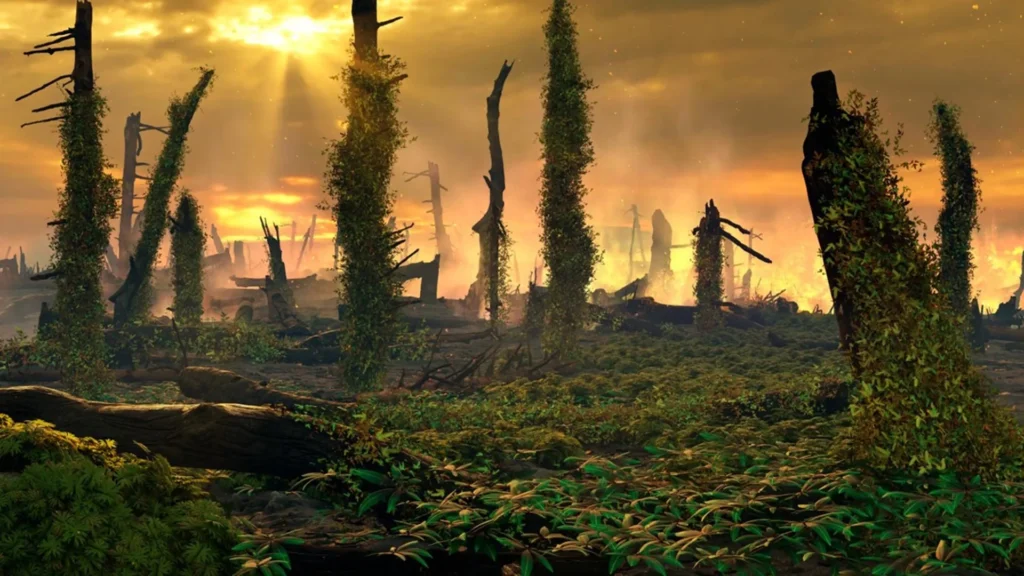
New research, published on July 21, 2026, in Nature Geoscience, reveals that these fern-dominated landscapes were not the tranquil, green havens one might imagine. Instead, they were the epicenters of a brutal, recurring cycle of fire. An international team led by geologists at Utrecht University has discovered that as the planet burned, ferns acted as both the beneficiaries of this destruction and the primary fuel for the flames that followed.
The Chronology of a Planetary Catastrophe
The end-Triassic mass extinction is one of the "Big Five" extinction events in Earth’s history. While the asteroid impact that killed the dinosaurs 66 million years ago is more famous, the end-Triassic event was a protracted, slow-motion catastrophe driven by internal terrestrial processes.
The Onset of Warming
The crisis began with the massive volcanic activity associated with the breakup of Pangea. As the volcanic gases accumulated, the planet entered a state of runaway global warming. The terrestrial ecosystem, unable to adapt to the rapid temperature shift, experienced widespread deforestation.
The Fern Spike
As the forests died, the landscape was stripped bare. Into this vacuum rushed opportunistic plants. Fossil records from this era, particularly across what is now Northwest Europe, show a dramatic "fern spike"—a period where these resilient plants dominated the landscape, effectively creating vast, open, savannah-like environments.
The Fiery Interval
The new study suggests that this fern-dominated phase was not merely a transition period but a volatile "fiery interval." The research indicates that for at least 40,000 to perhaps as long as 300,000 years, the Earth was trapped in a feedback loop of forest loss, fern colonization, and repeated, massive wildfires.
Supporting Data: Innovations in Deep-Time Reconstruction
To map the history of these ancient wildfires, the Utrecht University team turned to the sedimentary record. They analyzed four separate drill cores, including a remarkable 640-meter-long core recovered from the United Kingdom.
Beyond Traditional Indicators
Historically, scientists have reconstructed ancient fire regimes by looking for charcoal fragments and polycyclic aromatic hydrocarbons (PAHs)—compounds produced during combustion—trapped in rock layers. However, these methods are notoriously unreliable. Charcoal can fragment into tiny, misleading pieces, and PAHs are volatile, often migrating through sediment or degrading over millions of years.
To overcome these limitations, the team pioneered the Palynomorph Darkness Index (PDI).
The Palynomorph Darkness Index (PDI)
"The novelty of this study came from the analysis of color changes of organic microfossils," explains Dr. Bas van de Schootbrugge, a senior author on the paper. "We used a simple and very low-cost technique that quantifies the ‘darkness’ of fossil pollen and spores."
Under normal geological conditions, organic microfossils darken as they are buried deeper, a process caused by the increasing heat and pressure of the Earth’s crust. Typically, deeper equals darker. However, the researchers found a counter-intuitive pattern in the drill cores: the deepest, oldest fossils were relatively light, while those within the extinction interval were scorched to a deep, dark brown, regardless of their depth.
By measuring the RGB values of 15,000 pollen and spore samples, the team created a standardized grayscale index. This "Dark Zone" in the fossil record coincided perfectly with the peak abundance of charcoal, PAHs, and the fern spike, providing undeniable evidence of intense, widespread, and sustained fire activity.
Official Responses and Scientific Perspective
The implications of the study have sent ripples through the geological community. By demonstrating that the "Dark Zone" occurred simultaneously across four distinct sedimentary basins with different geological histories, the researchers effectively ruled out local tectonic or burial-related causes.
"All plant groups show the same effect," Dr. Van de Schootbrugge notes, "which is a strong indication that it was the result of an outside force."
The researchers argue that the consistency of the data across multiple sites confirms a global phenomenon rather than a local anomaly. This, they suggest, was a truly "hellish world," where the combination of high temperatures and dry, abundant fuel created a persistent fire regime.
The study highlights the role of ferns not just as passive victims of climate change, but as active participants in the destruction of their own environment. While the aerial fronds of a fern are highly flammable, their subterranean root systems are robust. When fire swept through the landscape, the ferns would quickly resprout, allowing them to outcompete other flora and consolidate their hold on the landscape. This created a recurring cycle: the ferns grew, they dried out, they fueled a massive fire, and then they regrew to do it all over again.
Implications: A Warning for the Modern Era
While the end-Triassic occurred 201 million years ago, the findings of the Utrecht team carry significant weight for our modern understanding of climate change and ecological collapse.
The Perfect Storm
The study defines a "perfect storm" of ecological destruction. When climate change triggers deforestation, it creates a niche for "disaster species." These species, while highly adaptive, can fundamentally change the character of an ecosystem. In the Triassic, this meant turning a forest into a fire-prone savannah.
Feedback Loops and Tipping Points
The most chilling implication of the study is the concept of the feedback cycle. We often think of climate change as a linear process, but the end-Triassic record suggests it is a series of interconnected events. Warming led to fire; fire led to the loss of carbon-sequestering forests; the loss of forests likely exacerbated the warming, which in turn fueled more fires.
The Resilience of "Disaster Species"
The researchers describe ferns as "true disaster species." Their ability to survive the most extreme conditions allowed them to persist when other life forms could not. However, their presence also prevented the recovery of more complex forest ecosystems for hundreds of thousands of years.
Dr. Van de Schootbrugge concludes with a sobering reflection: "The lesson we can learn from this is that the combination of climate change, deforestation, and the spread of opportunistic species can provide all the ingredients for a perfect storm."
As modern humanity faces its own era of rapid environmental change, the story of the end-Triassic serves as a cautionary tale. It is a reminder that ecosystems are not static; they are dynamic, and when pushed beyond their limits, they can shift into states that are not only hostile to the existing flora and fauna but are actively self-destructive. The "Dark Zone" in the geological record remains a silent witness to a time when the Earth burned, and in that fire, we find a mirror held up to our own uncertain future.