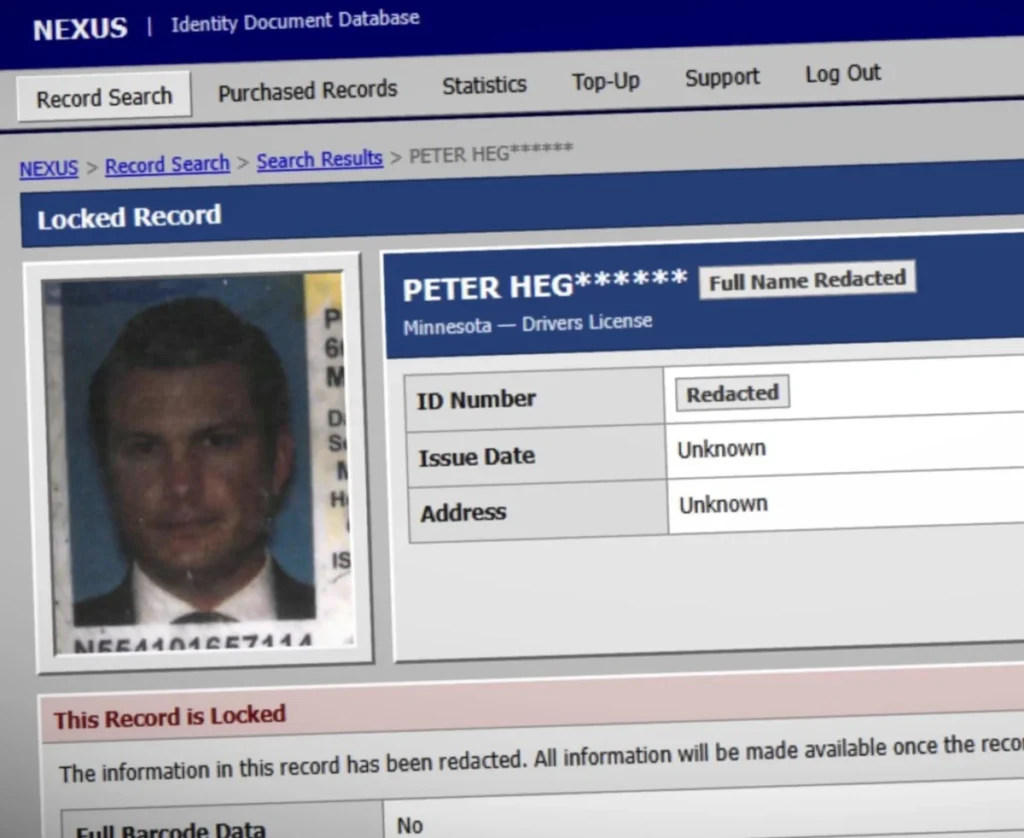
If you have ever handed over your driver’s license at a bar, scanned your passport at a car rental counter, or verified your age at a cannabis dispensary, your most sensitive personal information may now be in the hands of cybercriminals. In what security experts are calling one of the most significant and alarming data exposures in recent history, a dark web platform known as "Nexus" has reportedly offered a searchable database containing over 150 million government-issued identity documents belonging to citizens in the United States and Canada.
The breach, first uncovered by veteran security journalist Brian Krebs, suggests a systematic and ongoing exfiltration of data from a primary identity verification provider. As the digital and physical worlds collide through increasingly stringent age-verification mandates, this incident serves as a chilling reminder of the perils inherent in the mass collection and storage of biometric and state-issued identity data.
Main Facts: The Nexus Exposure
The scale of the Nexus operation is staggering. Launched on the dark web, the site functioned as a searchable repository for stolen identity credentials. Advertisements for the platform, posted on prominent Russian-speaking cybercrime forums, claimed that the database was not static; it was being updated with approximately 500,000 new records every single day.
This implies that the threat actors behind the breach had established near-real-time access to the back-end systems of a major verification intermediary. The data reportedly included not only text-based records—names, addresses, and license numbers—but also high-resolution scans of the physical ID cards and, in many cases, the facial photographs of the individuals.
The authenticity of the database was chillingly confirmed when Krebs and security researcher Zach Edwards discovered their own driver’s licenses within the searchable records. The breach also touched the highest levels of government; reports indicate that the photograph of U.S. Secretary of Defense Pete Hegseth was listed among the stolen files, heightening concerns regarding the national security implications of the incident.
Chronology of the Breach
The discovery of the Nexus platform occurred in late September 2026, though the timeline of the actual exfiltration remains a subject of ongoing investigation.
- Mid-2026: It is suspected that attackers gained persistent, unauthorized access to the infrastructure of a major identity verification firm.
- Late September 2026: The Nexus site goes live on the dark web, marketing its massive database of 150 million North American identities to potential buyers, including identity thieves, financial fraudsters, and state-sponsored actors.
- September 2026 (The Reveal): Brian Krebs publishes a detailed exposé identifying the likely source of the data as IDScan, a Louisiana-based company that facilitates identity verification for major retail, tech, and service brands globally.
- Immediate Aftermath: Following the publication of the report, the Nexus site was taken offline, though the damage remains done. The data, once distributed into the dark web ecosystem, is notoriously difficult to "claw back."
- Current Status: The FBI’s New Orleans field office has reportedly launched a formal probe into the incident. The Department of Defense has confirmed it is "aware of these reports and is evaluating them" in relation to the exposure of high-level government officials.
The Source: IDScan and the Perils of Intermediaries
The investigation pointed squarely at IDScan, a company that acts as a silent backbone for identity verification. Millions of transactions—ranging from age-restricted purchases to automated hotel check-ins—rely on IDScan’s technology to bridge the gap between a physical piece of plastic and a digital authorization.
For companies like IDScan, the business model relies on speed and seamless integration. However, the centralization of this data creates a "honeypot" for hackers. If a single point of failure is compromised, the data of millions of people is exposed at once, rather than requiring attackers to compromise thousands of individual retailers.
While IDScan’s COO, Jillain Kossman, stated that the company is actively investigating the breach, the silence from CEO Jimmy Roussel has left many in the industry concerned about the transparency of the response. The company’s role as an intermediary means that even if a consumer never interacted with IDScan directly, their data was likely funneled through the service by a third-party retailer or service provider.
Supporting Data and Security Implications
The sheer volume of the breach—150 million records—surpasses many of the most famous data leaks in the last decade. Unlike a breach of passwords or credit card numbers, which can be changed or canceled, a government-issued ID is a foundational identity document.
The Lifelong Impact
When a driver’s license or passport number is stolen, the victim cannot simply "reset" their identity. A compromised license can be used to open fraudulent bank accounts, secure loans, obtain medical services, or even provide a cover for criminals to evade law enforcement. When coupled with a facial photograph, the risk of "deepfake" attacks and sophisticated social engineering skyrockets.
The Rise of Mandatory Verification
This incident occurs at a critical juncture in the global policy debate. Governments are currently pushing for widespread age-verification laws, requiring users to upload ID documents to access everything from social media to retail websites. Privacy advocates and cybersecurity experts have repeatedly warned that these laws mandate the creation of massive, centralized databases of sensitive information—databases that are, by their very nature, attractive targets for sophisticated hackers.
This breach validates those fears, proving that even companies that specialize in security are not immune to state-of-the-art cyber-attacks.
Official Responses and The Path Forward
The involvement of the FBI underscores the severity of the situation. Federal investigators are tasked with tracing the origins of the Nexus site and determining the extent of the unauthorized access. For the victims, however, the response from government agencies and the affected company has been slow to provide actionable advice.
The Department of Defense’s acknowledgment of the breach involving the Secretary of Defense suggests that this is being treated as a matter of national security. When public officials are compromised, the risk of "doxing" and targeted harassment increases, potentially compromising the integrity of government operations.
What Consumers Can Do
While there is no "undo" button for this breach, security professionals recommend several steps for those who believe they may be impacted:
- Monitor Financial Statements: Look for suspicious activity on bank accounts and credit cards that may have been opened in your name.
- Credit Freezes: Placing a security freeze on your credit reports with the major bureaus (Equifax, Experian, and TransUnion) can prevent criminals from opening new lines of credit.
- Vigilance: Be wary of phishing attempts. Criminals often use stolen ID data to call victims, posing as bank officials or government agents, armed with the victim’s personal details to gain their trust.
Conclusion: A Wake-Up Call for Digital Governance
The Nexus breach is a watershed moment in the history of the digital age. It demonstrates the profound vulnerability of our current "identity-as-a-service" model. By relying on centralized, third-party intermediaries to verify our identities, we have inadvertently built a house of cards.
As we move toward a future where our physical and digital identities are increasingly tethered, the responsibility falls on both regulators and private corporations to ensure that security is not sacrificed at the altar of convenience. Until such time as decentralized, privacy-preserving identity verification becomes the standard, incidents like the one involving IDScan will likely remain a recurring and catastrophic feature of our hyper-connected reality.
The theft of 150 million identities is not merely a technical failure; it is a systemic crisis that demands a fundamental rethink of how we, as a society, protect the most precious asset we have: our identity.