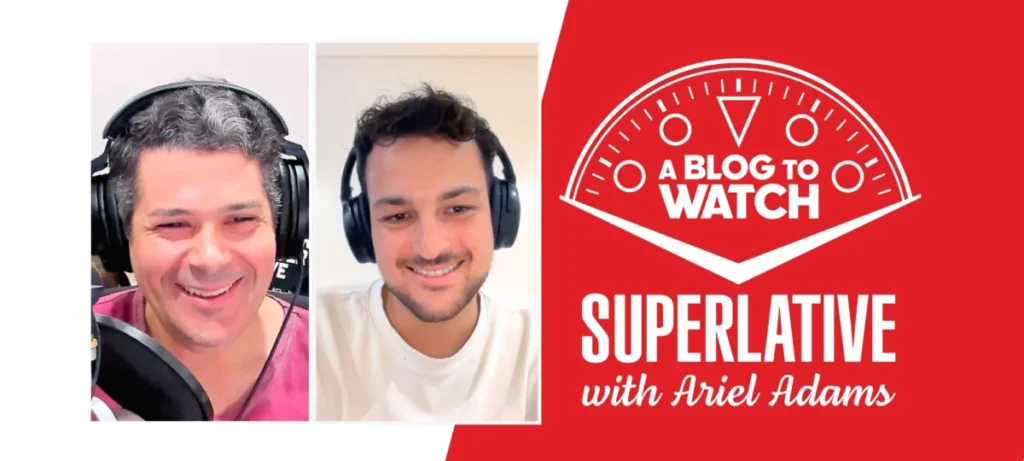
The landscape of the watch industry is currently undergoing its most significant transformation in decades. As consumer preferences shift away from legacy fashion conglomerates and toward value-driven, narrative-rich microbrands, the underlying infrastructure of global watchmaking is being forced to adapt. In a recent episode of the Superlative Podcast, host Ariel Adams sat down with Oscar Chabrat—founder of Praesidus Watches and Chief Marketing Officer of the Montrichard Group—to dissect the mechanics of this shift.
The discussion provides a rare, transparent look at the symbiotic relationship between manufacturing powerhouses and the agile, story-driven brands currently disrupting the market.
The Genesis of a Manufacturing Giant: The Montrichard Evolution
To understand the current state of watch production, one must first understand the entity behind much of the industry’s "hidden" output. The Montrichard Group, where Oscar Chabrat serves as CMO, began its journey as a traditional B2B manufacturer. In the early days of horological outsourcing, companies like Montrichard acted primarily as silent partners, providing the technical muscle—engineering, assembly, and supply chain management—for brands that lacked the scale to maintain their own factories.
However, the industry has changed. The rise of digital direct-to-consumer (DTC) sales channels has allowed manufacturers to pivot. Montrichard has evolved from a pure-play assembly partner into a vertically integrated global operation. This evolution is emblematic of the broader industry trend: the collapse of the barrier between the "factory" and the "brand." By controlling both the production line and the marketing narrative, companies like Montrichard have moved from being simple vendors to strategic partners capable of bringing a concept from a napkin sketch to a global launch in record time.
Chronology: From Legacy B2B to Modern Microbrand Success
The trajectory of this industry shift can be categorized into three distinct eras:
- The Era of Exclusivity (Pre-2010): Production was largely gatekept by Swiss conglomerates. If a brand wanted a watch, they had to deal with high Minimum Order Quantities (MOQs) and long lead times. This created a high barrier to entry, resulting in a market dominated by established names.
- The Disruptive Awakening (2010–2018): The rise of crowdfunding platforms like Kickstarter allowed independent creators to bypass traditional retail. This was the "Wild West" of watchmaking, where supply chain management was often the primary point of failure for new brands.
- The Professionalization Phase (2019–Present): Today, we see the rise of the "pro-microbrand." These companies, like Praesidus, leverage the manufacturing expertise of partners like Montrichard to ensure high build quality while maintaining the intimacy of an independent brand. This era is defined by efficient supply chain management and a focus on community engagement.
Supporting Data: The Economics of Production and Pricing
The conversation between Adams and Chabrat highlighted the harsh economic realities that define current watch pricing. Many consumers are often confused by the massive disparity in price between two watches that might use the same movement (such as an NH35 or a Miyota caliber).
The Cost of Complexity
Chabrat emphasized that the movement is only one variable in a complex cost equation.
- Inventory Carrying Costs: Brands that maintain stock must account for the capital tied up in warehouses.
- Lead Times: The industry is currently facing volatility in the supply chain. A delay in a single component—be it a crystal, a gasket, or a dial finish—can stall an entire production run, leading to significant overhead losses.
- Brand Equity: The premium attached to luxury watches is not just "marketing fluff." It accounts for the cost of customer acquisition, warranty support, and the long-term investment in a brand’s heritage.
The Death of the "Fashion Watch"
The data points toward a decline in the traditional fashion watch segment—watches manufactured cheaply and sold at high margins based solely on a logo. In their place, the "informed enthusiast" market has emerged. Consumers are now better educated than ever before, thanks to platforms like aBlogtoWatch. They are scrutinizing specs—crystal types, water resistance ratings, and finishing techniques—forcing brands to provide genuine value to compete.
Official Perspectives: The Role of Storytelling in Brand Survival
Perhaps the most compelling part of the discussion centered on the birth of Praesidus Watches. The brand began with a mission: to recreate the iconic A11 watch, a staple of WWII-era horology. However, the project was not merely a design exercise; it was a tribute to a specific veteran’s lost timepiece.

"Storytelling isn’t just marketing," Chabrat noted. "It is the brand’s DNA."
By anchoring the brand in historical authenticity, Praesidus was able to cultivate a loyal community before a single watch was even delivered. This model stands in stark contrast to brands that rely on aggressive social media advertising without a cohesive brand identity. For the modern consumer, the "why" behind a watch is just as important as the "how."
The Future of Praesidus: Evolution Beyond WWII
Chabrat offered a glimpse into the next phase of the brand. While the WWII-inspired pieces solidified their foundation, the company is now looking toward modern horology. Moving beyond the "vintage-inspired" trope is a high-stakes gamble for a brand known for its history. However, Chabrat argues that survival requires iteration. The goal is to apply the same level of historical respect and quality control to contemporary, original designs that don’t rely on the crutch of nostalgia.
Implications: AI, Automation, and the Future Market
The dialogue also ventured into the potential impact of Artificial Intelligence on the industry. While AI cannot replace the tactile craftsmanship of watchmaking, it is already disrupting the consumer journey.
- Discovery: AI-driven algorithms are changing how consumers find watches. The traditional retail experience is being supplemented, and in some cases replaced, by personalized recommendations that understand a user’s specific aesthetic and technical preferences.
- Manufacturing Optimization: On the back end, AI is being used to predict demand cycles and optimize raw material procurement, which could eventually lead to shorter wait times and more efficient production runs.
The Conflict of Luxury Pricing
A major point of tension addressed in the podcast is the "aggressive" pricing of luxury watches. As entry-level luxury brands raise their prices to chase market status, they leave a vacuum in the $500–$2,000 price range. This is precisely where brands like Praesidus are positioning themselves. By offering high-quality manufacturing—the kind usually reserved for more expensive pieces—they are challenging the status quo and forcing a conversation about what "luxury" actually means in the 21st century.
Conclusion: The Road Ahead
The collaboration between manufacturers like Montrichard and agile brands like Praesidus represents a sustainable model for the future of horology. By prioritizing transparency, investing in supply chain efficiency, and maintaining a deep connection to the consumer through authentic storytelling, these brands are successfully navigating a volatile market.
As Oscar Chabrat’s insights suggest, the future of the watch industry will not be defined by the giants of the past, but by the innovators who can balance the cold, hard reality of manufacturing logistics with the warm, human element of storytelling. For collectors and enthusiasts, this means a golden age of choice: high-quality timepieces that offer more than just the time—they offer a history, a purpose, and a piece of the future.
To dive deeper into these insights, you can watch the full interview between Ariel Adams and Oscar Chabrat on the Superlative Podcast via the official aBlogtoWatch YouTube channel.