Executive Summary: A Catalyst for Growth
Vizsla Copper Corp. (TSXV: VCU; OTCQB: VCUFF; Frankfurt: 97E0) experienced a significant surge in market valuation on Wednesday, as investors reacted to a landmark discovery at its Woodjam Project in central British Columbia. The company announced initial assay results from its 2026 summer drilling campaign, with drill hole DH26-136 at the Deerhorn deposit producing what the company characterizes as the longest and highest-grade copper intersection in the project’s history.
Shares of Vizsla Copper climbed 14.3%—an increase of 19 cents—to close at $1.52. This rally brings the company’s stock closer to its 52-week high of $2.68, reflecting a growing investor appetite for high-grade copper assets in established mining jurisdictions. The results not only validate the company’s strategic exploration model but also suggest that the Woodjam Project may hold significantly more geological potential than historical estimates previously indicated.
The Chronology of Discovery: From Inferred Resource to High-Grade Reality
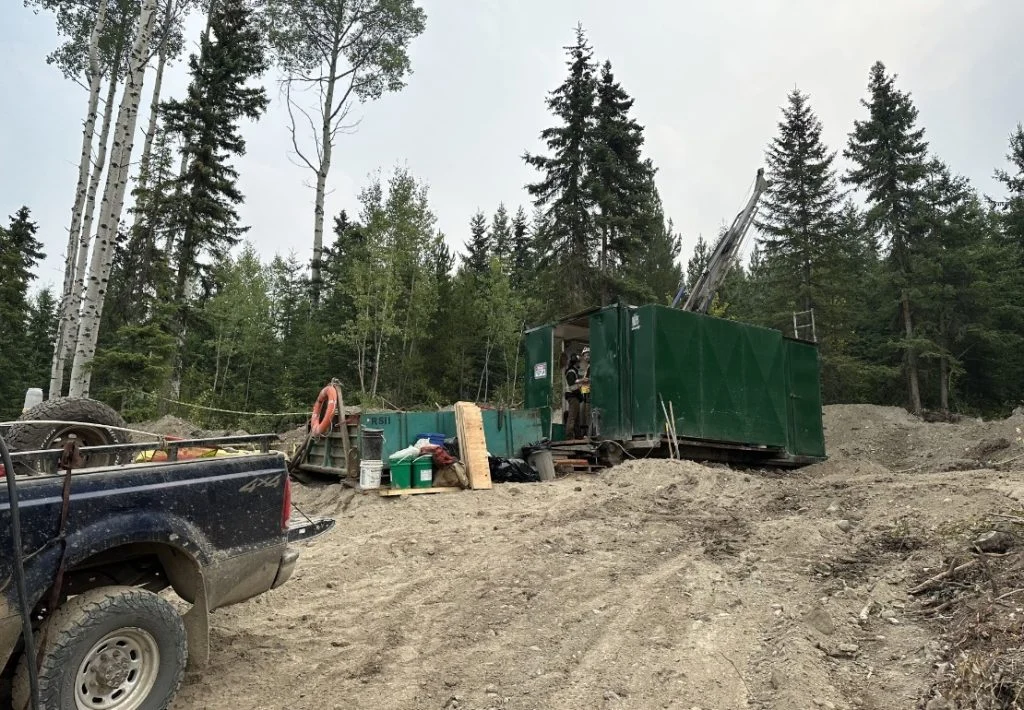
The 2026 summer drill program at Woodjam was a meticulously planned 6,055-metre, 11-hole campaign. A primary objective of this program was to stress-test the historical inferred resource estimate at the Deerhorn deposit, which sits at 32.8 million tonnes grading 0.22% copper and 0.49 g/t gold. While historical estimates provided a baseline for exploration, Vizsla Copper’s team focused their efforts on identifying the structural controls and continuity of mineralization that could elevate the project’s profile.
Three specific drill holes—DH26-134, DH26-136, and DH26-137—were dedicated to the Deerhorn deposit. The arrival of these results marks a turning point in the company’s timeline. After months of drilling and subsequent laboratory analysis, the data from DH26-136 has effectively recalibrated the market’s expectations for the project. By focusing on the eastern portion of the deposit, the technical team successfully intersected thick zones of high-grade copper mineralization that far exceed the average grades previously attributed to the Deerhorn zone.
Supporting Data: Unpacking the DH26-136 Intercepts
The core data provided by the DH26-136 hole is, by any professional estimation, a game-changer for Vizsla Copper. The intersection of porphyry-related mineralization indicates a robust, long-lived hydrothermal system.
The Deep High-Grade Interval
The most compelling evidence of success is the lower interval found at 306 metres downhole. This zone yielded:
- 266.0 metres of 0.97% copper, 0.06 g/t gold, and 4.29 g/t silver.
Within that substantial length, the "sweet spot" is even more impressive:
- 107.7 metres of 2.01% copper, 0.13 g/t gold, and 8.61 g/t silver from 320.5 metres downhole.
- 48.5 metres of 3.32% copper, 0.23 g/t gold, and 16.59 g/t silver starting at the same depth.
The Near-Surface Potential
Complementing the deep high-grade mineralization is a broad, near-surface zone that underscores the potential for future open-pit mining considerations. Starting at 70.1 metres downhole, the company intercepted:
- 129.9 metres of 0.30% copper, 0.21 g/t gold, and 0.94 g/t silver.
- Including a higher-grade subset of 50.0 metres of 0.46% copper, 0.40 g/t gold, and 1.43 g/t silver from 150 metres downhole.
These numbers suggest that the Deerhorn deposit is not merely a collection of low-grade porphyry occurrences, but a structurally complex system that hosts concentrated, high-value ore bodies at depth.
Strategic Implications: Redefining the Asset
The implications of these findings for Vizsla Copper are multi-faceted. First, the data provides a strong foundation for a resource update. By integrating these recent assays with historical core data, the company intends to launch a comprehensive 3D modelling program. This model will not only refine the existing geological understanding of the eastern Deerhorn area but will also serve as a blueprint for the next phase of infill and step-out drilling.
For investors, the primary takeaway is the reduction of exploration risk. When a company hits a 48.5-metre interval of 3.32% copper, the "discovery risk" is significantly mitigated. This level of grade is exceptionally high for a porphyry system, which typically relies on high volumes of lower-grade ore. Finding such concentration in British Columbia—a mining-friendly jurisdiction with well-established infrastructure—positions Vizsla Copper as an attractive player in the global copper supply chain.
Expanding the Horizon: Poplar and Palmer Projects
While Woodjam remains the centerpiece of current excitement, Vizsla Copper is maintaining a multi-pronged approach to its exploration portfolio.
The Poplar Project
The 44,200-hectare Poplar project is currently seeing active exploration with two drill rigs turning. The focus is on the Thira target, located approximately 10 kilometres south of the primary Poplar deposit. The Poplar deposit itself is a massive asset with an indicated resource of 152.3 million tonnes at 0.32% copper and 0.09 g/t gold. By exploring the Thira target, Vizsla is attempting to demonstrate the presence of a broader mineralized district rather than an isolated deposit. While assays from Poplar are currently pending due to laboratory backlog, the company expects to release these results in the coming weeks, providing further catalysts for the stock.
The Palmer Project
In tandem with its B.C. operations, Vizsla is also advancing the Palmer project in southeast Alaska. Palmer is characterized as a Volcanogenic Massive Sulphide (VMS) project, a deposit type known for high-grade polymetallic mineralization. By operating in both the Canadian cordillera and the Alaskan frontier, Vizsla Copper is diversifying its geological risk, ensuring that the company is not dependent on a single asset or a single style of mineralization.
Official Perspective and Forward-Looking Statements
The leadership at Vizsla Copper has emphasized a disciplined approach to geological modeling. The company’s decision to pause for core-logging and 3D modeling of the entire eastern Deerhorn area reflects a commitment to data-driven exploration. Rather than rushing into "blind" drilling, the company is choosing to let the structural geology dictate the path forward.
"The goal," as stated in company briefings, "is to evaluate the potential extent and continuity of this emerging zone." This indicates that the company believes the high-grade intersection in DH26-136 is not an anomaly but a signal of a larger, untapped structural trend.
Market Context and Final Considerations
The copper market is currently facing a supply-demand imbalance, with global transitions toward electrification and green energy driving long-term demand. Projects like Woodjam are becoming increasingly critical as the industry struggles to find new, high-grade discoveries that can be brought into production.
Investors should note, however, that exploration remains a high-risk venture. While the results from DH26-136 are undeniably positive, they represent a snapshot in time. Future results from the Poplar project and further exploration at Woodjam will be the ultimate determinants of the project’s long-term economic viability.
Disclaimer
Resource World Magazine Inc. has prepared this editorial for general information purposes only. It should not be considered a solicitation to buy or sell securities in the companies discussed herein. The information provided has been derived from sources believed to be reliable but cannot be guaranteed. This editorial does not take into account the reader’s investment criteria, financial expertise, or financial goals. Potential investors should conduct their own thorough due diligence and consult with professional financial advisors before making any investment decisions. Mineral exploration is inherently risky, and historical estimates, while helpful, are subject to change as modern NI 43-101 standards are applied.
As Vizsla Copper moves into the next phase of its 2026 exploration strategy, the mining community will be watching closely. With a proven ability to intersect high-grade copper in a well-understood district, the company has successfully transitioned from a junior explorer to a significant player in the B.C. copper space. The coming months, characterized by pending assays from Poplar and the updated model for Woodjam, promise to be a pivotal chapter in the company’s history.