For decades, the horological industry has been anchored by a singular, persistent marketing narrative: the "milestone watch." It is a concept as entrenched in luxury retail as the velvet display tray. Whether it is the graduation gift, the promotion trophy, or the traditional retirement gold timepiece, the industry has long suggested that a watch’s value is tethered to a specific date on the calendar. However, as the digital age reshapes collector habits and the democratization of enthusiast culture continues, this "day-of" consumerist approach is facing a necessary reckoning.
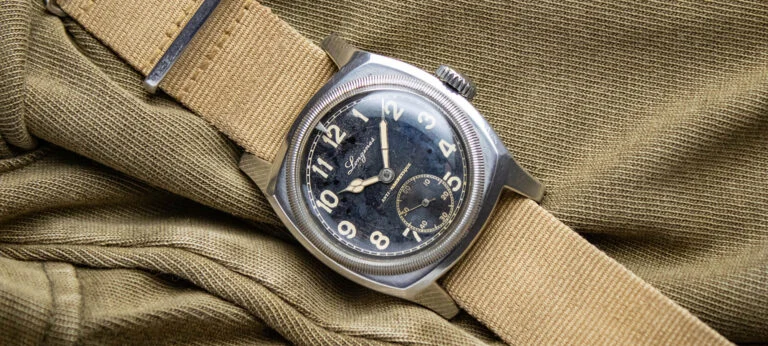
To understand why, we must look beyond the glossy advertisements and turn our attention to one of the most compelling artifacts of the mid-20th century: the circa 1939 Longines Majetek reference 3582. Through the lens of this storied pilot’s watch, we can begin to see that the most meaningful "milestone" purchases are not those that celebrate a moment as it happens, but those that serve as permanent, time-detached anchors for our most significant life achievements.

The Evolution of the Milestone Concept
The traditional definition of a milestone watch is fundamentally transactional. Historically, it was an external reward—an object bestowed upon an individual by an employer or family member to mark the completion of a career or a phase of life. In the modern era, this has shifted toward self-gifting. Enthusiasts now frequently mark personal triumphs with new acquisitions.
Yet, this practice often feels hollow. When a watch is purchased strictly to commemorate an event, the timepiece often becomes inextricably linked to the pressure of that moment. If the watch fails to live up to expectations, or if the memory of the event loses its luster, the watch itself suffers. A shift is occurring: collectors are moving toward "memento" collecting. This is the act of acquiring a piece that resonates with the spirit of an achievement, rather than just the date.

The author’s experience with the Longines Majetek serves as a case study. After publishing a first book in 2025, the author opted for a traditional milestone watch, only to find that the true emotional weight of the project remained unanchored. It was only by reflecting on the Majetek—a piece of history that speaks to endurance, precision, and functional beauty—that the true meaning of the professional milestone was fully realized.
A Chronology of the Longines Majetek (Ref. 3582)
To appreciate the Majetek, one must understand the geopolitical climate of its birth. Developed in 1935 and entering production by 1939, the Majetek was a direct response to the urgent, modernizing requirements of the Czechoslovak Air Force.

- 1935–1938: The Developmental Phase. As Czechoslovakia faced the looming threat of expansionist neighbors, the military required a robust, highly legible, and reliable timepiece for its pilots. Longines, already a titan of aviation horology, answered the call.
- 1939: The Height of Production. The reference 3582 was officially launched. The watch featured the iconic "Majetek Vojenské Spravy" (Property of the Military Administration) engraving on the caseback, marking it as a government-issued instrument.
- March 1939: The Occupation. Following the Nazi occupation of Czechoslovakia, production dynamics shifted. While the watch continued to be produced, the later examples—often destined for Czechoslovak pilots in exile serving with the RAF or the Free French Air Force—showcased a drift toward simplified aesthetics due to wartime material constraints.
- 1942–1948: The Chronometric Era. During this period, the internal caliber 15.68Z, which powered the Majetek, dominated the Neuchâtel observatory trials. This solidified the movement’s reputation as one of the most reliable, high-precision hand-wound movements of the 20th century.
Supporting Data: Why the "Tartarugone" Remains Unmatched
What distinguishes the Majetek from other military-issued watches of the era? It is a rare confluence of utilitarian function and high-design elegance.
The Case Architecture
The 40mm stainless steel cushion-shaped case was gargantuan for the 1930s. Its faceted design—earning it the Italian nickname Tartarugone or "Big Tortoise"—is characterized by a flowing, organic silhouette. Unlike the rigid, utilitarian tool watches of the later war years, the Majetek features elegant, splayed fixed-bar lugs designed to accommodate 24mm leather straps, giving it an aesthetic profile that feels surprisingly contemporary, even reminiscent of modern Panerai models.

The Bezel and Crown
The coin-edge, bidirectional rotating bezel is a masterclass in early navigational engineering. It was designed to be manipulated by pilots wearing thick gloves, allowing them to track flight intervals via an internal triangular marker. The oversized 3 o’clock crown is equally functional, providing an tactile, ergonomic interface that remains satisfying nearly 90 years later.
The Dial and Handset
The dial is a study in legibility. The bold Arabic numerals and chemin-de-fer minutes track are standard military issue, but the cathedral handset elevates the watch into the realm of luxury. Over nine decades, the matte black dial has undergone a process of natural patination, resulting in a unique, mottled aesthetic—a "living" surface that reflects the history the watch has endured.

Technical Specifications: The Caliber 15.68Z
While many military watches are prized for their ruggedness, the Majetek is a rare instance where the movement is as legendary as the case. The 15.68Z movement was not merely a mass-produced engine; it was a high-frequency (for its time, at 18,000 bph) platform designed for stability. Its 34mm diameter allowed for a large, powerful mainspring, which contributed to its exceptional performance in chronometer trials. Today, while servicing a movement of this vintage requires a master watchmaker, the 15.68Z remains a robust, functional, and highly accurate timekeeper.
Implications for the Modern Collector
The shift toward viewing watches as "mementos" rather than "milestones" carries significant implications for the market.

- De-emphasizing the "Hype": By focusing on watches with historical or personal significance—like the Majetek—collectors insulate themselves from the volatility of trend-driven "hype" watches. A watch that is personally meaningful is less likely to be flipped during a market dip.
- The Rise of Vintage Appreciation: As modern luxury becomes increasingly sterile and mass-produced, the "lived-in" quality of a 1939 Majetek becomes a luxury in itself. Collectors are beginning to value the "swirls of gray and tan" on a dial over the pristine, flawless finish of a factory-fresh ceramic piece.
- The Reassessment of Value: The author’s realization—that a watch purchased years after a life event can be a more powerful symbol than one purchased on the day of—challenges the traditional marketing cycle of the watch industry. It suggests that a collector’s relationship with a timepiece is not a static state, but an evolving narrative.
Conclusion: Finding Meaning in the Machine
The Longines Majetek ref. 3582 is a reminder that horology is, at its heart, about the relationship between time and the human experience. It was built for the chaos of the cockpit, yet it has survived to witness the quiet, contemplative moments of a reader or a writer decades later.
By moving away from the consumerist "milestone" framework, we allow ourselves to curate collections that are truly reflective of our personal journeys. Whether it is a watch with a storied military past or a piece that simply captures the aesthetic of a bygone era, the best watches are those that stop being "new additions" and start being partners in our history. In the case of the Majetek, it is more than just a watch; it is a testament to the fact that it is never too late to commemorate a moment—and that the most profound milestones are the ones we define for ourselves.