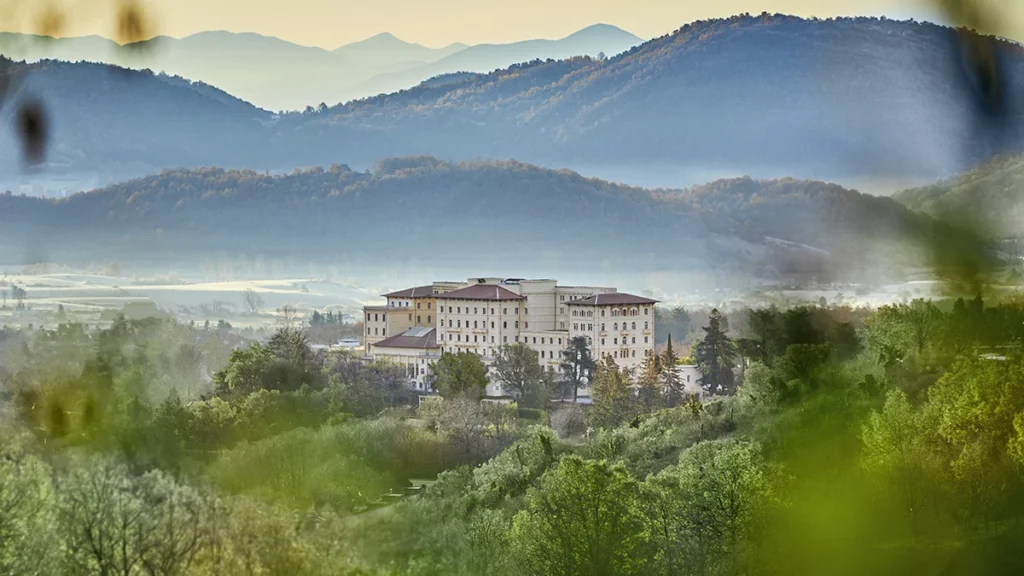
In the rolling foothills of the Ciociaria region, roughly an hour’s drive from the frenetic pulse of Rome, lies a sanctuary that defies the conventional definition of a "spa." Palazzo Fiuggi is not merely a resort; it is a high-tech medical cathedral dedicated to the modern pursuit of longevity. Since its grand reopening in 2021, following a comprehensive multi-million-dollar restoration, the 102-room property has established itself as the pinnacle of preventative healthcare, blending the opulence of five-star Italian hospitality with the cold, hard precision of clinical medicine.
For the uninitiated, the prospect of such a retreat can be daunting. One anticipates the anxieties of the unknown: the rigor of a structured medical schedule, the potential isolation of a solo wellness journey, and, perhaps most pressingly, the fear of deprivation. Yet, as one passes through the wrought-iron gates and traverses the winding, cedar-lined drive, the aesthetic splendor of the 1913-built villa—once a playground for European aristocracy—instantly recalibrates the nervous system. Here, grandeur meets health, and the transition from "guest" to "patient" is facilitated by an environment that feels more like a palace than a clinic.
The Architecture of Wellness: A New Paradigm
The philosophy at Palazzo Fiuggi is anchored in the concept of "Food as Medicine," a protocol developed in partnership with three-star Michelin chef Heinz Beck and the resort’s elite medical team. Spanning 102 rooms and a sprawling $35 million medical wing, the facility serves as a testing ground for the future of personalized medicine.
The infrastructure is comprehensive: indoor and outdoor thermal pools, a dedicated Dr. Barbara Sturm spa, a state-of-the-art gym repurposed from a former grand ballroom, and a cinematic library. Upon arrival, the juxtaposition is striking—guests drift through vaulted, frescoed hallways clad in plush white robes, moving between a cardiovascular assessment and a session of binaural sound therapy. It is a place where a DEXA scan is as essential as a morning espresso, though the latter is notably absent from the menu.

A Chronology of Discovery: The Five-Day Immersion
The typical guest journey begins not with leisure, but with an exhaustive data-gathering phase. Upon arrival, the clinical team initiates an intensive health assessment, including EKG, ECG, comprehensive blood work, and genetic screening.
Days 1–2: The Clinical Baseline
The first forty-eight hours are defined by diagnostics. Beyond the standard physical, the medical team utilizes ultrasounds, cardiovascular stress tests, and body-composition analysis to map the guest’s current biological state. During these initial days, the shift in lifestyle is immediate. The diet is strictly managed, stripping away the stimulants and processed sugars common in modern life. The initial sensation of lightheadedness is a common physiological response to the abrupt caloric recalibration, but it is quickly superseded by a sense of clarity.
Days 3–4: The Intersection of Biomechanics and Biology
By the midpoint, the focus shifts to functionality. The "High Performance Method" fitness program is the centerpiece here. Utilizing advanced motion-capture technology on a treadmill, therapists analyze the guest’s gait, posture, and core engagement. For many, this is the most revealing aspect of the stay: realizing that chronic back pain or fatigue is not an age-related inevitability, but the direct result of poor biomechanical habits that can be corrected with guided training.
Day 5: Synthesis and Strategy
The final stages of the stay are dedicated to integrating the findings. The medical team provides a hardbound, personalized health dossier—a "blueprint" for the future. It is a moment of profound revelation. For many guests, this is where hidden issues, such as minor cardiac anomalies or metabolic imbalances, are identified long before they manifest as clinical symptoms.

Supporting Data: The "Food as Medicine" Efficacy
The nutritional program at the Palazzo is perhaps the most debated and discussed aspect among guests. With approximately 1,800 calories per day, the menu defies the stereotype of bland "diet food." Chef Heinz Beck’s influence is evident in every dish. Edible flowers, delicate field greens, and high-quality proteins are presented with the flair of fine dining.
The success of the program lies in its psychological reprogramming. By the third day, the hunger pangs vanish. Guests report a newfound appreciation for the nuanced flavors of whole foods, often returning home with a critical eye toward the over-processed, high-sodium diet typical of the West. The kitchen tour, where one can witness the meticulous plating standards, underscores the resort’s commitment: every calorie is calculated, and every ingredient is purposeful.
The Human Element: An Eclectic Community
Palazzo Fiuggi attracts a diverse, global cohort. A walk through the Sala 4 Continenti reveals an eclectic mix: a Texas couple utilizing ChatGPT to plan their wellness journey, a television personality seeking a mental reset, and a real-estate lawyer looking to reverse the effects of a high-stress career.
Despite their disparate backgrounds, these guests are united by a singular, non-negotiable priority: the investment in their own longevity. The communal dining experience serves as a support group of sorts. Conversations inevitably turn toward shared test results, the challenges of the protocol, and the collective craving for a "real" Italian dessert—a temptation often mitigated by the occasional surprise from the kitchen, such as a chef-curated hazelnut chocolate bar.

Clinical Implications: The Reality of Results
The impact of the stay often extends far beyond the departure date. For the guest, the sobering reality of the data—such as elevated visceral fat levels or minor thyroid irregularities—acts as a catalyst for permanent change.
"It is not about the chandeliers or the pools," one regular guest noted. "It is about the clarity." This clarity is the ultimate luxury. Most guests leave with a comprehensive strategy that shifts their daily habits: reducing alcohol, eliminating processed sugars, and adopting the specific physical therapy exercises prescribed during their biomechanical assessment.
Official Responses and Future Outlook
The leadership at Palazzo Fiuggi maintains that the resort is not just a destination, but a component of a global shift toward proactive health. By providing access to diagnostic tools usually reserved for clinical hospitals and pairing them with high-end luxury, the resort is pioneering a new category of "medical hospitality."
The medical team emphasizes that their role is not to "fix" the guest in a week, but to provide the tools for sustainable health. The data-driven approach is designed to be actionable, ensuring that the insights gained in the hills of Fiuggi translate to improved life quality in the outside world.

Conclusion: The Luxury of Clarity
The cost of entry—starting at roughly $8,400 for a seven-night program—is steep, reflecting the intensity of the medical infrastructure and the exclusivity of the service. However, for those who measure the value of their time in years and vitality, the price is a modest premium to pay for a roadmap to longevity.
In an age where health information is often contradictory and overwhelming, Palazzo Fiuggi provides a singular, authoritative voice. It proves that the most profound wellness experience is not found in the luxury of the thread count, but in the precision of the data. For anyone willing to trade their comfort zone for a rigorous, science-backed reality check, the Palazzo offers the greatest gift of all: the ability to see one’s health—and potential future—with absolute, unvarnished clarity.