By Desmond Lachman
August 21, 2026
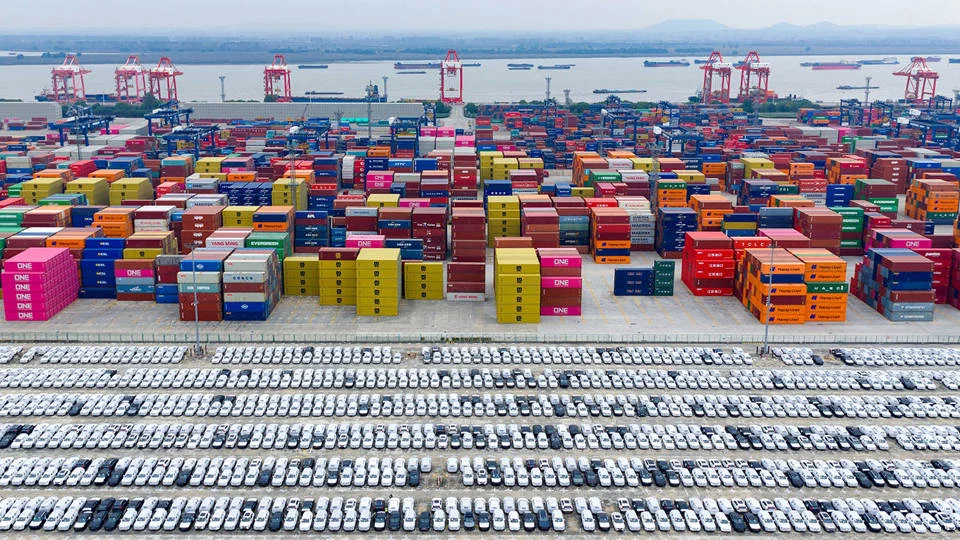
The global economic architecture is undergoing a seismic shift that echoes the anxieties of the early 2000s. As European capitals grapple with the stagnation of their industrial heartlands, a familiar specter has returned to haunt the corridors of Brussels: the specter of an unchecked, state-subsidized Chinese manufacturing juggernaut. While economists have long argued that a rebalancing of the Chinese economy—moving away from export-led growth toward domestic consumption—would be a net positive for the world, the reality on the ground suggests a different trajectory. Chinese leadership remains committed to an export-first model that threatens to hollow out the European industrial base, forcing the European Union into a defensive posture that was once unthinkable.
The Lessons of 2001: A Historical Parallel
Few geopolitical strategists in the late 1990s could have predicted the profound, destabilizing consequences of China’s 2001 accession to the World Trade Organization (WTO). At the time, the consensus in Washington and Brussels was one of cautious optimism; the prevailing logic held that integrating China into the rules-based global order would eventually lead to political liberalization and a more balanced global economy.
Instead, the decade that followed became known in the United States as the era of the "China Shock." The sudden influx of low-cost Chinese goods acted as a wrecking ball to the American manufacturing sector. Entire industrial towns across the Midwest were hollowed out, leading to a profound decline in manufacturing employment that was never truly recovered. This economic displacement did not occur in a vacuum; it served as the bedrock for the right-wing economic populism that propelled Donald Trump’s political rise. The anger and disillusionment of the American working class were directly linked to the loss of stable industrial jobs. Today, Europe stands at a crossroads, facing the same existential risk.
Chronology: The Escalation of Trade Tensions
The current crisis is not a sudden eruption but the culmination of a decade-long drift in international trade relations.
- 2010–2015: China solidifies its position as the "factory of the world," significantly scaling up production in sectors ranging from steel and chemicals to advanced electronics.
- 2018: The U.S.-China trade war intensifies, leading to a redirection of Chinese export focus. With the U.S. market becoming increasingly hostile, Beijing pivots its excess industrial capacity toward the European Union.
- 2022–2024: Post-pandemic recovery in China proves sluggish. With domestic consumer demand failing to materialize, Beijing incentivizes manufacturers to clear inventory globally, leading to a massive surge in exports at predatory prices.
- 2025: European manufacturing indicators reach historic lows. Brussels launches a series of anti-subsidy investigations into Chinese electric vehicles (EVs) and green energy components.
- 2026 (Present): European manufacturers issue dire warnings regarding market saturation. Political pressure mounts within the European Parliament to impose broad-spectrum tariffs, moving beyond targeted investigations to comprehensive trade protectionism.
Supporting Data: The Anatomy of the Industrial Crisis
The data underpinning the current European anxiety is stark. According to recent trade reports, the EU’s trade deficit with China has expanded at an alarming rate, driven largely by the influx of goods that are priced significantly below the cost of production for European firms.
The Overcapacity Trap
Chinese state-owned enterprises (SOEs) continue to operate under a mandate of growth that is decoupled from market demand. By utilizing cheap credit and massive state subsidies, these firms have created a structural overcapacity. In the automotive sector alone, China’s EV production capacity now dwarfs the combined output of several European nations, leading to a predatory pricing environment that makes it impossible for European legacy automakers to compete.
Employment and Economic Stagnation
The manufacturing sector in the Eurozone—the traditional engine of European growth—has seen a contraction in output for six consecutive quarters. In Germany, the continent’s industrial backbone, manufacturing confidence is at its lowest level since the 2008 financial crisis. For every percentage point increase in Chinese import penetration in specific sectors, European labor economists have tracked a corresponding 0.5% decrease in domestic industrial jobs. The "hollowing out" is no longer a theoretical risk; it is a current reality.
Official Responses: Brussels, Beijing, and the Policy Divide
The response from the European Commission has shifted from diplomatic engagement to a reluctant embrace of "de-risking."
The European Position
Commission officials are increasingly vocal about the need for "strategic autonomy." The rhetoric coming out of Brussels suggests that the era of naive free trade is over. By implementing "Carbon Border Adjustment Mechanisms" (CBAM) and investigating unfair state aid, the EU is attempting to build a firewall. However, many industry leaders argue these measures are "too little, too late." They are calling for an aggressive tariff regime that mirrors the U.S. approach, arguing that without a steep tariff barrier, European manufacturers will be unable to survive the next 24 months.
The Chinese Narrative
Beijing characterizes these defensive moves as "protectionist bullying." Chinese officials maintain that their competitive advantage is derived from innovation and supply chain efficiency, not state subsidies. They warn that any move by the EU to restrict Chinese goods will be met with "necessary countermeasures," potentially targeting European luxury goods and agricultural exports. This creates a precarious game of brinkmanship that threatens to escalate into a full-blown trade war.
Implications: A New Era of Economic Nationalism
The implications of this standoff extend far beyond trade balances. We are witnessing the end of the post-Cold War era of hyper-globalization.
The Political Fallout
If Europe fails to protect its industrial base, the political consequences are predictable. Just as in the U.S., the erosion of the middle class and the decline of manufacturing jobs are the primary drivers of political polarization. If the European political establishment cannot demonstrate that it has the capacity to safeguard domestic industry, voters will increasingly turn to populist movements that promise to dismantle the status quo. The stability of the European project itself may depend on whether Brussels can successfully navigate this economic tension.
The Future of Global Trade
We are moving toward a fractured global economy characterized by "bloc-based trade." The world is effectively dividing into zones of economic interest, where security considerations supersede the efficiency of the market. For European businesses, this means the end of easy access to the massive Chinese market and the beginning of a long, arduous process of supply chain diversification.
Conclusion: The Case for Decisive Action
The path forward for Europe is fraught with difficulty, but the status quo is clearly unsustainable. While critics of protectionism warn that tariffs will increase costs for European consumers, this argument ignores the long-term cost of industrial collapse. A continent that cannot manufacture its own goods—from cars to semiconductors—is a continent that has surrendered its sovereignty.
Chinese leaders have signaled no intention of abandoning their export-led growth model. They are doubling down on the very strategies that have led to this current imbalance. Consequently, the European Union has little choice but to embrace a robust tariff policy. By shielding its manufacturing sector, Europe is not merely engaging in protectionism; it is participating in a necessary act of economic self-preservation. The lesson of 2001 is clear: ignoring the imbalances of global trade does not make them go away; it merely delays the reckoning until the consequences become far more painful. For Europe, the time for hesitation has passed. The time for a new, assertive industrial policy has arrived.