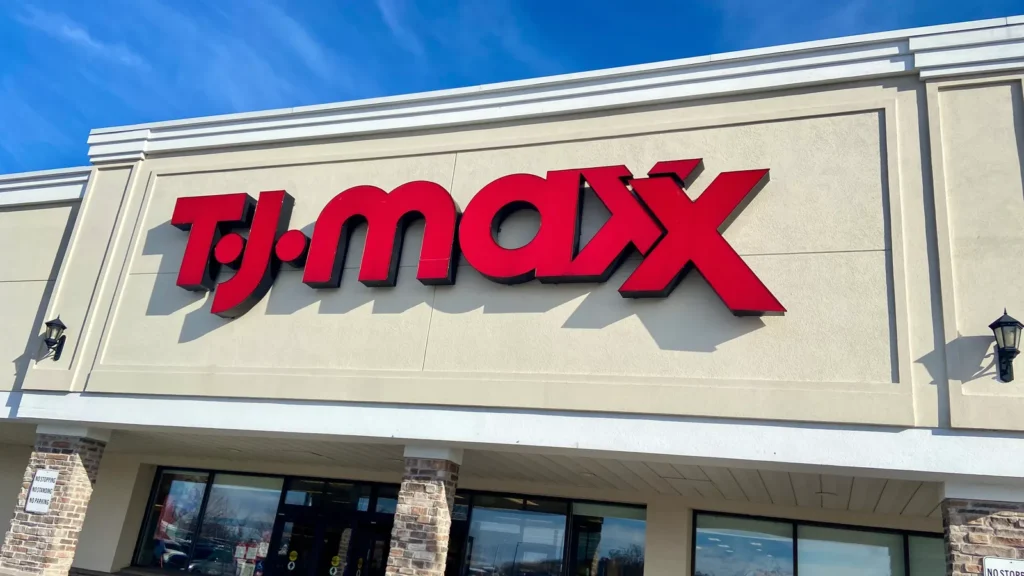
In the high-stakes world of off-price retail, TJX Companies—the parent organization behind T.J. Maxx, Marshalls, and HomeGoods—has long served as the industry’s gold standard. With a business model predicated on the "treasure hunt" experience and an uncanny ability to source inventory at a discount, TJX has consistently outperformed its brick-and-mortar peers. However, the company’s second-quarter results for the current fiscal year have sent a ripple of concern through the investment community.
While the company posted robust top-line growth and a significant surge in net income, a closer examination of its flagship Marmaxx division—which encompasses T.J. Maxx and Marshalls—reveals a troubling stagnation. As competition intensifies and consumer price sensitivity reaches a boiling point, analysts are questioning whether the company’s internal "execution errors" are the only factor at play, or if the off-price sector is finally facing a long-overdue market correction.
Main Facts: A Tale of Two Realities
On the surface, TJX’s Q2 financial performance is, by most metrics, enviable. The company reported total net sales exceeding $15 billion, a 5.4% increase compared to the previous year. Net income followed a similar upward trajectory, rising 22% to $1.5 billion, bolstered significantly by a $331 million windfall in tariff refunds.
However, beneath the headline-grabbing net income figures, the underlying health of the company’s core business is under a microscope. While HomeGoods and international segments (covering Europe and Australia) reported stellar growth—with HomeGoods seeing a 10% sales increase and international segments climbing 11%—the Marmaxx division struggled to maintain momentum.
The disparity in performance has forced a strategic pivot in the narrative from management, who are currently attributing the lackluster results to self-inflicted merchandising mistakes. Yet, Wall Street is beginning to look beyond this explanation, considering the macroeconomic pressures of inflation and a shifting competitive landscape.
Chronology: The Evolution of the Q2 Stumble
The narrative of TJX’s second quarter can be viewed as a study in contrast.
- Early Q2: TJX entered the quarter with optimism, relying on its established strategy of pricing power and inventory turnover. Executives expected that their ability to undercut department stores would insulate them from broader retail trends.
- The June Inflection Point: As the quarter progressed, major e-commerce events—most notably Amazon’s Prime Day and a flurry of mid-year promotional activities from mainstream apparel retailers—began to siphon off consumer attention.
- The Earnings Release: On Wednesday, the company reported its Q2 results. While the financial windfall from tariff reimbursements provided a cushion, the "feeble" comp growth at Marmaxx was immediately identified as the primary point of contention for analysts.
- The Response: Following the release, CEO Ernie Herrman faced intense questioning regarding the disparity between the success of international/home segments and the domestic apparel stagnation. Herrman maintained that the issues were isolated to internal execution and promised a rebound by the upcoming holiday season.
Supporting Data: By the Numbers
The data provided in the Q2 report paints a complex picture of a company firing on all cylinders in some areas while misfiring in its most vital engine.
- Global Performance: Total sales reached $15 billion, a 5.4% increase.
- Segmented Growth:
- HomeGoods (U.S.): Net sales rose 10% to $2.5 billion, with comps up 7%.
- Canada: Net sales rose 6% to $1.5 billion, with comps up 6%.
- International (Europe/Australia): Net sales rose 11% to over $2 billion, with comps growing 7%.
- The Marmaxx Stagnation: While the company did not disclose exact figures for Marmaxx, the "feeble" growth in this segment was significant enough to prompt a wave of analyst notes.
- Bottom Line Impact: Net income rose 22% to $1.5 billion, largely due to $331 million in collected tariff refunds, which artificially inflated profitability in Canada and overseas.
Official Responses: Management’s Stance on "Self-Inflicted" Wounds
During the investor conference call, CEO Ernie Herrman was firm in his assertion that the issues within Marmaxx were entirely within the company’s control. He explicitly rejected the notion that competitive pressure from other off-price retailers was to blame.
"We are convinced that the issues were self-inflicted and within our control, and we have made good progress working through them," Herrman stated. He pointed to specific merchandising errors—such as improper inventory selection—as the primary culprit. When pressed on whether rival retailers like Ross or Nordstrom Rack were eating into market share, Herrman noted that comp performance remained consistent regardless of the density of competitors in a given area.
Furthermore, Herrman attempted to soothe investor anxiety by highlighting that early Q3 data already shows signs of improvement. He signaled a high degree of confidence that by the time the holiday shopping season arrives, the company will have course-corrected, returning to the high-growth patterns that have defined TJX for decades.
Implications: A Shifting Retail Landscape
While management remains confident in their ability to "fix" the internal issues, industry experts are not entirely convinced that the problems are purely aesthetic or logistical. Several broader implications are beginning to emerge.
1. The Death of Pricing Power
For years, TJX relied on its ability to raise prices even while maintaining a "value" proposition. However, as inflation erodes the purchasing power of the average consumer, this strategy is hitting a wall. Analyst Dylan Carden of William Blair notes that the apparel sector is seeing a massive shift in consumer behavior. "In my coverage, most of the companies are speaking to some incremental price sensitivity," Carden noted. The era of aggressive price hikes may be drawing to a close, and TJX will have to navigate a market that is increasingly allergic to inflation-driven costs.
2. Competitive Cannibalization
The off-price sector is no longer a niche corner of retail; it is a battleground. With competitors like Ross Stores reporting late in the week, analysts are bracing for the possibility that the "treasure hunt" market is reaching saturation. If Ross shows stronger comp growth than TJX, it will provide empirical evidence that the two are now directly cannibalizing each other’s market share rather than merely growing at the expense of traditional department stores.
3. The "Prickly" Consumer
The psychological state of the American shopper has changed. GlobalData Managing Director Neil Saunders argues that TJX’s more affluent demographic—which typically has more disposable income—is now spending time shopping around at middle-market players. This "cross-shopping" behavior blunts the value proposition that has historically kept T.J. Maxx customers loyal. If the consumer is no longer convinced that the "deal" at TJX is the best available, the entire value-based brand identity could be at risk.
4. Historical Precedent
Wells Fargo analysts have sounded a note of caution, drawing parallels to a period nearly a decade ago when Marmaxx faced similar struggles. At that time, the company was slow to acknowledge the depth of the problem, blaming external factors like weather rather than internal strategy. The fact that the company is currently attempting to diagnose and fix these issues in real-time is a positive sign, but as analyst Ike Boruchow succinctly put it, "We aren’t out of the woods just yet."
Conclusion: The Path Forward
TJX remains a retail titan with deep pockets and a proven, resilient business model. Its ability to generate $15 billion in a single quarter—and to see double-digit growth in international and home-goods sectors—proves that the brand still carries significant weight.
However, the "Marmaxx moment" of this quarter serves as a warning. Even the most successful retail giants are not immune to the cooling of consumer sentiment or the tightening of the competitive landscape. If TJX’s management is correct, the next quarter will be a testament to their operational agility. If they are wrong, and these "self-inflicted" wounds are actually symptoms of a broader market shift, the company may need to rethink its entire pricing and inventory strategy for the years ahead. For now, all eyes are on the holiday season, which will act as the final arbiter of whether TJX’s current dip is a temporary stumble or the beginning of a new, more difficult chapter.