By Tech Insights Bureau
August 22, 2026
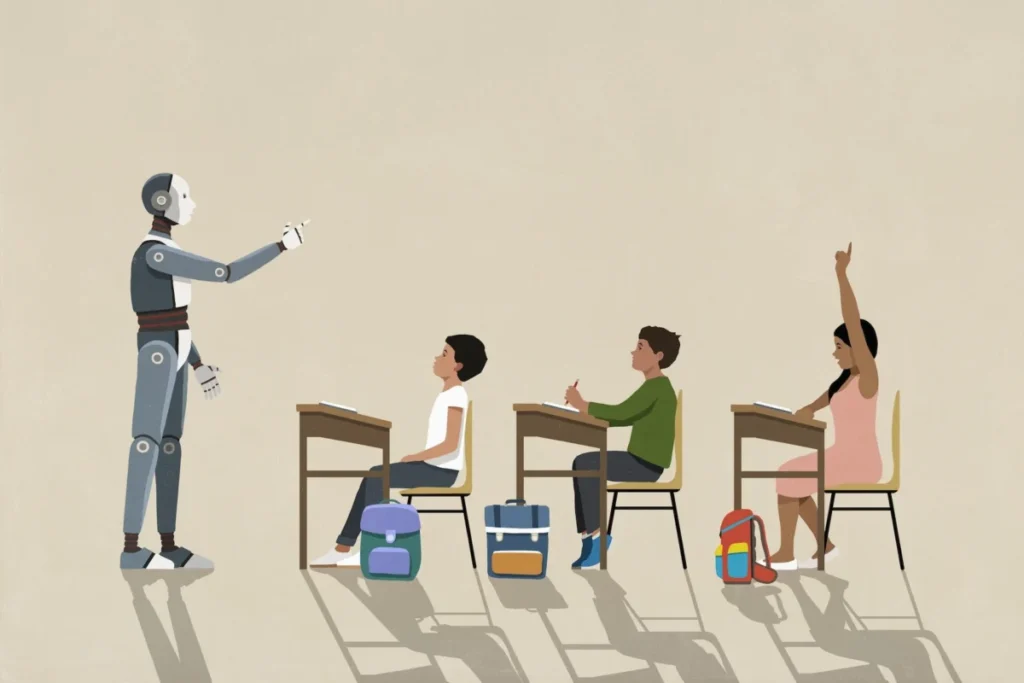
As the global demand for elite business education continues to outpace the physical capacity of top-tier universities, Harvard Business School (HBS) has taken a bold step into the future of pedagogy. In an effort to democratize access to high-level entrepreneurial coaching, the institution is integrating advanced AI avatars into its curriculum, effectively allowing students to "pitch" their business ideas to digital simulacra of industry titans.
The initiative, housed within the eight-week, $699 HBS Foundry bootcamp, signals a fundamental shift in how business schools might balance the prestige of human-led instruction with the infinite scalability of artificial intelligence.
The Core of the Initiative: Scaling the "Harvard Experience"
For decades, the "Harvard experience" was defined by the intimacy of the case study method—small groups, intense debate, and one-on-one access to world-class faculty and venture capitalists. However, scaling this model has historically been a zero-sum game: more students inevitably meant less individual feedback.
The HBS Foundry program, which focuses on early-stage entrepreneurship, seeks to break this constraint. While the program maintains weekly live sessions with human instructors, the heavy lifting of iterative practice—specifically in the high-pressure arenas of board meetings and pitch decks—has been offloaded to AI avatars.
These digital instructors are powered by HeyGen, a leading startup in the generative video space. By training models on the likeness, mannerisms, and expertise of actual venture capitalists and business leaders, HBS has created a persistent, always-available feedback loop. Students no longer have to wait for office hours; they can practice their elevator pitch at 3:00 AM, receiving immediate, high-fidelity critiques from a digital version of a seasoned investor.
A Chronology of the Virtual Classroom
The implementation of this technology did not happen overnight. The path from the whiteboard to the screen involved several critical phases of development:
- Q1 2026: The Chatbot Concept: Initially, project directors like Katharina Rings envisioned the AI integration as a text-based chatbot—a "digital tutor" that could answer questions about course material. The primary goal was to provide administrative and pedagogical support to offload the burden on teaching assistants.
- Q2 2026: The Pivot to Presence: During trial runs, student feedback was lukewarm. Participants expressed that while information was helpful, they craved a more "human" element. They wanted the social pressure and non-verbal cues inherent in a real pitch. This led the team to abandon the chatbot model in favor of HeyGen’s visual avatars.
- Summer 2026: Pilot Launch: The HBS Foundry bootcamp officially integrated the avatars. The curriculum was designed to rotate students through various "Board Meetings" with AI versions of real-world mentors, including figures like Flybridge Capital co-founder Jeff Bussgang.
- August 2026: Real-World Testing: Public scrutiny intensified following a firsthand account by New York Times reporter Sarah Kessler, who tested the system by pitching a tongue-in-cheek business plan—"Uber for bananas"—to the digital version of Bussgang.
Supporting Data: The Student Sentiment Shift
The introduction of AI into the classroom has been met with significant skepticism in the broader academic community. Throughout 2026, student protests and commencement speeches have frequently highlighted a growing "AI fatigue," with many students fearing that technology is being used to replace, rather than augment, the human element of education.
Yet, data from the HBS Foundry pilot suggests a different reality for those inside the program. Despite the initial concerns about the "uncanny valley" effect—where the digital replicas can feel slightly eerie—the student response has been largely positive.
Key findings from the pilot include:

- Increased Engagement: Students reported practicing their pitches three times more often than those in previous cohorts who relied solely on peer-to-peer feedback.
- Immediate Iteration: The ability to receive instant, objective feedback on tone and content allowed students to pivot their strategies in real-time, leading to higher confidence levels during live sessions with human instructors.
- The "Creep Factor" Trade-off: While students acknowledged that the avatars possess a "frozen" or slightly unnatural smile—a hallmark of current AI video synthesis—the utility of the feedback outweighed the aesthetic discomfort.
Official Responses and the "Uncanny Valley"
The human subjects behind the avatars are not oblivious to the strangeness of the situation. Jeff Bussgang, whose digital twin has been a focal point of the program, has been candid about his feelings.
"My digital copy is, admittedly, a little creepy," Bussgang told the New York Times. However, he emphasized that his primary responsibility is to the efficacy of the learning process. "My students love it. If they are getting more reps in, and if they are refining their pitches because they have a 24/7 sounding board, then the technology is doing exactly what it was designed to do."
Katharina Rings, the project director, maintains that the success of the program is rooted in the "guided experience." By allowing students to interact with an avatar that mimics the behavioral patterns of a real investor, HBS is essentially providing a safe space to fail. The avatar doesn’t get tired, it doesn’t get frustrated, and it doesn’t judge the student for repeating the same mistake four times in an hour.
Implications: The Future of Higher Education
The HBS experiment serves as a bellwether for the future of higher education. If a top-tier institution can successfully outsource the "practice" component of its curriculum to AI, several implications follow:
1. The Democratization of Coaching
If AI avatars can replicate the feedback loops of elite mentors, the "Harvard experience" could eventually be scaled to tens of thousands of students globally. This could radically reduce the cost of world-class business education, moving it from an exclusive, scarcity-based model to a subscription-based, scalable service.
2. The Changing Role of the Professor
As AI takes over the role of the "feedback machine," the human professor is liberated. Instead of spending hours grading pitch decks or providing repetitive critiques on basic business models, professors can focus on high-level strategy, ethics, and the nuanced, subjective aspects of leadership that AI cannot yet master.
3. Ethical and Philosophical Questions
The normalization of AI avatars raises significant questions about the authenticity of the academic experience. If a student spends more time talking to a screen than a human, does the "Harvard brand" lose its meaning? Furthermore, there are concerns about the proprietary nature of the data: as students train these models with their ideas, who owns the intellectual property of those interactions?
4. Market Impact
The success of the HBS Foundry program will likely trigger an arms race among MBA programs and online learning platforms. We can expect to see a surge in "digital faculty" deployments, where universities market their access to famous alumni not just as guest speakers, but as persistent, interactive AI agents.
Conclusion
The "Uber for bananas" pitch might have failed, but the experiment itself has proven to be a resounding success for the HBS Foundry. By embracing the "creepy" but effective reality of AI avatars, Harvard Business School has demonstrated that the future of elite education lies not in avoiding technology, but in masterfully integrating it.
As the program moves forward, the focus will likely shift from the visual fidelity of the avatars to the sophistication of their reasoning. For now, the HBS model offers a glimpse into a world where every student has a mentor in their pocket—provided they are willing to accept a slightly frozen smile in return for a world-class education.