By Harold James
August 21, 2026
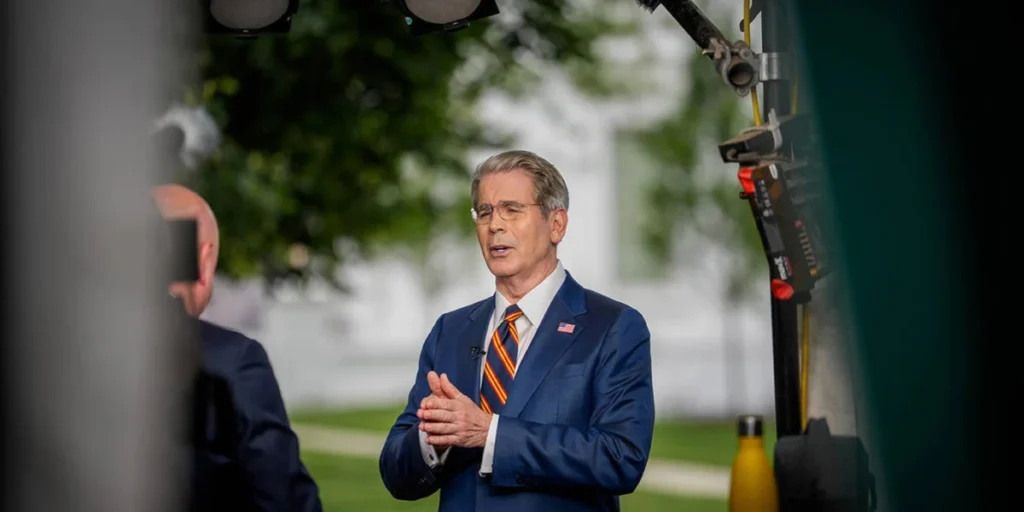
In the corridors of the Treasury Department, a rare sense of urgency has taken hold. A photograph captured in late July, now circulating widely across global financial desks, depicts Treasury Secretary Scott Bessent carrying a handwritten to-do list. It contains a single, stark directive: “Purchase $5–10 billion worth of yen.” This is not merely a technical intervention; it is a profound policy pivot that signals a growing anxiety within the Trump administration regarding the stability of the Japanese currency and its potential to destabilize the American economic recovery.
When Secretary Bessent later addressed the press, he invoked the legendary promise made by former European Central Bank President Mario Draghi during the 2012 sovereign debt crisis: the United States, he declared, would do “whatever it takes” to prop up the yen. This commitment marks a departure from traditional laissez-faire currency stances and forces a reckoning with historical precedents that extend far beyond the oft-cited comparisons to the protectionism of the 1930s or the trade friction of the 1980s. Instead, the current administration’s apprehension mirrors the anxieties of the 1960s, a period defined by the fear that localized financial tremors could trigger a contagion capable of dismantling the American financial architecture.
The Chronology of a Currency Collapse
The current volatility did not emerge in a vacuum. To understand the gravity of Secretary Bessent’s directive, one must look at the timeline of the recent depreciation.
Early 2026: The Slow Erosion
As the U.S. Federal Reserve maintained a hawkish stance to combat lingering inflationary pressures, the interest rate differential between the U.S. dollar and the Japanese yen widened significantly. Investors, seeking higher yields, flocked to dollar-denominated assets, inadvertently fueling a carry trade that drained liquidity from the Japanese market.
June 2026: The Breaking Point
By mid-year, the yen began a precipitous slide, breaching key psychological barriers against the dollar. The Japanese Ministry of Finance, traditionally cautious, found its domestic intervention tools blunted by the sheer scale of global capital outflows.
July 2026: The "Whatever It Takes" Moment
The late July photograph of Secretary Bessent emerged during a period of acute market volatility. With U.S. bond yields spiking—a direct result of the market’s reaction to the administration’s potential deficit spending and the instability of the yen—the Treasury recognized that a collapse in Tokyo would inevitably lead to a sell-off in U.S. Treasuries, effectively driving up borrowing costs for the American government at the worst possible time.
August 2026: Consolidation and Contagion
As of late August, the administration has moved from rhetoric to reality. The promised $5–10 billion intervention is viewed by many analysts as a "firebreak"—a move intended to signal to global speculators that the U.S. is prepared to defend the status quo, even if it requires direct capital expenditure.
Historical Parallels: Beyond the 1980s
While many financial pundits point to the 1985 Plaza Accord—where the G5 nations agreed to depreciate the U.S. dollar against the yen and the German mark—this comparison misses the mark. The 1980s were about trade imbalances and managed adjustment. The current crisis is about systemic survival.
The true parallel is the 1960s, specifically the era of the London Gold Pool. During that decade, U.S. officials were terrified that the erosion of confidence in the British pound or the French franc would create a domino effect, leading to a run on gold that would ultimately collapse the Bretton Woods system. The U.S. Treasury of the 1960s operated under the assumption that the global financial system was a house of cards, where a failure in a major partner’s currency was, by extension, a failure of the American system.
Secretary Bessent’s current anxiety reflects this same "contagion fear." The Trump administration recognizes that the modern financial system is far more integrated than it was forty years ago. If the yen continues to spiral, the resulting repatriation of capital by Japanese institutional investors—who hold vast amounts of U.S. debt—would force a rapid liquidation of American bonds, causing yields to spike even further and potentially triggering a recessionary shock in the United States.
Supporting Data: The Anatomy of the Yield Spike
The relationship between the yen and U.S. bond yields is the pivot point of the current economic drama.
- The Carry Trade Unwinding: For months, the yen has served as the primary funding currency for global speculation. As the yen weakens, the cost to maintain these positions increases, leading to a frantic unwinding that creates self-reinforcing downward pressure on the currency.
- Bond Yield Correlation: As the yen weakens, Japanese holders of U.S. Treasuries face significant currency risk. When they sell these bonds to hedge their exposure, U.S. yields rise. Since early July, the 10-year Treasury yield has climbed by over 45 basis points, a move that is putting immense pressure on corporate debt markets and the U.S. housing sector.
- The Intervention Threshold: Market data suggests that the "intervention floor" established by the Treasury is not merely about the exchange rate, but about maintaining stability in the bond market. The $5–10 billion target is designed to provide enough liquidity to prevent the panic-selling that occurs when the yen crosses critical technical thresholds.
Official Responses and Political Implications
The administration’s stance has been met with a mixture of confusion and cautious approval from international stakeholders.
The White House Perspective
Inside the Oval Office, the narrative is one of "America First" through global stability. President Trump has framed the intervention as a necessary defense of American manufacturing competitiveness. By propping up the yen, the administration is effectively curbing the "super-dollar," which has historically handicapped U.S. exporters.
The Federal Reserve’s Stance
While the Federal Reserve maintains its formal independence, reports indicate a high level of coordination between the Fed and the Treasury. Chair Jerome Powell has hinted that monetary policy must be sensitive to "global financial conditions," a euphemism for acknowledging that the Fed cannot ignore the yen’s collapse if it threatens domestic financial stability.
International Reaction
In Tokyo, the response has been one of quiet relief. Japanese officials have welcomed the U.S. commitment, though there is lingering concern regarding the strings attached. There is an unspoken understanding that this intervention may lead to future demands from Washington regarding Japanese trade policy, particularly concerning the automotive and semiconductor sectors.
Implications for the Future
The decision to intervene in currency markets carries profound long-term implications.
1. The End of "Hands-Off" Currency Policy: The Trump administration is signaling that it is willing to abandon the traditional "strong dollar" mantra if it conflicts with the administration’s domestic growth targets. This creates a new, more volatile era for foreign exchange markets.
2. The Risk of Moral Hazard: By stepping in to support the yen, the U.S. is effectively providing a backstop to global financial markets. This creates a "Bessent Put"—the market belief that the U.S. Treasury will intervene whenever systemic volatility threatens U.S. bond markets. This could encourage even riskier behavior from global hedge funds in the future.
3. The Potential for Geopolitical Friction: If the intervention fails to stabilize the yen, the administration may be forced to escalate its efforts, potentially leading to more direct capital controls or aggressive trade measures against other nations deemed to be "manipulating" their currencies to compete with the yen.
Conclusion: The Tightrope Walk
The puzzle of the yen is, at its core, a puzzle of American domestic stability. Secretary Bessent’s to-do list is a manifestation of the realization that in a globalized economy, there is no such thing as a "local" currency crisis.
As the autumn of 2026 approaches, the world watches to see if this $5–10 billion intervention will be enough to stem the tide. If it succeeds, it will be remembered as a masterstroke of modern financial management—a moment where the U.S. acted as the lender of last resort to the global system. If it fails, the administration may find itself trapped in an escalating conflict with the very markets it seeks to control, forcing a fundamental redesign of the international monetary order. For now, the Treasury remains on the front lines, acting with the same defensive urgency that defined the policymakers of the 1960s, hoping to prevent a ripple from turning into a tidal wave.