Nevada, the longtime pioneer of autonomous vehicle (AV) testing, has officially signaled that the future of urban mobility has arrived. In a landmark decision that could redefine the transportation landscape of the American West, the Nevada Transportation Authority (NTA) unanimously approved a series of permits this past Thursday, greenlighting a massive influx of robotaxis into Clark County. The decision sets the stage for a high-stakes competition between three tech titans—Tesla, Uber, and Waymo—transforming Las Vegas into the world’s most significant proving ground for autonomous, driverless ride-hailing services.
The Scope of the Expansion: A New Fleet for the Neon City
The NTA’s approval marks the most aggressive scaling of autonomous operations in the United States to date. Combined, the newly issued permits allow for the deployment of up to 8,000 robotaxis over the next 12 months. This massive influx is not merely an incremental increase in testing; it represents a transition from experimental pilot programs to full-scale, commercial-grade public transportation infrastructure.
The breakdown of these permits reveals the varying strategies of the major players:
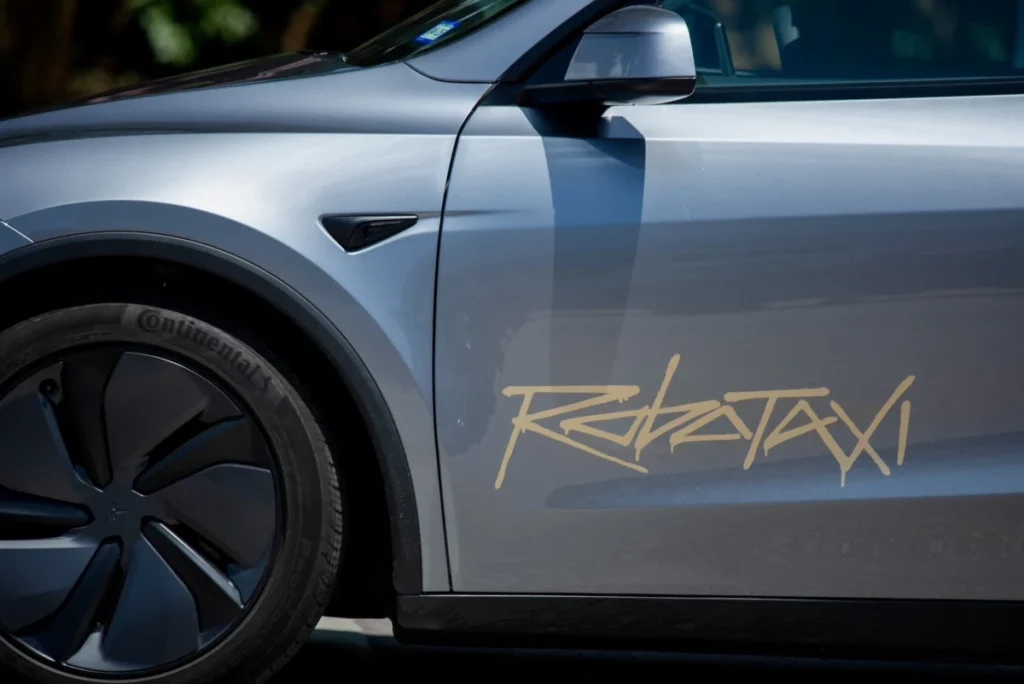
- Tesla: The electric vehicle giant has received authorization for up to 5,000 vehicles, signaling its intent to aggressively leverage its "Cybercab" technology.
- Waymo: A veteran in the autonomous space, Waymo is permitted to deploy 1,000 vehicles, building upon its existing, well-regarded operational framework.
- Uber: Through strategic partnerships with Hyundai-backed Motional and the Amazon-owned Zoox, Uber has also secured a permit for 1,000 vehicles. These additions supplement Zoox’s existing network, which already operates 100 autonomous vehicles in the region.
A Chronology of Progress: From Testing to Public Adoption
The road to this week’s decision has been paved with years of regulatory evolution. Nevada has historically maintained some of the most permissive laws regarding self-driving vehicles, positioning itself as a "regulatory sandbox" for Silicon Valley’s finest.
- Early Testing Phase: For the better part of the last decade, companies like Waymo and Motional have been quietly mapping the streets of the "Golden Triangle"—the high-traffic corridor stretching from Harry Reid International Airport to the Las Vegas Strip.
- The Regulatory Push: Over the last 24 months, the NTA moved from granting restricted testing permits to evaluating full commercial operational licenses. This shift followed improvements in sensor reliability, AI decision-making, and the successful navigation of high-density tourist traffic.
- The Hearing: Thursday’s hearing was the culmination of these efforts. Despite intense pushback from local transportation unions and legacy taxi operators, the board found that the companies had met the stringent safety and operational criteria required to move forward with public-facing commercial service.
Reality Check: The Gap Between Permits and Deployment
While the authorization allows for 8,000 vehicles, industry experts and company representatives alike suggest that the actual number of cars on the road will be significantly lower in the immediate future. The logistics of fleet maintenance, charging infrastructure, and software validation remain significant hurdles.
Eric Early, the chief engineer for Tesla’s Cybercab, provided a sobering reality check during the NTA meeting. While Tesla secured a 5,000-vehicle ceiling, Early noted that the company is taking a pragmatic approach to the rollout. "The 5,000 has always been a ceiling for us," Early explained. "I don’t think we’ll be in a position by this time next year to deploy 5,000 vehicles, and it’s not [because of] the technology. I think we would be extremely happy and satisfied if we could get ourselves up to 2,500, maybe a bit higher than that in the next year."
This candid admission highlights a critical nuance: the permits are aspirational caps rather than immediate deployment mandates. Even at 50% capacity, the deployment of 4,000 vehicles would still represent a radical change for the Las Vegas streetscape, ensuring that the city remains the primary battleground for the future of mobility.
The Controversy: Economic Anxiety and Roadway Congestion
The approval was not met with universal applause. Representatives from the Livery Operators Association and the local taxi industry voiced deep concerns regarding the rapid integration of autonomous fleets, focusing on two specific issues: economic displacement and urban saturation.
Economic Implications for the Workforce
The rise of the robotaxi creates a binary economic outlook. Proponents argue that these fleets will spawn a new industry of "robotaxi management," requiring technicians, cleaning crews, and remote fleet monitors. Conversely, labor advocates fear that the technology will effectively end the era of the human taxi driver. As autonomous systems become cheaper and more reliable, the cost of labor-free transit could undercut traditional ride-hailing and taxi services, threatening the livelihoods of thousands of residents who rely on gig-economy and livery driving.
The Problem of the "Golden Triangle"
Kimberly Maxson-Rushton, legal counsel for the Livery Operators Association, articulated the industry’s opposition during the hearing. "These applications raise two grave concerns," she stated. "One deals with the oversaturation of the commercial transportation industry as a whole in Nevada, and the second one deals with the overcrowding of the roadways, and specifically the Golden Triangle."
The Golden Triangle is currently the most congested part of the city, serving as the main artery for tourists and business travelers. Critics argue that adding thousands of additional autonomous units into this already saturated environment could lead to "ghost traffic"—where vehicles circle endlessly while waiting for passengers, further clogging streets that are already strained by the city’s high volume of convention and hospitality traffic.
Uber’s "Goldilocks" Strategy
As the industry prepares for this transition, Uber is attempting to differentiate itself through a hybrid model. Rather than betting exclusively on a fully autonomous future, the company is advocating for a system where robotaxis are integrated into existing networks that still rely on human drivers.
This strategy serves as a two-fold hedge. First, it addresses urban concerns by allowing for a more gradual, demand-driven integration of autonomous vehicles. By using human drivers to handle peak surges and complex, low-visibility conditions, Uber aims to avoid the "all-at-once" market flooding that regulators fear. Second, it protects Uber’s business model in the event that the technology behind Waymo or Tesla proves more successful or more cost-effective than their own partners’ offerings. Uber has actively lobbied for regulations that would mandate a hybrid network, a stance that has created significant friction with Waymo, which is moving toward a fully autonomous, independent service model.
Implications: A City Transformed
The implications of this NTA decision extend far beyond the borders of Nevada. By creating a framework for the mass deployment of autonomous vehicles, Nevada is essentially providing a blueprint for how other major metropolitan areas might handle the transition to driverless transit.
- Urban Planning: City planners will need to rethink curb management, drop-off zones, and charging infrastructure. The traditional "taxi stand" may soon be replaced by "autonomous hubs."
- Public Safety: With 8,000 potential vehicles on the road, the statistical safety of these algorithms will be put to the ultimate test. The industry will be under intense pressure to prove that its vehicles can handle the unpredictable nature of Las Vegas nightlife, intoxicated pedestrians, and high-speed highway merging.
- The New Workforce: The transition will force a reckoning in the local labor market. State and local officials will likely face mounting pressure to provide retraining programs for the thousands of human drivers whose jobs may be phased out over the next decade.
Conclusion: The Road Ahead
Las Vegas is officially embarking on a high-stakes experiment. The NTA’s decision to approve these permits represents a major milestone in the history of transportation, effectively signaling that the autonomous future is no longer a theoretical concept—it is a tangible, operational reality.
While the companies involved have tempered expectations regarding the immediate scale of their deployment, the trajectory is clear. Competition between Tesla, Waymo, and the Uber-backed coalition will likely accelerate technological innovation, drive down consumer costs, and permanently alter the fabric of Las Vegas’s economy. Whether this transition leads to a more efficient, safer, and cleaner city or one plagued by gridlock and job instability remains to be seen. For now, all eyes are on the streets of Clark County as the first wave of these 8,000 potential robotaxis begins to merge into the neon-lit flow of traffic.