For over a century, the Italian espresso machine has stood as the undisputed centerpiece of coffee culture. While the global market is currently flooded with automated, app-connected, and capsule-based brewing systems, a dedicated cohort of home baristas continues to gravitate toward traditional, Italian-engineered equipment. This choice is rarely motivated by mere aesthetic nostalgia or brand prestige. Instead, it is a calculated decision rooted in a sophisticated design philosophy that prioritizes thermal accuracy, metallurgical integrity, and mechanical longevity. For the discerning home brewer, the Italian machine is not just an appliance; it is an instrument of precision that dictates the quality of every shot pulled and every pitcher of milk steamed.
Main Facts: The Anatomy of Italian Excellence
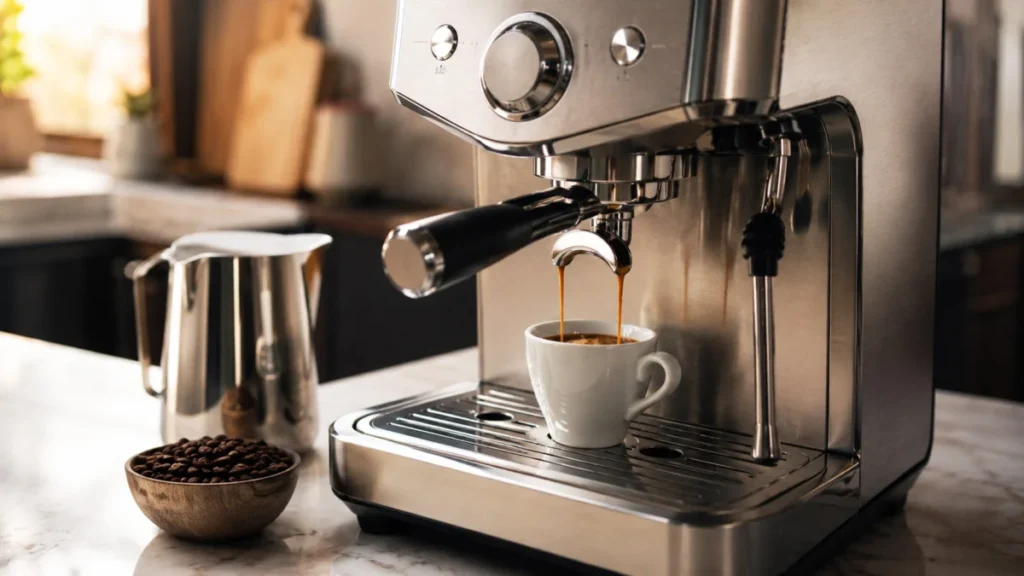
At the heart of the Italian espresso philosophy lies a commitment to commercial-grade performance within a residential footprint. Unlike mass-market machines that often rely on plastic components and thermoblock heaters prone to rapid degradation, Italian manufacturers—such as the venerable Rancilio—utilize heavy brass, high-gauge stainless steel, and robust solenoid systems.
The core advantage of this engineering approach is "thermal mass." In the physics of espresso extraction, temperature stability is the most critical variable. A fluctuation of even two degrees Celsius during a thirty-second extraction can mean the difference between a syrupy, chocolatey shot and a thin, astringent, or sour disappointment. Italian machines mitigate these variances by utilizing massive, saturated group heads that act as heat sinks. These components store thermal energy, ensuring that water traveling from the boiler to the coffee puck maintains a consistent temperature, even when back-to-back shots are pulled.
A Chronological Evolution of Brewing Technology
To understand why Italian hardware dominates the high-end market, one must look at the historical trajectory of the industry. The evolution of the espresso machine is, in many ways, the history of Italian industrial design.
The Steam Era (1884–1947)
The narrative begins with Angelo Moriondo’s 1884 patent for a steam-driven coffee machine. While rudimentary by today’s standards, it established the fundamental concept: pressurized water forced through a bed of coffee. Throughout the early 20th century, inventors like Desiderio Pavoni and Pier Teresio Arduino refined these designs, focusing on how to control steam pressure to extract coffee more efficiently.
The Golden Age of Pressure (1948–1961)
The post-WWII era brought a seismic shift in technology. In 1948, Achille Gaggia introduced the piston-driven machine, which utilized a manual lever to generate the high pressure required to emulsify coffee oils, creating the modern "crema" that defines espresso. This period established the "group head" architecture that remains the industry standard. By 1961, the E61 group head design by Faema revolutionized the industry with a thermosyphon system that circulated hot water to keep the group head permanently heated—a feature that remains the blueprint for high-end home machines today.
The Modern Precision Era (1990s–Present)
The last thirty years have seen the integration of digital PID (Proportional-Integral-Derivative) controllers and sophisticated pump technologies. Italian manufacturers have successfully bridged the gap between the raw power of the 1960s and the digital precision required by the "Third Wave" coffee movement, which demands exacting control over every variable of the brewing process.
Supporting Data: The Case for Material Integrity
When analyzing why professional-grade machines outperform consumer-grade alternatives, the data points toward material science. The use of brass—specifically lead-free, chrome-plated brass—for portafilters and group heads is not arbitrary. Brass possesses superior heat retention and conductivity compared to aluminum or plastic.
- Thermal Retention: A 5-pound brass group head, once at operating temperature, creates a stable environment that resists the cooling effect of ambient air or cold water entering the system.
- Corrosion Resistance: The commercial-grade stainless steel used in Italian chassis is designed to withstand high humidity and the corrosive nature of descaling agents over decades, not years.
- Repairability Metrics: Data from equipment repair centers consistently shows that Italian-built machines have a significantly lower "Total Cost of Ownership" over a 10-year period. While the upfront investment is higher, the ability to replace individual pumps, gaskets, and heating elements—rather than discarding the entire unit—renders these machines sustainable assets.
Official Perspectives: The Engineering Philosophy
Industry experts and engineers emphasize that the Italian approach is defined by "Iterative Refinement." Unlike consumer electronics, which are often redesigned annually to incorporate "planned obsolescence" or aesthetic gimmicks, Italian espresso brands tend to keep core designs in production for decades.
"We don’t chase trends; we chase stability," says a lead engineer at a prominent Milanese manufacturing house. "When you look at a commercial-spec machine scaled for the home, you aren’t looking at a product designed by a marketing team. You are looking at a machine designed by technicians who understand that the customer expects the same quality of espresso at 7:00 AM on a Tuesday as they do at 3:00 PM on a Sunday. Reliability is the ultimate form of luxury."
This perspective highlights a fundamental divide in the market: while mainstream manufacturers focus on how fast a machine can reach temperature, Italian manufacturers focus on the quality of the extraction once the machine is hot.
Implications for the Modern Home Barista
The decision to invest in Italian-engineered equipment has significant implications for both the user experience and the final product.
The Tactile Ritual
The act of brewing coffee on a high-end machine is inherently manual. It involves grinding fresh beans, weighing the dose, leveling the bed, and manually locking the portafilter into the group head. This tactile engagement is essential for the home barista. It creates a ritual that connects the user to the process. When a machine is capable of responding to these inputs with precision, the barista’s skill level grows alongside the machine’s capabilities.
Community and Collective Wisdom
The enduring popularity of brands like Rancilio, La Marzocco, and Profitec has fostered a massive, global support network. Because these machines are built to a standard, the knowledge base is vast. If a home user encounters a challenge—such as a specific pressure issue or a need for a gasket replacement—there are thousands of forum posts, YouTube tutorials, and community groups dedicated to solving that specific problem. This collective knowledge acts as an insurance policy for the owner, ensuring that the machine never truly becomes obsolete.
The Shift Toward Sustainability
In an era of mass-consumption, the "buy-it-for-life" ethos of Italian espresso equipment is gaining renewed traction. The environmental impact of discarding a $200 appliance every two years is becoming an increasing concern for consumers. The Italian model, which prioritizes modular, serviceable parts, aligns with the growing movement toward sustainable, long-term kitchen investments.
Conclusion: An Investment in Excellence
The enduring dominance of Italian-engineered espresso machines is not an accident of history. It is the result of a long-standing commitment to the physical realities of coffee extraction. By focusing on thermal stability, high-quality materials, and a design philosophy that favors repairability over replacement, Italian manufacturers have created a standard that remains unmatched in the residential sector.
For the aspiring home barista, the journey toward the perfect shot is paved with variables—grind size, humidity, bean origin, and roast profile. Having a machine that acts as a consistent, reliable, and precise anchor allows the barista to master these variables rather than fighting against the machine’s own limitations. Ultimately, choosing an Italian-engineered machine is an investment in the craft itself—a recognition that when it comes to the complex science of espresso, there are no shortcuts that can replace the integrity of proven, professional-grade engineering.