Between 2.5 and 2 billion years ago, our planet underwent its most profound biological and chemical metamorphosis. This era, known as the Paleoproterozoic, witnessed the "Great Oxidation Event" (GOE)—a seismic shift where atmospheric oxygen levels surged, fundamentally altering the trajectory of life. For decades, geologists have pointed to a specific, enigmatic chemical marker known as the Shunga-Francevillian event as the "smoking gun" for a global disruption of the carbon cycle during this period.
However, a new study led by researchers at the California Institute of Technology (Caltech) and published in the journal Geology is challenging this long-held scientific orthodoxy. By analyzing gases trapped for two billion years within microscopic rock pockets, the team suggests that the mysterious carbon-isotope signal once thought to reflect a planetwide environmental crisis may, in fact, be the result of local geological drama.
The Shunga-Francevillian Event: A Global Paradigm?
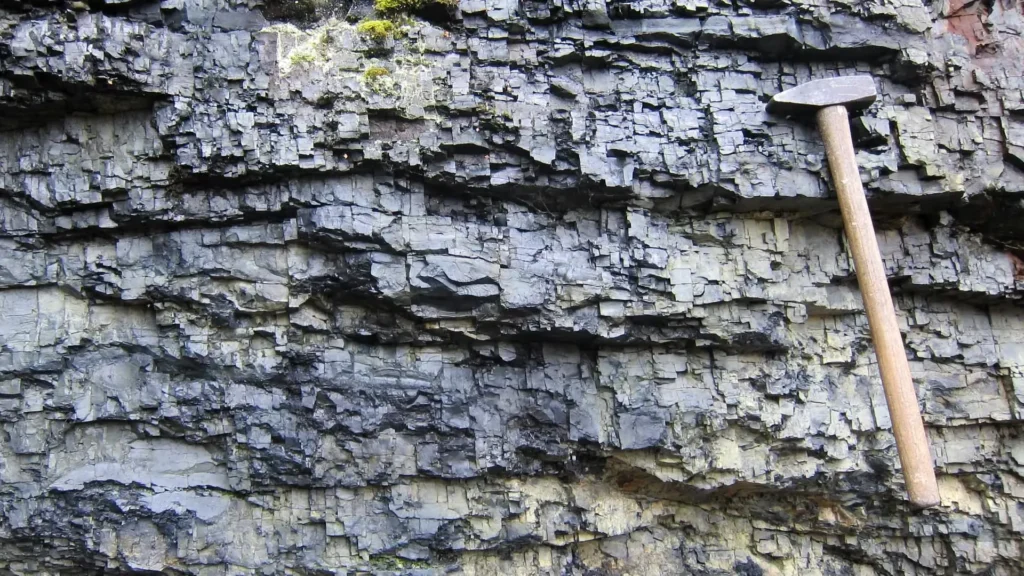
The Shunga-Francevillian event is defined by an unusual isotopic signature found in ancient marine sedimentary rocks, most notably in the Zaonega Formation of Karelia, Russia, and the Francevillian Basin in Gabon.
Carbon isotopes—atoms of carbon with varying numbers of neutrons—serve as a "fossilized" record of ancient life and environmental conditions. Because living organisms preferentially incorporate certain isotopes over others, the ratio of these isotopes in sedimentary rock acts as a ledger of biological activity. When scientists discovered a stark anomaly in the isotope ratios of 2-billion-year-old rocks, the prevailing interpretation was that the global carbon cycle had become catastrophically unbalanced.
For nearly half a century, this anomaly was cited as evidence that the rapid oxygenation of the atmosphere caused a massive burial of organic matter beneath the seafloor, trapping carbon on a scale that affected the entire planet. But as Nivedita Thiagarajan, a senior scientific researcher at Caltech and the study’s lead author, points out, our interpretation of the past is only as good as the tools we use to read it.
Chronology of a Geological Mystery
To understand why this discovery is significant, one must look at the timeline of Earth’s transformation:
- 2.5 to 2.0 Billion Years Ago: The Great Oxidation Event occurs. Oxygen begins to accumulate in the atmosphere, eventually enabling the evolution of complex, multicellular life forms half a billion years later.
- The Post-Oxygenation Era: Large quantities of microbial biomass are buried in seafloor sediments. In the Zaonega and Francevillian regions, specific rock layers exhibit a peculiar, light carbon-isotope signature.
- The Mid-20th Century to Present: Scientists identify this signature as a "global event," assuming the entire Earth’s carbon cycle shifted simultaneously.
- The Current Study: Researchers re-examine the Zaonega Formation using advanced gas-isotope analysis, identifying evidence of local thermal processes—magma intrusions and methane consumption—that could explain the signal without requiring a global catastrophe.
Deconstructing the Signal: Gases Trapped in Time
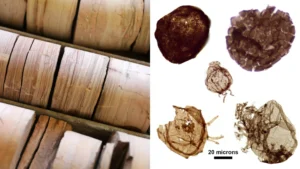
The research team, which includes experts from the Geological Survey of Norway (NGU), decided to approach the problem by looking inside the rocks rather than just at their bulk chemistry. They focused on "fluid inclusions"—microscopic, sealed pockets of fluid and gas trapped within the rock matrix for two billion years.
"We studied gases trapped in microscopic pockets within rocks from the Zaonega Formation in Karelia, Russia, one of the world’s oldest known fossil oil fields," says Thiagarajan. "We found that the carbon-isotope signal at this key site can be explained by local phenomena that occurred in a several-hundred-square-kilometer sedimentary basin rather than across the entire globe."
The Zaonega Formation is rich in pyrobitumen, an insoluble organic residue formed when crude oil or kerogen is subjected to intense heat deep beneath the Earth’s surface. By analyzing the isotopic composition of the gases trapped alongside this pyrobitumen, the researchers were able to reconstruct the thermal history of the basin.
Magma, Methane, and Microbial Consumption
The team’s proposed mechanism for the anomaly reads like a blueprint for an ancient industrial accident. They hypothesize that a massive sheet of molten magma forced its way through marine sediments beneath an ancient ocean. As the magma surged upward, it acted as a giant heating element, cooking the surrounding sediments.
This intense heat—reaching temperatures of approximately 350 degrees Celsius near the magma contact—triggered "thermogenic hydrocarbon generation," breaking down buried organic matter into methane and propane. These gases then migrated upward toward the cooler seafloor (roughly 72 degrees Celsius), where they were consumed by methane-oxidizing microbes.
The metabolic byproducts of these microbes carried the very "light" carbon-isotope signature that had previously been interpreted as a global environmental signal. The thermal gradient identified by the team—a steep drop in temperature from the magma intrusion to the seafloor—provides a perfect physical explanation for how these hydrocarbons were generated and processed locally.
"This chain of geological and biological processes can account for the unusual carbon-isotope signal recorded at the Zaonega Formation," Thiagarajan explains. "It was interesting to see that some of the same signatures that we observe in modern oil and gas basins are also there and preserved in 2-billion-year-old samples."
Official Perspectives and Scientific Collaboration
The project represents a high-level collaboration between academic and geological survey institutions. Aivo Lepland, a researcher at the NGU and a co-author of the study, brought a unique set of isotope measurements to the collaboration. Having worked on the Zaonega samples for years, his sabbatical at Caltech allowed for a synthesis of geological fieldwork and advanced geochemical modeling.
"Earth, in a way, went crazy during that time interval when oxygen appeared in the atmosphere," says Lepland. "What we are trying to assess are the causes and consequences of Earth oxygenation. This information is archived in the rocks, so, in order to study what happened, you have to study rocks."
The study also involved contributions from Florian Eichinger of Hydroisotop GmbH and Anthony Prave of the University of St. Andrews. By combining the expertise of gas-isotope geochemists with field-based sedimentologists, the team successfully created a framework that mirrors the processes seen in modern, active hydrocarbon basins.
The Path Forward: Testing the Hypothesis in Gabon
The findings raise a critical question: If the signal in Russia was created by a localized magma intrusion, is the similar signal in Gabon also a product of local geological quirks rather than a global event?
The researchers are already moving to answer this. The GOE-DEEP project, an international effort co-funded by the International Continental Scientific Drilling Program, has recently recovered new drill cores from the Francevillian Basin in Gabon.
"Now we can really put things together by doing a similar type of study on the Gabonese rocks to compare the two sites," says Lepland. "This is how science moves forward."
The international team, representing 18 different countries, is scheduled to begin sampling the Gabon cores this year. If the isotopic data from Gabon reveals a similar thermal signature—or, conversely, if it lacks the evidence of local heating—it will either confirm or complicate the team’s bold new theory.
Implications for Earth History
The implications of this study are far-reaching. If the Shunga-Francevillian event is demoted from a "global catastrophe" to a "local anomaly," it forces geologists to re-evaluate the entire record of the Great Oxidation Event. It suggests that our understanding of how Earth transitioned into an oxygen-rich world may be skewed by the misinterpretation of local, high-energy geological events.
For decades, the "unbalanced" carbon cycle was the standard model for how the planet handled the surge of oxygen. If that balance was never actually lost on a global scale, it implies that the Earth’s biosphere may have been more resilient—or differently regulated—than previously thought.
As the scientific community awaits the results from the Gabon drill cores, one thing is certain: the study of the ancient Earth is undergoing its own, smaller-scale revolution. By looking closer at the microscopic pockets of gas trapped within the crust, researchers are finding that even in the deepest annals of geological time, the devil—or in this case, the story of life’s evolution—is in the details.