In the modern retail landscape, the traditional transactional model—walk in, purchase, walk out—is rapidly losing its luster. As digital commerce continues to capture market share, physical flagships are being forced to evolve, shifting from mere points of sale to centers of cultural and lifestyle immersion. While high-end luxury juggernauts have long utilized hospitality to bolster their brand prestige, the trend is now trickling down to the contemporary sector. A prime example of this evolution is the recent opening of the first-ever flagship store for Italian fashion label Pence 1979, which has unveiled its retail footprint within the walls of a sophisticated Milanese restaurant, Salotto Orsini.
This strategic marriage of fashion and dining is not merely a design quirk; it is a calculated effort by parent company IPO SpA to synthesize a lifestyle brand that prioritizes the "Italian way of life." By embedding the brand’s identity within the culinary and social heart of Milan’s Brera district, Pence 1979 is betting that the future of retail lies in the seamless, unhurried integration of commerce and consumption.
The Intersection of Fashion and Gastronomy: Main Facts
Located on the Via San Carpoforo, the boutique occupies the lower level of Salotto Orsini, a destination space that balances culinary excellence with an aesthetic of understated luxury. The flagship, which debuted this past Thursday, creates a vertical narrative for the consumer: one enters through the warm, inviting atmosphere of a restaurant and descends a striking black stone staircase into a curated, cozy retail sanctuary.
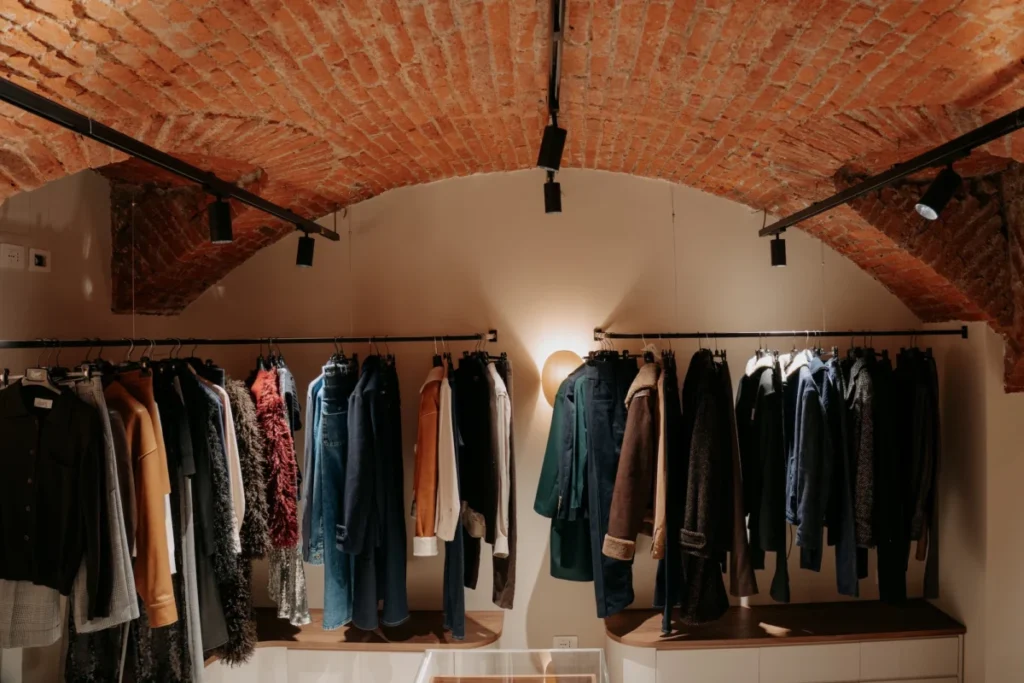
The physical space of the store is a masterclass in atmosphere. With its red-bricked vaulted ceilings, the store evokes the history of old Milan while housing the brand’s latest men’s and women’s ready-to-wear collections. Wooden displays and cabinets interact with beige marble flooring to create a tactile, warm environment that mirrors the sophistication of the restaurant above.
To ensure maximum foot traffic and "cross-pollination" between the two businesses, the boutique operates on unconventional retail hours, remaining open from 11:30 a.m. to 10:00 p.m. on weekends. This schedule is designed to capture the attention of the restaurant’s dinner crowd, allowing patrons to transition naturally from an evening cocktail or a meal by chef Gaia Giordano to an exploration of the label’s latest apparel.
A Legacy Transformed: The Chronology of Pence 1979
To understand the weight of this opening, one must look at the brand’s long-standing evolution. Founded in 1979 by Otello Zecchin on the outskirts of Venice, the company originally built its reputation as a niche specialist in men’s trousers. For decades, the brand functioned with a focus on manufacturing excellence and regional distribution.
However, the brand’s trajectory shifted significantly in 2021 when it was acquired by IPO Fashion & Design, a division of the holding company IPO SpA. This acquisition served as the catalyst for a top-to-bottom rebrand. The new ownership recognized that while the brand possessed high-quality craftsmanship, it lacked a coherent, direct-to-consumer narrative.

A critical turning point occurred in 2024, when the brand terminated its previous manufacturing license. By taking operations in-house, the company asserted direct control over its supply chain and brand image. This operational shift allowed for the agility necessary to launch a flagship concept that is as much about experimental retail as it is about garment design. The Milan flagship, therefore, represents the culmination of a three-year strategic repositioning aimed at elevating Pence 1979 from a regional manufacturer to an international contemporary player.
Market Positioning and Strategic Data
The brand currently maintains a strong, loyal footprint within the Italian market, bolstered by its reputation for high-quality fabrics and tailored silhouettes. However, international presence remains a work in progress. Distribution is currently limited to select European markets and Japan, where the brand’s focus on "Italian heritage" continues to resonate with consumers who value longevity and slow fashion.
The decision to open the flagship in the Brera district is not incidental. As one of Milan’s most "arty" and affluent neighborhoods, Brera offers a concentrated density of the exact demographic Pence 1979 seeks to capture: the urban, culturally savvy consumer who views fashion as an extension of their personal taste rather than a trend-based utility.
Data from the retail sector consistently indicates that "experience-led" retail flagships see higher dwell times and increased conversion rates for high-ticket items. By removing the sterile, clinical environment of a traditional store and replacing it with the sensory richness of a restaurant, Pence 1979 is mitigating the "anxiety of choice" that often accompanies retail, replacing it with the ease of a social outing.
The Vision: Official Responses
The philosophy behind this unique arrangement was articulated clearly by the leadership of both the restaurant and the fashion brand. Marco Tiburzi, CEO of Pence 1979, emphasized that the move is deeply rooted in the Italian ethos of leisure.
"The idea stemmed from a strong alignment of values, including the idea of reclaiming time for ourselves," Tiburzi stated during the launch. "When we talk about the Italian way of life, it’s something we take for granted, but it’s highly appealing elsewhere — and that’s what we’re offering here: a taste of it."
For Tiburzi, the flagship serves as the final piece of a puzzle. "Since the brand was acquired, we have undertaken a process not only of reinterpreting and updating it, but also of repositioning it. That involved important strategic decisions… and the final piece that we were missing was engaging in a direct dialogue with the market."

Bruno Lucisano, founder and CEO of Salotto Orsini, echoed this sentiment, arguing that the silos separating hospitality and fashion are increasingly artificial. "We were really committed to bringing together the two seemingly different worlds that aren’t so different, but rather both rooted in lifestyle and experience," Lucisano remarked. "They move at the same pace, and we wanted to create a space where you could come in for a coffee and end up buying a piece of clothing, or vice versa."
Implications for the Future of Retail
The implications of the Pence 1979-Salotto Orsini collaboration are far-reaching. As the global retail market continues to consolidate, mid-market and contemporary brands are finding it increasingly difficult to compete with the massive marketing budgets of luxury conglomerates. By partnering with hospitality ventures, smaller brands can create an "anchor" that drives foot traffic through organic social interactions rather than paid advertising.
This model also solves a common problem in urban retail: the "dead zone" of low-traffic hours. By aligning with a restaurant, the retail space benefits from the natural flow of the hospitality business, turning the restaurant’s clientele into a captive audience for the store.
Furthermore, this move signals a broader cultural shift. The modern consumer is increasingly wary of over-consumption. By creating a retail space that is tied to the concept of "reclaiming time" and enjoying a meal, Pence 1979 is positioning its clothing not as a disposable commodity, but as a component of a lifestyle that values quality, patience, and social connection.
As Pence 1979 continues to expand its reach, the success of this Milanese flagship will likely serve as a blueprint for future expansion. If the brand can successfully translate this "tasting menu" approach to retail into international markets, it may well prove that the most effective way to sell a garment is not to shout about it, but to invite the customer to stay for a while, have a glass of wine, and experience the world of the brand in its most authentic form.
In conclusion, the debut of the Pence 1979 flagship is more than a store opening; it is a bold statement on the future of brand engagement. By blurring the lines between the table and the dressing room, the company is crafting a narrative that is difficult to replicate online, ensuring that the physical store remains a vital, relevant, and deeply human part of the retail ecosystem.