

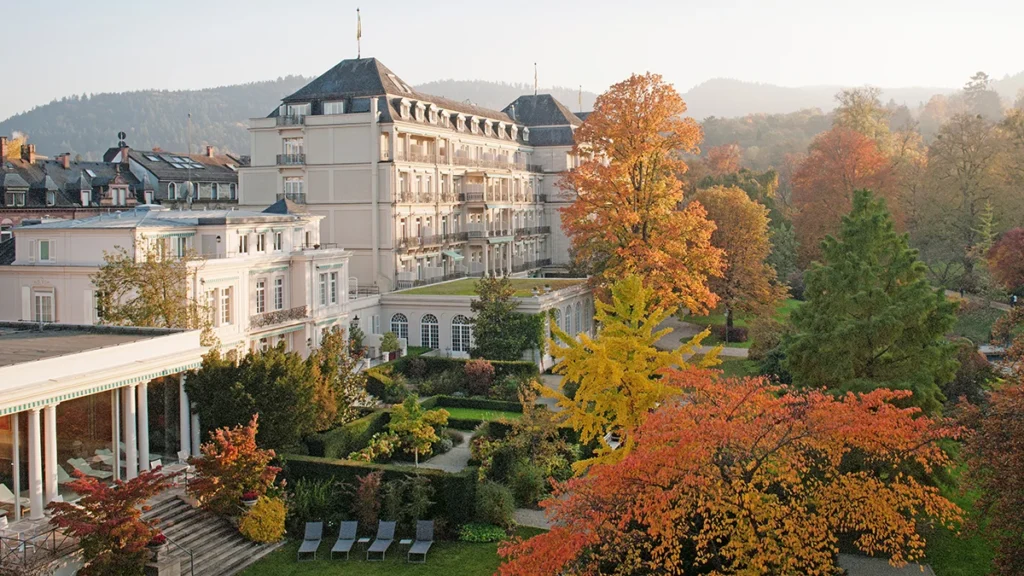
In the historic, mist-shrouded town of Baden-Baden, Germany—a destination that has served as a sanctuary for the European elite since the 19th century—a quiet revolution in high-end hospitality is unfolding. At the storied Brenners Park-Hotel & Spa, the traditional concept of a "wellness retreat" has been dismantled and replaced by something far more clinical, scientific, and profoundly personalized.
The line between a five-star grand resort and a cutting-edge diagnostic facility has been intentionally blurred. Here, the guest experience is not defined by the mere absence of stress, but by the proactive pursuit of biological optimization. For the global ultra-high-net-worth individual, Brenners has become the preeminent address for "preventative medicine," where one can undergo a comprehensive cellular audit before retreating to a suite that overlooks the tranquil Oos River.
The Architecture of a Medical Oasis
Upon arrival, the distinction between guest and patient is immediate. A front-desk agent leads visitors not toward the sprawling manicured gardens or the plush lobby bar, but directly to the clinic. This transition is seamless, designed to maintain the hotel’s atmosphere of absolute discretion.
While many resorts rely on the aesthetic of "yoga pants and green juice," the atmosphere at Brenners is strikingly different. The hallways are populated by individuals who appear to have stepped off an international best-dressed list: women carrying limited-edition Dior bags and men in tailored loafers. Yet, the destination for these guests is rarely a cocktail lounge; it is a laboratory. The juxtaposition is jarring yet intentional—a runway for the global elite that ends not in a party, but in a blood draw.

A Chronology of a Biological Audit
The rhythm of a stay at Brenners is dictated by the clinic’s operational pulse. While the mornings are often dominated by the rigorous, unsexy work of diagnostics, the evenings reclaim the traditional luxury resort experience.
The Diagnostic Phase
Most mornings begin in the office of Dr. Harry König, the architect of the hotel’s medical operation. Dr. König’s approach is a calculated synthesis of conventional Western medicine and advanced naturopathy. During the first few days, the schedule is packed: ultrasound screenings of the thyroid, heart, and abdomen; cardiovascular stress testing; exhaustive blood panels; and full-body scans.
The Evolving Protocol
The beauty of the Brenners system lies in its agility. As lab results return, the medical team recalibrates the guest’s itinerary. By evening—or sometimes in the middle of the day—a revised schedule appears, reflecting new data points. If a blood test reveals a deficiency, the necessary supplements are sourced from a local pharmacy and delivered to the suite by evening.
The Treatment Regimen
The middle of the week is usually reserved for a rotation of specialized interventions. These include:

- Cranio Sacral Balance: For neurological and structural alignment.
- EmSella Pelvic-Floor Activation: Utilizing high-intensity focused electromagnetic technology.
- Exomind Brain Stimulation: Targeted non-invasive neuro-modulation.
- Lymphatic Drainage and Physiotherapy: To manage inflammation and structural recovery.
Supporting Data: Addressing the Fundamentals
The data gathered during a stay at Brenners provides a granular look at personal health. For many, the findings are revelatory. In one documented case, a guest’s profile revealed low iron, a vitamin-D deficiency, elevated cholesterol levels (determined to be largely genetic), and a sluggish thyroid.
However, the clinic’s philosophy is defined as much by what it doesn’t do as by what it does. Despite being one of only two clinics in Germany legally permitted to perform pluripotent stem-cell treatments, the medical team is remarkably conservative. If a patient’s age or health profile does not necessitate aggressive intervention, they are steered toward foundational health.
When a guest presented with endometriosis, the team avoided invasive procedures, opting instead for a long-term plan centered on hormone regulation and fundamental lifestyle shifts. This "do no harm" approach, delivered with the soft touch of a five-star concierge, provides a level of reassurance that is rarely found in the high-pressure world of boutique longevity clinics.
The Holistic Integration: Beyond the Lab
While the clinical side is rigorous, the "spa" aspect of the hotel remains a pillar of the experience. The integration of high-end skincare—such as the use of Augustinus Bader products in facial treatments—and traditional therapeutic modalities like Lomi Lomi massage, ensures that the guest never feels like they are merely an object of study.

Even the culinary program is an extension of the medical plan. Unlike many wellness retreats that rely on "dietary penance"—thin broths and restrictive fasting—Brenners treats nutrition as a bespoke service. Menus are tailored to the individual’s biomarkers. If a patient is flagged for inflammation, their meals are engineered to be gluten- and lactose-free, with specific protein targets, yet they retain the complexity and flavor profile of fine dining.
Official Perspectives: The Philosophy of Longevity
Dr. Harry König views the current trend of "longevity tourism" with a critical eye. He draws a sharp distinction between the feeling of vitality one achieves while at a resort and the actual physiological results that persist once a guest returns home.
"Longevity is a strategy," König notes. He compares superficial wellness trends to the experience of drinking rosé in the South of France: "It tastes incredible sitting by the sea in perfect weather; less so once you get home."
The goal of the Brenners protocol is to create results that are durable. By focusing on the fundamentals—hormonal balance, gut health, and structural integrity—the clinic aims to provide guests with a roadmap for their "everyday" life, rather than just a temporary spike in well-being. The clinic’s willingness to tell high-profile clients—CEOs, politicians, and A-list celebrities—that they don’t need a particular procedure is a testament to the integrity of the practice.

Implications for the Future of Luxury Travel
The logistical "wrinkles" observed during a stay—occasional delays in appointments or a minor lapse in meal delivery protocols—serve as a reminder that Brenners is, at its core, a functioning medical practice. Reconciling the precision of medicine with the fluid, indulgent nature of luxury hospitality is an ongoing challenge.
However, the success of the model is evident in the guest feedback. When a 32-year-old guest is mistaken for a college student, it acts as a form of non-clinical validation. While it may be unclear if this is the result of the lighting or the longevity protocol, the effect is undeniable: the guest feels, and appears, revitalized.
As the global appetite for longevity and preventative health continues to grow, the "Brenners Model"—a blend of rigorous, evidence-based medical diagnostics and the uncompromising comforts of a historic grand resort—is likely to become the new benchmark for luxury travel. For those who can afford the entry price (which starts at approximately $51,800 for the 10-night ReLife Longevity Protocol, excluding accommodations), the return on investment is not just a vacation, but a calculated extension of one’s own vitality.