

As the world approaches the United Nations Climate Change Conference (COP31) in Turkey, the global community finds itself at a precarious crossroads. For years, the discourse around climate change has focused heavily on decarbonization and physical infrastructure—building seawalls, reinforcing power grids, and transitioning to renewable energy. However, as the planet continues to shatter heat records and weather patterns become increasingly erratic, a glaring blind spot has emerged: the total absence of “care” in national adaptation plans and climate financing strategies.
Climate change is not merely an environmental or economic problem; it is a profound human crisis that disproportionately affects the most vulnerable. When floods, wildfires, and extreme heatwaves strike, the infrastructure that supports human life—specifically childcare, eldercare, and disability support services—is often the first to collapse. By failing to integrate care into climate resilience frameworks, nations are ignoring a vital line of defense that could prevent cascading health and economic disasters.
The Anatomy of the Crisis: Main Facts and Current Realities
The argument for integrating care into climate policy is rooted in the reality of modern climate disasters. When a heatwave strikes or a cyclone necessitates the evacuation of a city, the responsibility for those who cannot fend for themselves—the elderly, the disabled, and the very young—falls into a precarious gap.
In the summer of 2026, Europe witnessed the devastating consequences of this oversight. Despite possessing some of the world’s most sophisticated welfare states, the region saw at least 35,000 excess deaths attributed to back-to-back heatwaves. These deaths were not merely the result of high temperatures; they were the result of a breakdown in the care ecosystem. Without climate-resilient facilities, backup power for medical equipment, and organized community support, those dependent on professional care were left exposed.
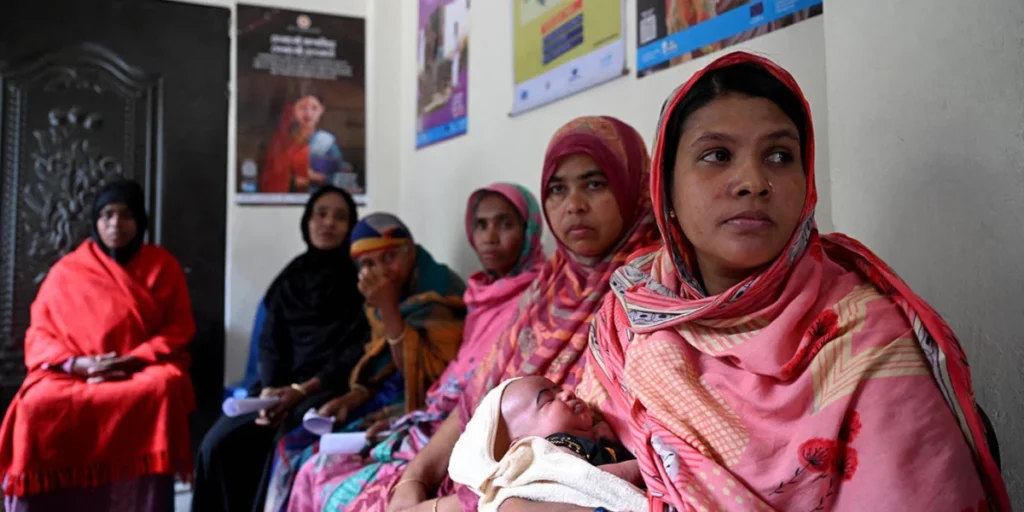
When household-based care fails, the burden inevitably shifts to family members, the vast majority of whom are women. In the wake of a disaster, these caregivers are often forced to choose between their own safety, their paid employment, and the survival of their loved ones. This leads to a dual crisis: a collapse in public health as hospitals are overwhelmed by preventable cases, and a long-term economic blow as caregivers exit the workforce to manage the fallout of the disaster.
A Chronology of Neglect
The trajectory of climate adaptation planning has historically followed a top-down, siloed approach.
- Pre-2020: Climate policy was almost exclusively dominated by mitigation—reducing greenhouse gas emissions. Adaptation was a secondary concern, often limited to "hard" infrastructure projects like dam building and irrigation.
- 2021–2023: As the UN Environment Programme’s (UNEP) Adaptation Gap Reports began highlighting the massive shortfall in funding, the international community realized that climate impacts were no longer theoretical. However, the focus remained on agriculture, forestry, and water management.
- 2024–2025: The record-shattering heat of 2025 forced a re-evaluation of social infrastructure. Reports from the World Meteorological Organization (WMO) confirmed that extreme weather events were no longer outliers but the new normal.
- The Road to COP31 (2026): Pressure is mounting on governments to move beyond vague commitments. The current conversation is shifting toward "implementation," yet the financial pipelines for social resilience remain largely dry.
Supporting Data: The Multi-Billion Dollar Gap
The math behind the current climate adaptation gap is sobering. According to the UN Environment Programme, developing countries require between $310 billion and $365 billion annually through 2035 to meet basic adaptation needs. Currently, there is a shortfall of at least $280 billion.
Even more alarming is how that money is allocated. Conventional sectors—agriculture, water, and sanitation—command nearly 40% of global adaptation finance. Conversely, health receives a meager 4–6%, and education accounts for roughly 2%. Long-term care and early-childhood education are essentially non-existent in these financial frameworks, despite their critical role in social stability.
Research into specific economies, such as Bangladesh, provides a blueprint for what a shift in priorities might look like. Estimates suggest that building a climate-resilient care infrastructure in the country would require an investment of roughly 3–5% of GDP. While this figure appears significant, it pales in comparison to the hidden value of the unpaid care work currently sustaining these populations. Furthermore, this investment is not just a cost; it is a job creator. Such a system could directly employ between 3.6 million and 7 million people in Bangladesh alone, stimulating the local economy while fortifying the population against future shocks.
Official Responses and the Financing Struggle
International financial institutions (IFIs) and multilateral development banks (MDBs) are currently struggling with the "bankability" of adaptation projects. The primary challenge, as identified by global financiers, is the difficulty of assessing and pricing the risks associated with social projects. Unlike a solar farm, where energy output and revenue are predictable, the outcomes of a care center are complex to quantify in a spreadsheet.
However, advocates for the "care economy" argue that this is a failure of imagination. Care services come with an established evidence base—data on unit costs, staffing models, and long-term health outcomes. By retrofitting childcare facilities or building climate-resilient nursing homes, governments can lower future health expenditure and boost tax revenue through higher female labor force participation.
The "sector-by-sector" approach to funding has allowed care to fall through the cracks. For the upcoming COP31, experts are calling for a systemic change in how MDBs categorize "adaptation projects." They argue that if a project prevents a health crisis or keeps caregivers in the workforce during a disaster, it should be classified as primary climate infrastructure.
Implications: The High Cost of Inaction
The failure to integrate care into national adaptation plans carries three major implications:
1. The Erosion of Economic Productivity
When climate shocks hit, the immediate loss of productivity from caregivers is often overlooked. By neglecting to build resilient care, nations are effectively subsidizing their own economic downturns. Women, who provide the vast majority of unpaid care, are forced to exit the workforce, leading to long-term skill gaps and reduced household income that can take years to recover.
2. The Overburdening of Public Health Systems
Climate shocks often turn manageable health conditions into emergencies when professional care is interrupted. Without early-childhood education centers or geriatric care services that are built to withstand floods or heat, hospitals are forced to act as the "caregiver of last resort." This places an unsustainable strain on public health systems, leading to higher mortality rates and spiraling costs for the state.
3. Demographic Vulnerability
As global populations age, the demand for long-term care will only increase. Climate change is a threat multiplier; it exacerbates the fragility of the elderly. A society that does not invest in climate-adapted care for its aging population is building a disaster that it cannot afford to ignore.
Conclusion: A New Mandate for COP31
As the world prepares for COP31, the narrative must shift. Adaptation is not just about concrete and steel; it is about the systems that hold society together. Investing in climate-resilient care is one of the most effective ways to ensure that when the next disaster strikes, the most vulnerable among us are protected, and the economic engines of our societies remain intact.
The evidence is clear: the current adaptation gap is not just a lack of money, but a lack of focus. By moving care from the periphery to the center of climate policy, governments can create a more resilient, equitable, and productive future. The time to implement these changes is not after the next disaster, but now. Every dollar invested in resilient care systems today is a dollar that prevents a crisis tomorrow.



