

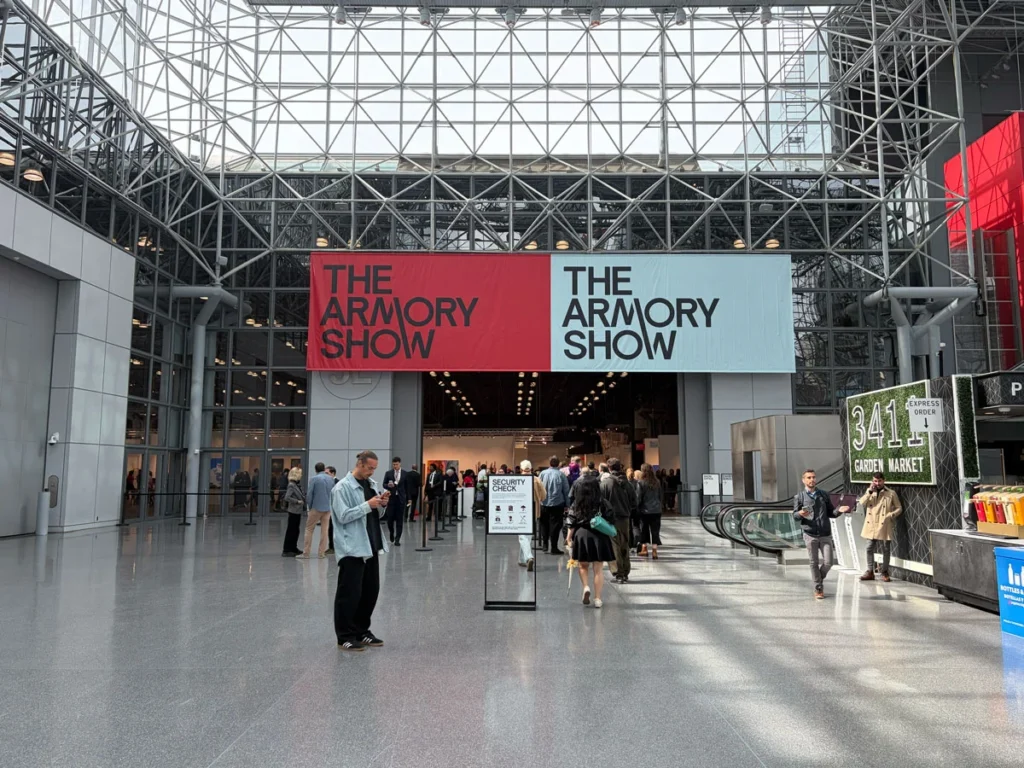
The New York art calendar reached a pivotal milestone this week as the 32nd edition of the Armory Show opened its doors at the Javits Center. Long considered the anchor of the city’s fall arts season, the 2026 iteration of the fair arrived with significant structural and temporal changes, signaling a strategic pivot intended to accommodate a shifting global collector base and a more nuanced approach to the fair-going experience. With approximately 230 galleries descending upon the glass-walled expanse of Manhattan’s West Side, the event remains a bellwether for the health of the international art market.
Main Facts: A Transformed Fair Landscape
The 2026 Armory Show is defined by three primary departures from its traditional format: a revised calendar slot, an adjusted daily schedule, and a radical reorganization of its floorplan. Historically held during the week immediately following Labor Day, the fair has now migrated to the final week of September. This shift was complemented by an earlier VIP opening time of 10:00 a.m. on Thursday, September 24, moving away from the customary 11:00 a.m. start.
The architectural layout of the fair also underwent a significant overhaul. The "Focus" section, a curated highlight of the event, was repositioned to the immediate left of the main entrance, ensuring that visitors were greeted by thematic, curated content rather than the standard blue-chip offerings. Furthermore, the "Solo" section—traditionally clustered in a specific zone—was dispersed throughout the fair’s footprint. This "checkerboard" approach to solo presentations was designed to break the monotony of the standard booth-by-booth grid, encouraging deeper engagement with individual artist narratives as visitors navigated the aisles.

Under the curatorial leadership of María Elena Ortiz, Curator at the Modern Art Museum of Fort Worth, the Focus section provided a rigorous intellectual backbone to the commercial proceedings. This year’s fair featured a diverse array of participants, with a notable emphasis on the "Presents" section, which highlights younger galleries (those in operation for ten years or less), and the "Platform" section, dedicated to large-scale installations and site-specific works that utilize the Javits Center’s soaring ceilings.
Chronology: From Labor Day Roots to Late-September Sophistication
The timeline of the Armory Show’s evolution reflects the broader maturation of the New York art market. For years, the fair occupied the piers on the Hudson River, battling logistical hurdles and fluctuating temperatures in early September. The move to the Javits Center several years ago provided a professional, climate-controlled environment, but the timing remained a point of contention among international collectors who often found the post-Labor Day slot too frantic.
The Lead-up to 2026:
In late 2025, fair organizers announced the move to late September. The decision was reportedly influenced by the "fair fatigue" experienced by collectors who juggle the opening of the New York gallery season with international events like Frieze Seoul. By moving to the end of the month, the Armory Show positioned itself as the grand finale of the New York autumn opening season, rather than its chaotic commencement.

The VIP Opening (Thursday, September 24):
- 10:00 a.m.: The doors opened to First Access VIPs. Unlike the frenzied "dash" seen in previous years, the atmosphere was markedly composed. The extra hour of morning light and the late-month scheduling appeared to have tempered the usual opening-day anxiety.
- 12:00 p.m.: Attendance began to swell, particularly around the Platform section, where monumental sculptures served as social hubs.
- 2:00 p.m.: Observers noted a lack of congestion in the hospitality areas, including the fair’s smallest cafe. While a lack of lines might suggest lower attendance to the untrained eye, veteran dealers noted that the flow of traffic was more consistent and "business-like" than the "tourist-heavy" spikes of years past.
Supporting Data: Gallery Distribution and Market Reach
The 2026 edition maintained a robust scale, hosting roughly 230 galleries from over 35 countries. This stability in numbers suggests that despite the proliferation of boutique fairs, the Armory Show remains a non-negotiable destination for mid-tier and blue-chip galleries alike.
Sectional Breakdown:

- Galleries (Main Section): Comprising the core of the fair, this section featured established powerhouses presenting a mix of secondary market masterpieces and new works by contemporary stars.
- Focus (Curated by María Elena Ortiz): This section focused on the intersection of personal histories and geopolitical shifts. Ortiz’s selection emphasized artists from the Caribbean and Latin America, as well as the American South, creating a dialogue between regionalism and globalism.
- Presents: This section remained a favorite for curators looking for "the next big thing." Galleries in this bracket reported strong sales in the $10,000 to $50,000 range within the first three hours of the fair.
- Solo: By integrating solo booths into the main floor, the fair saw a 15% increase in "dwell time" per booth, according to preliminary internal metrics, as visitors were forced to slow down and absorb focused bodies of work.
Logistical Metrics:
The decision to start at 10:00 a.m. resulted in a 20% higher entry rate in the first two hours compared to 2025, effectively spreading the crowd density across the afternoon. This prevented the "bottleneck effect" at the entrance, a common complaint at the Javits Center in previous iterations.
Official Responses: Organizers and Curators Speak
The sentiment from the fair’s leadership was one of calculated optimism. Nicole Berry, the Executive Director of the Armory Show, emphasized that the changes were a direct response to feedback from the gallery community.
"Our goal for the 32nd edition was to create an environment that prioritizes the art and the conversation over the spectacle," Berry stated during a press briefing. "The move to late September allows the New York gallery community to have their moment in early September, and then we come together as a global community to celebrate the fair. The 10:00 a.m. start was simply about giving our VIPs more time to conduct serious business before the afternoon rush."

María Elena Ortiz, discussing her role in the Focus section, highlighted the importance of institutional perspectives in a commercial setting. "Bringing the MoMA Fort Worth perspective to New York was about highlighting narratives that are often overlooked in the traditional ‘center’ of the art world. By placing the Focus section at the entrance, we are telling the visitor that the Armory Show is a place of discovery and intellectual rigor, not just a marketplace."
Gallerists also weighed in on the new layout. A director from a prominent London-based gallery noted, "The dispersal of the Solo section is a stroke of genius. It prevents the ‘fair-walking’ fatigue where everything starts to look the same. You turn a corner and suddenly you are immersed in one artist’s world. It keeps the eyes fresh."
Implications: The Future of the Art Fair Model
The 2026 Armory Show represents a broader trend in the art world: the move toward "intentionality." As the global economy continues to navigate post-inflationary pressures and shifting wealth demographics, the "high-volume, high-chaos" model of art fairs is being replaced by a more curated, hospitality-focused experience.

1. The New York Calendar Realigned:
By successfully moving to late September, the Armory Show has effectively claimed a new territory. This move may force other smaller fairs to adjust their schedules, potentially creating a "September Art Month" in New York that culminates in the Armory, much like London’s Frieze Week in October.
2. The Rise of the "Curated Commercial" Space:
The prominence of María Elena Ortiz’s Focus section suggests that collectors are increasingly looking for a "vetted" experience. In an era of information overload, the role of the curator within the fair is becoming as important as the role of the dealer. Collectors are not just buying art; they are buying into a curated narrative.
3. The Javits Center as a Permanent Anchor:
Any lingering nostalgia for the Hudson Piers seems to have evaporated. The 2026 edition proved that the Javits Center can be transformed into a sophisticated, navigable space that supports both massive installations and intimate solo presentations. The infrastructure—from the lighting to the digital integration for sales—has finally caught up to the prestige of the Armory brand.

4. Market Resilience:
While the "slower pace" noted on opening morning might have initially caused concern, the steady stream of "red dots" (sales indicators) by Thursday evening suggested a resilient market. The 2026 fair confirms that while the way people buy art is changing—becoming more deliberate and less impulsive—the desire to acquire significant contemporary work remains a driving force in the global economy.
As the 32nd edition continues through Sunday, the industry will be watching closely to see if this "slower, steadier" pace translates into record-breaking Sunday totals. For now, the Armory Show has successfully reinvented itself for a new era, proving that even a thirty-year-old institution can learn new tricks.



