

Introduction: A Shift in Global Maritime Security
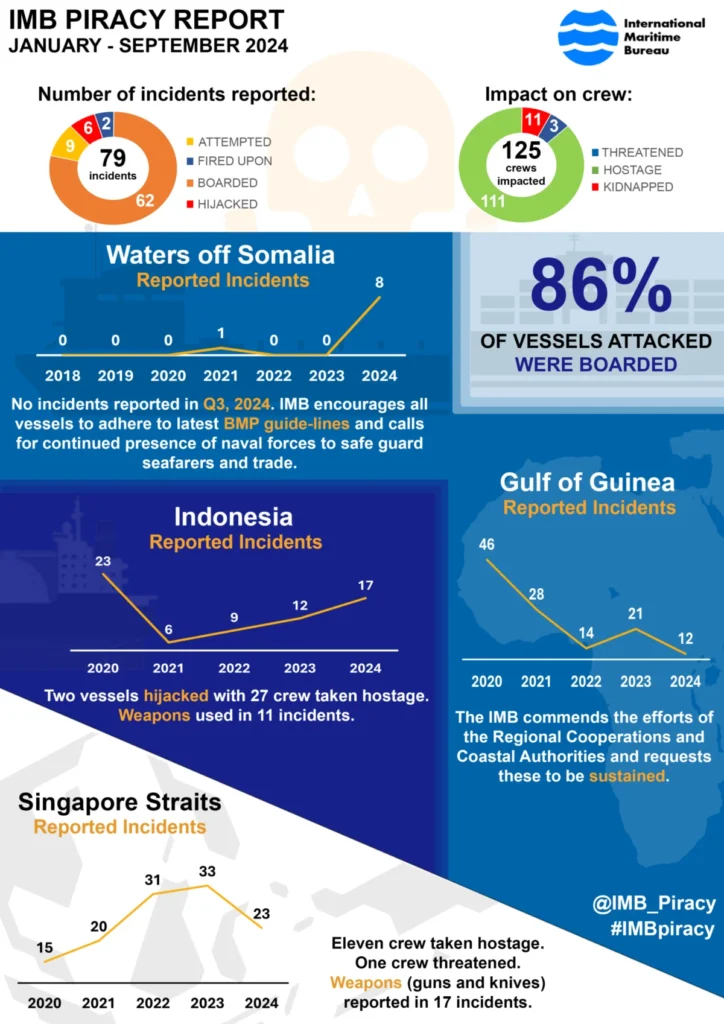
The global maritime landscape has witnessed a significant transformation throughout the first nine months of 2024. According to the latest data provided by the International Chamber of Commerce’s International Maritime Bureau (IMB), major piracy hotspots—historically synonymous with danger—have seen a marked reduction in the frequency of reported incidents. From the turbulent waters of the Gulf of Guinea to the strategically vital chokepoints of the Singapore Straits, the statistical trend line is pointing downward.
However, maritime security experts warn against premature optimism. While the total number of incidents has plummeted, the human cost remains staggeringly high. Behind the cold statistics of "boardings" and "hijackings" lie the harrowing experiences of seafarers subjected to kidnapping and hostage-taking. This report examines the current state of global maritime security, the tactical shifts in piracy, and the imperative for continued vigilance in an increasingly volatile world.
I. Main Facts: The Statistical Overview
The first three quarters of 2024 have been defined by a paradox: fewer attacks, yet persistent threats to human life.
The Gulf of Guinea: A Historic Low
Perhaps the most striking development is the situation in the Gulf of Guinea. Historically considered the world’s most dangerous region for seafarers, the area recorded only 12 incidents between January and September 2024. This represents the lowest number of reports since the IMB began compiling data in 1996. For years, West African piracy was characterized by sophisticated armed gangs targeting tankers and kidnapping crews for ransom. The current decline suggests that regional naval cooperation and enhanced onboard security protocols are beginning to bear fruit.
Singapore Straits: A Decline in Frequency, Not Intensity
The Singapore Straits, one of the world’s busiest shipping lanes, also saw a positive shift. Incidents dropped to 23 in the first nine months of 2024, down from 33 during the same period in 2023. While the reduction in volume is a welcome relief for the shipping industry, the nature of these incidents remains problematic. Perpetrators successfully boarded vessels in 96% of cases, highlighting a persistent inability for merchant ships to deter low-level opportunistic attackers in these congested waters.
Somalia and the Gulf of Aden: The Return of the Threat
Conversely, the waters off Somalia and the Gulf of Aden have seen a concerning resurgence. Eight incidents were recorded in 2024, including three confirmed hijackings and two instances where vessels were fired upon. Although the third quarter—July through September—remained quiet, likely due to the adverse weather conditions brought on by the monsoon season, the IMB remains on high alert for a potential uptick in activity as the seas calm.
II. Chronology: Mapping the 2024 Timeline
To understand the nuances of these maritime threats, it is necessary to examine the timeline of events that have defined 2024 thus far.
- Q1 2024 (January–March): The year began with a continued focus on the Singapore Straits, where opportunistic thefts were the primary concern. In the Gulf of Guinea, the start of the year saw a continuation of the downward trend in piracy, attributed to increased patrols by regional maritime authorities.
- Q2 2024 (April–June): This period marked the emergence of renewed concern in the Horn of Africa. Following a long period of dormancy, the hijacking of vessels off the Somali coast sent shockwaves through the industry. These events forced shipping companies to re-evaluate their risk assessments for vessels transiting the Indian Ocean.
- Q3 2024 (July–September): As the monsoon season set in across the Indian Ocean and the Gulf of Aden, piracy activity in these regions dropped to zero. During this time, the IMB reported a stabilization in the Gulf of Guinea, though the kidnapping of 11 crew members and the taking of 21 hostages remained a somber reminder that the threat, while localized, remains lethal.
III. Supporting Data: The Human Cost
While the IMB’s data points toward a "reduction in incidents," the human impact remains the core concern of the international shipping community.
The Calculus of Kidnapping and Hostage-Taking
In the first nine months of 2024, 11 crew members were kidnapped, and 21 were taken hostage. These numbers, while smaller than in the peak years of piracy, represent individuals whose lives have been upended by criminal enterprises.
- The Singapore Straits Pattern: The 23 incidents in the Singapore Straits have predominantly involved opportunistic criminals looking for ship stores or engine parts. While rarely involving kidnapping, the success rate of boarding—96%—indicates that these perpetrators are well-versed in the blind spots of large cargo vessels and are rarely deterred by standard non-lethal security measures.
- The Gulf of Guinea Vulnerability: The incidents here are generally more sophisticated. Even with only 12 reported events, the violence involved in the kidnapping of crew members suggests that the criminal networks in the Niger Delta have not been eliminated; they have merely been suppressed.
IV. Official Responses and Industry Vigilance
International bodies, including the IMB, have issued a series of directives aimed at mitigating these risks. The response to the current situation is two-fold: tactical security and regional policy.
Best Management Practices (BMP)
The IMB continues to stress the vital importance of the latest Best Management Practices (BMP). These guidelines are the industry standard for hardening vessels against attack. Key recommendations include:
- Vessel Hardening: Installing razor wire, maintaining high-speed capabilities when transiting high-risk areas, and ensuring that all deck areas are well-lit and monitored.
- Watchkeeping: Maintaining a 24/7 dedicated bridge watch, with additional lookouts posted on the deck during transit through high-risk zones.
- Communication: Ensuring that all vessels report their position to regional maritime security centers and maintain constant contact with the IMB Piracy Reporting Centre (PRC).
Regional Naval Cooperation
The reduction in Gulf of Guinea piracy is largely attributed to the collaborative efforts of the Nigerian Navy and other regional partners who have intensified patrols in the Economic Exclusion Zones (EEZ). Similarly, the international naval presence off the coast of Somalia remains a critical deterrent, though the IMB warns that the lack of constant naval coverage during monsoon seasons can create "blind spots" that opportunistic pirates may exploit.
V. Implications: Navigating Future Risks
The maritime industry stands at a crossroads. While the decline in piracy is a testament to the efficacy of current countermeasures, several factors threaten to reverse these gains.
The Risk to Navigation
A critical point raised by the IMB is the risk that even "low-level" incidents pose to the safety of navigation. In the narrow, congested waters of the Singapore Straits, a vessel that is distracted by an attempted boarding is a vessel at risk of collision or grounding. The psychological stress placed on crews during an attack—even one that does not lead to kidnapping—can lead to errors in judgment that have catastrophic consequences for the ship and the environment.
The "Monsoon Factor" and Potential Resurgence
The lull in the Somali region during Q3 2024 is weather-dependent, not security-dependent. As the monsoon season concludes, the IMB warns that criminal groups will likely attempt to resume their operations. The return of piracy in the Indian Ocean serves as a stark reminder that criminal networks are resilient and will adapt to changing political and environmental conditions.
The Role of Technology
The future of maritime security will likely involve a greater reliance on satellite surveillance and artificial intelligence to predict pirate movements. As criminals become more adept at using technology to identify vulnerable vessels, the shipping industry must pivot toward "predictive security" rather than merely "reactive security."
Conclusion: A Call for Sustained Effort
The maritime industry has made significant strides in securing the world’s oceans over the past nine months. The decline in incidents in the Gulf of Guinea and the Singapore Straits is a credit to the collaborative efforts of crews, shipowners, and regional authorities. However, the 32 seafarers who have been kidnapped or held hostage this year serve as a poignant reminder that the threat has not been eradicated.
The IMB’s message is clear: do not become complacent. The shipping industry must maintain a rigorous adherence to safety protocols, continue to report all incidents, and keep the pressure on regional governments to maintain their naval commitments. As the global economy relies on the safe passage of goods across these dangerous corridors, the safety of the crew must remain the industry’s highest priority. The progress made in 2024 is a foundation to build upon, not a signal to lower our guard. By remaining vigilant, the maritime community can continue to ensure that the world’s oceans remain conduits for prosperity rather than arenas for criminal violence.



