

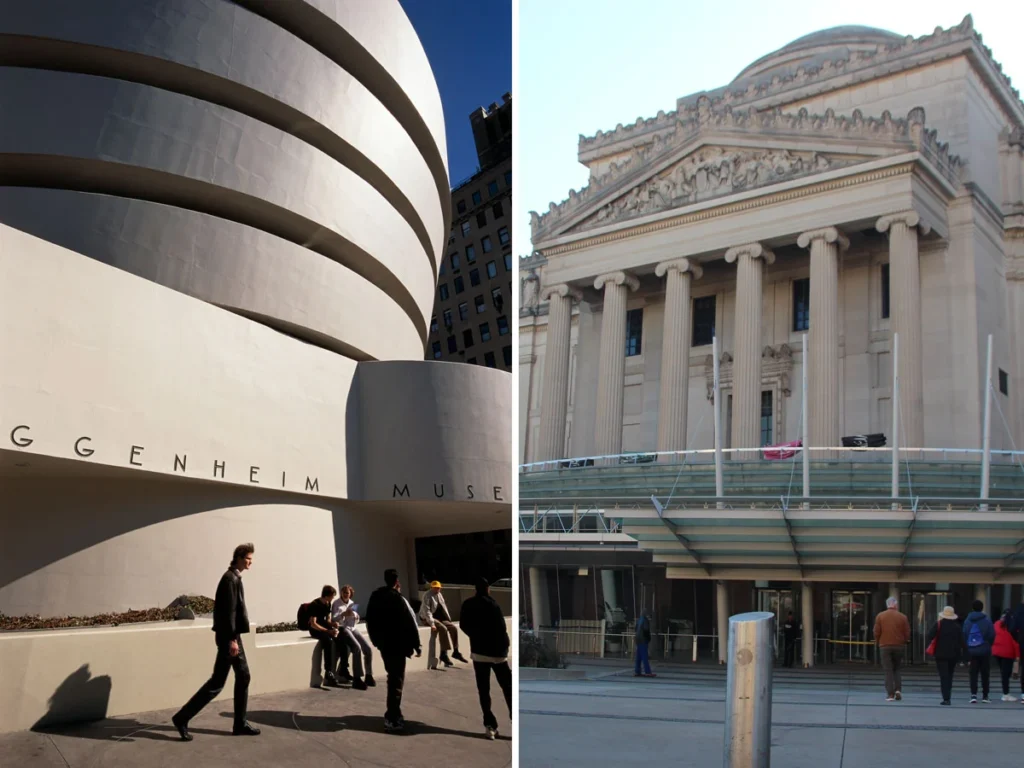
In a series of landmark developments for the New York City arts sector, unionized staff at four of the city’s most prestigious cultural institutions have successfully ratified new labor contracts. The agreements, facilitated by UAW Local 2110, mark a pivotal conclusion to months—and in some cases, years—of intense negotiations. The Brooklyn Museum, the Guggenheim Museum, the Jewish Museum, and the American Folk Art Museum (AFAM) have all secured new terms, setting a significant precedent for how cultural institutions address worker compensation, job security, and the rising cost of living in the metropolis.
This consolidation of labor power comes after a period of widespread instability in the museum sector, characterized by post-pandemic financial deficits, staff layoffs, and a growing determination among museum professionals to secure a more sustainable future.
The Landscape of the Recent Agreements
The resolution of these contracts was staggered throughout the autumn. While the Guggenheim and the Jewish Museum finalized their agreements in September, the Brooklyn Museum and the American Folk Art Museum concluded their negotiations this week. For many of these institutions, these contracts represent not just incremental pay raises, but a fundamental rethinking of the employer-employee relationship in the arts.
Brooklyn Museum: Securing Stability Amidst Crisis
The Brooklyn Museum’s second contract is a testament to the power of collective action. Following a year of extreme turbulence—marked by a $10 million operating deficit and a controversial proposal to slash 10 percent of the workforce—the union successfully staved off layoffs. The ratified four-year contract provides annual raises and establishes significant minimum salary tiers for full-time staff, ranging from $63,585 to $129,854. Furthermore, visitor services and retail staff are set to see their hourly wages rise to between $28.69 and $32 by the end of the contract term.
"We are pleased to have negotiated a second contract that preserves the quality of our health care and provides significant wage increases," said Elizabeth St. George, an assistant curator at the Brooklyn Museum. "It was important to us to maintain affordable health care, including keeping an out-of-network option."
The American Folk Art Museum: A Historic Inaugural Contract
For the staff at the American Folk Art Museum, the ratification is particularly historic, as it marks the institution’s inaugural contract after nearly two years of protracted bargaining. The deal includes a 13.6 percent total wage increase over four years, with entry-level workers in retail, security, and facilities seeing immediate raises of up to 22 percent. Beyond wages, the contract codifies protections that were previously nonexistent: a binding grievance procedure, premium-free health care, and restrictions on the use of temporary labor to replace permanent staff.
Chronology: From Picket Lines to Paperwork
The path to these agreements was far from linear. The tension in the sector escalated significantly in early 2025, as institutions struggled with the realities of reduced endowments and volatile post-COVID revenue streams.
- Early 2025: The Brooklyn Museum announces a 10 percent staff reduction plan to address a $10 million deficit. Unions (DC 37 Local 1502 and UAW Local 2110) mobilize, launching a weeks-long protest.
- Spring 2025: The pressure yields results when the New York City Council provides a $2.5 million grant to help the Brooklyn Museum bridge its financial gap, effectively halting the proposed layoffs.
- March 2025: Guggenheim staff picket the opening of the Carol Bove exhibition, signaling a breakdown in negotiations regarding job security and severance pay.
- September 2025: Strike-authorization votes are held at the Brooklyn Museum, the Whitney Museum, and AFAM, escalating the stakes for leadership at these institutions.
- Late September/October 2025: The Guggenheim and the Jewish Museum officially ratify their agreements, followed shortly by the Brooklyn Museum and AFAM.
Supporting Data: Why Labor Demands Were Non-Negotiable
The core of these negotiations was driven by the widening gap between the prestige of New York’s cultural institutions and the economic reality for the people who staff them. For decades, the "prestige" of working at a world-class museum was often used to justify stagnant wages. Today, that narrative has shifted.
The Cost of Living Crisis
Union leaders consistently cited the "inflated cost of living" in New York City as the primary driver for their demands. With rent prices at record highs and inflation eroding the value of stagnant salaries, museum workers—many of whom hold advanced degrees—found themselves unable to afford to live in the city where they work.
The Role of Job Security
At the Guggenheim, the February 2025 layoffs of 20 employees (representing 7 percent of the workforce) served as a catalyst for the union’s insistence on "strengthened job security provisions." The desire for advance notice of layoffs and improved severance packages became a non-negotiable demand for the union’s bargaining unit, which comprises approximately 150 curators, conservators, and educators.
Official Responses and Internal Perspectives
The statements from museum staff reflect a shift from professional passivity to active advocacy. Richard Ho, a 25-year veteran at AFAM and the director of information technologies, underscored the collaborative nature of the struggle. "AFAM staff voted unanimously to unionize to address pressing concerns about our workplace," Ho stated. "I’m happy that we were able to reach an agreement that will make the museum a more sustainable place to work for all of us."
While the museums themselves have remained relatively quiet, issuing brief acknowledgments of the ratifications, the institutional silence speaks volumes about the shifting power dynamic. Previously, management viewed these negotiations as internal budgetary matters; today, they are recognized as public-facing labor relations that can impact an institution’s reputation among donors, patrons, and the broader creative community.
Implications for the Future of NYC Culture
The success of these four institutions does not signal the end of the movement; rather, it indicates a new phase of institutional labor activism in New York.
The Whitney Museum’s Looming Deadline
The most immediate challenge lies with the Whitney Museum, where negotiations remain in a state of flux. With a potential strike date set for October 5, the museum faces the prospect of disruption just days before the highly anticipated Roy Lichtenstein retrospective. The Whitney, which previously reduced its workforce by 20 percent, is now under intense pressure to match the standards set by its neighbors.
A Domino Effect for Other Institutions
UAW Local 2110 is not slowing down. The union confirmed that it is actively negotiating contracts at several other major venues, including:
- The Metropolitan Museum of Art: The world’s largest art museum in the city, which faces its own unique challenges regarding size and scope.
- The New Museum of Contemporary Art: A bellwether for the contemporary art scene.
- The South Street Seaport Museum and The Noguchi Museum: Smaller institutions where unionization has become a critical tool for survival.
The New "Museum Standard"
The long-term implication of these contracts is the creation of a new, higher "floor" for compensation and benefits in the museum world. By securing retroactive pay increases, guaranteed health care, and limits on subcontracting, these unions have fundamentally changed the job description for museum work. The era of the "starving scholar" working at a blue-chip institution is being challenged by a workforce that views labor protections as essential to the health of the institution itself.
Ultimately, these agreements prove that cultural institutions are not merely storehouses for art, but workplaces that must be accountable to the people who curate, maintain, and share those collections with the public. As New York’s cultural landscape continues to evolve, the voices of its workers will be an increasingly central part of the dialogue, ensuring that the city’s museums remain as vibrant and sustainable as the art they house.



