

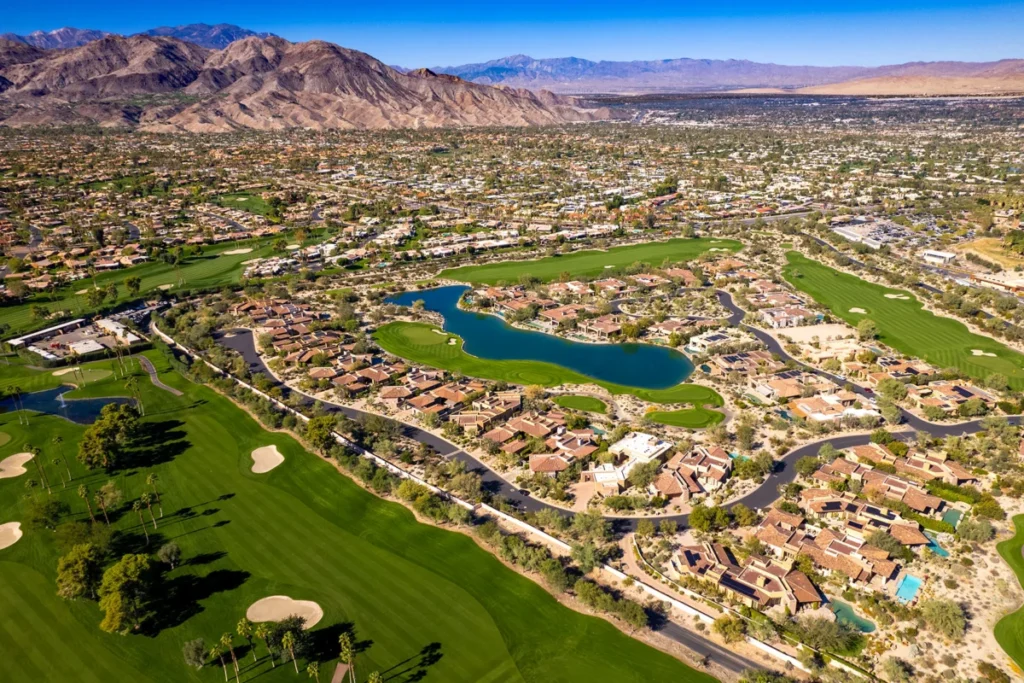
In the high-stakes world of luxury real estate, particularly within the sun-drenched corridors of California’s Coachella Valley, the list price of a property is often the most misleading data point a buyer encounters. A $1.3 million price tag on a new build in La Quinta might sound definitive, but in the rarefied air of premier country clubs, that figure is merely the opening line of a much longer, more complex financial narrative.
To the uninitiated, the process of buying a home in a golf community is straightforward: pick a floor plan, sign the contract, and move in. To the seasoned investor or lifestyle buyer, however, the real math begins where the brochure ends. It involves evaluating lot dimensions, deciphering the fine print of membership initiation fees, and calculating the true cost of "walk-on" golf access during the high season. For those looking to navigate this market, understanding the total cost of ownership is not just prudent—it is essential.
Main Facts: The Hidden Variables of Luxury Real Estate
When evaluating a luxury home in a desert country club, buyers frequently fall into the trap of comparing "apples to oranges." One buyer might prioritize square footage, settling for a massive house on a modest lot, while another might opt for a smaller footprint on a sprawling parcel of land. Without a standardized way to compare these assets, the "best value" remains elusive.
The core issue is transparency. While square footage is prominently displayed, lot dimensions—the true indicator of privacy, outdoor living potential, and long-term appreciation—are often relegated to the fine print. In the desert, where indoor-outdoor living is the hallmark of the lifestyle, the lot is arguably the most valuable component of the purchase. It dictates the size of your pool, the depth of your covered patio, and the vital buffer zone between your window wall and your neighbor’s.
Chronology: A Market Defined by Rising Demand
The current landscape of private club real estate has been fundamentally altered by a surge in demand that began in 2019. According to data from the National Golf Foundation, membership in private clubs has swelled by nearly 50% over the last five years. This influx of interest has created a competitive environment where waitlists are common and access to the course is no longer guaranteed.
- Pre-2019: The market was characterized by ample availability and negotiable initiation fees, with a more relaxed approach to club access.
- 2020–2022: The "pandemic pivot" saw a massive migration to secondary home markets like the Coachella Valley, causing inventory to tighten and prices to spike.
- 2023–2025: Market stabilization led to a focus on operational efficiency. Clubs began re-evaluating membership tiers to manage the influx of new residents.
- September 2026 (Current Landscape): New development models are being introduced to balance density with exclusivity, with developers offering design incentives to attract buyers to specific tiers of inventory.
Supporting Data: The Case of Andalusia Country Club
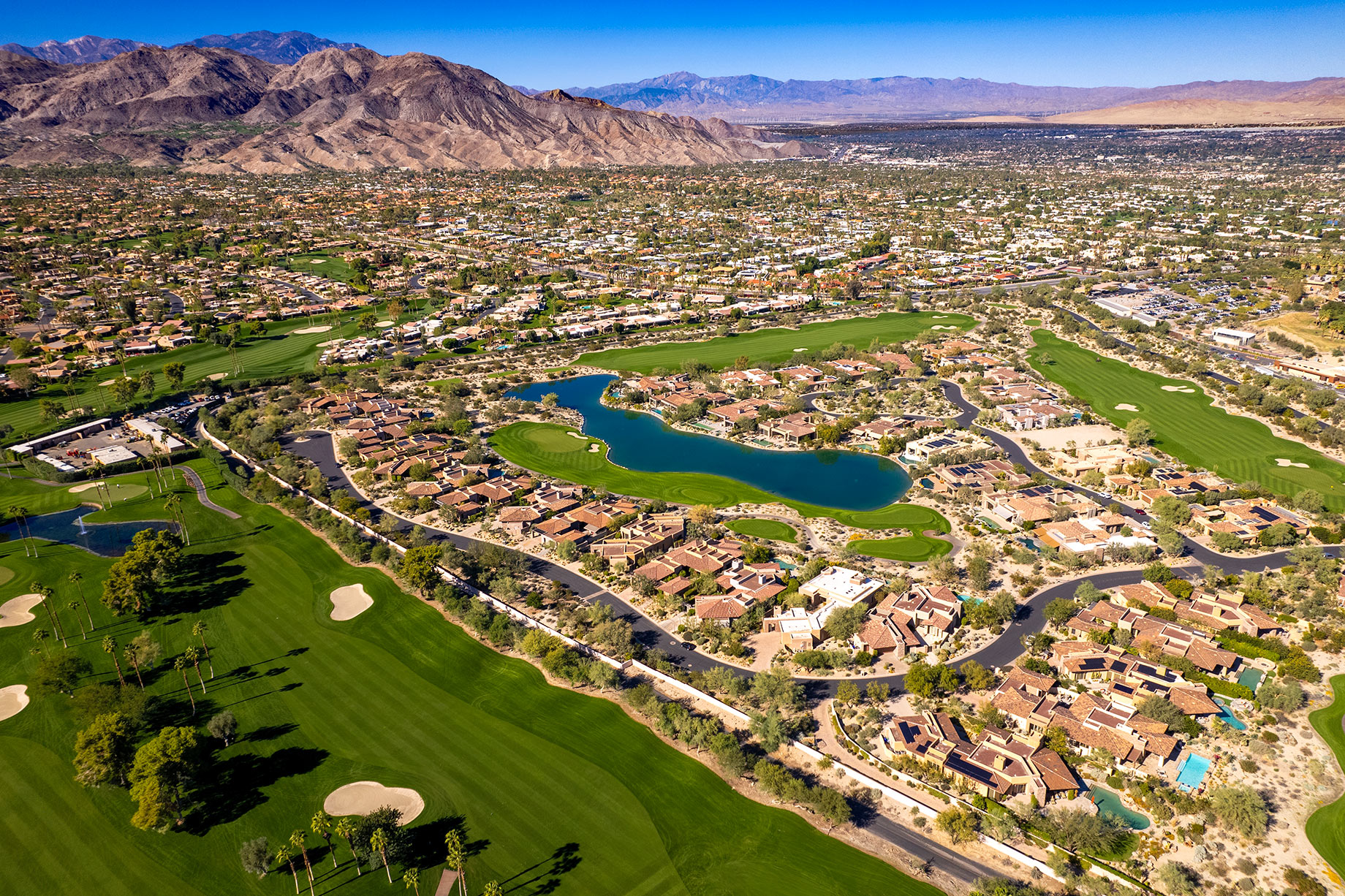
To understand the economics of modern club living, one must analyze the pricing structure of a premier property, such as the Andalusia Country Club in La Quinta. As of September 2026, their tiered pricing strategy provides a masterclass in how different home series offer varying values per square foot.
The Breakdown by Series:
- 200 Series: Sitting on a 55-by-140-foot lot (approx. 7,700 sq. ft.), these homes start at $1,310,000 for a 2,315-square-foot floor plan. The cost per square foot of house is roughly $566.
- 300 Series: Moving to a 65-by-180-foot lot (approx. 11,700 sq. ft.), these homes start at $1,950,000 for 3,333 square feet. The cost per square foot of house climbs to roughly $585.
- 400 Series: Featuring a 75-by-180-foot lot (approx. 13,500 sq. ft.), the largest 5,090-square-foot plan is listed at $2,645,000, bringing the cost per square foot down to $520.
While the 300 Series might appear to be the "worst" buy based strictly on price-per-square-foot of the structure, the 4,000 square feet of additional land changes the calculation entirely. Buyers must decide if the premium paid for the 300 or 400 series offers a lifestyle upgrade—via larger gardens or more privacy—that justifies the six-figure price gap.
Official Responses and Strategic Considerations
When interacting with sales teams, buyers should treat marketing claims with professional skepticism. Official brochures are designed to highlight convenience, but they often mask the logistical realities of high-season operations.
The Membership Fee Reality
The initiation fee is merely the down payment on your social and athletic life. At Andalusia, for instance, a resident golf membership includes a $60,000 non-refundable initiation fee and monthly dues of $2,240. Over a decade, assuming the rate remains flat, a member will pay roughly $329,000. For a buyer of a 200 Series home, this is a significant percentage of the purchase price. Prospective buyers must inquire:
- Transferability: What portion, if any, is recouped upon resignation?
- Scope: Do "Family Memberships" include adult children or extended family?
- Inflation: Is there a cap on annual dues increases?
The "Walk-On" Golf Litmus Test
"No tee times required" is a powerful marketing hook, but it does not account for the reality of a busy Saturday in March. Before signing, potential buyers should perform a "site audit." Visit the clubhouse during the busiest hour of the peak season. If you are a serious golfer, observe the flow of play. Use the "holes-per-home" ratio as a baseline: take the number of holes at a club (e.g., 36 at Toscana in Indian Wells) and divide it by the number of planned residences. While a crude metric, it provides a mathematical basis for estimating congestion.
Implications: The True Cost of Ownership
Perhaps the most neglected calculation in luxury real estate is the "actual use" cost. In the Coachella Valley, the season is roughly six months long—November through April. Summers are intense, with temperatures frequently exceeding 110 degrees, keeping many residents away.
If your annual dues total $26,880, you are effectively paying $4,480 for every month you actually utilize the club amenities. If you only spend three months in the desert, that cost doubles. When comparing a club home to an independent luxury estate, such as a sprawling $6.9 million property in Southridge, the math changes. An independent home carries maintenance costs, but it lacks the "membership tax" associated with the country club model.
Strategic Recommendations for the Buyer:
- Demand the Lot Survey: Never settle for the floor plan alone. Request the survey to visualize the orientation and the buffer between neighbors.
- Incentive Transparency: If a builder offers a $150,000 design credit, clarify how it is applied. Does it lower the base price, or is it strictly for upgrades? Get these terms in writing before financing.
- Model the Total Cost: Create a ten-year spreadsheet that combines the purchase price, total dues, expected initiation fees, and property taxes. Compare this against the cost of an off-course luxury property to see if the "lifestyle premium" is truly worth the investment for your specific frequency of use.
Ultimately, the goal of purchasing a luxury property in a private community should be the enhancement of one’s lifestyle. However, that enjoyment is best protected by a rigorous, data-driven approach to the transaction. By looking past the list price and focusing on the land, the membership terms, and the actual usage costs, a buyer transforms from a passive consumer into an informed investor. In a market as exclusive as the Coachella Valley, that distinction is the difference between a dream home and a financial burden.



