

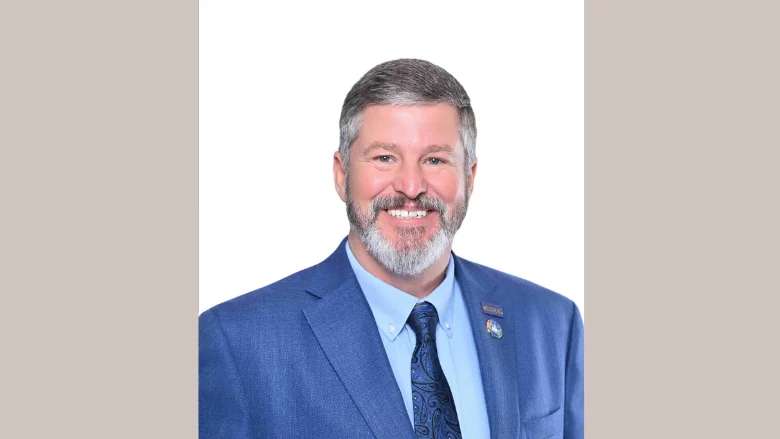
In the modern healthcare landscape, the term "caregiver" is traditionally reserved for those in scrubs: the nurses, physicians, and technicians who provide direct bedside treatment. However, a landmark decision by the Indiana Hospital Association (IHA) has challenged this narrow definition. Anthony “Tony” Pope, the Director of Emergency Management at Columbus Regional Health (CRH) and a retired Chief of Police, has been named the recipient of the prestigious Douglas J. Leonard Indiana Caregiver of the Year Award.
This honor marks a historic first for the IHA: Pope is the first non-clinical recipient to ever receive the award. By recognizing a professional whose work is rooted in security, emergency preparedness, and systemic safety, the IHA has signaled a paradigm shift in how hospitals perceive the holistic environment of patient care.
A Career Defined by Protection and Purpose
Tony Pope’s path to this accolade was not linear. His transition from the high-stakes environment of law enforcement to the complex ecosystem of a regional hospital system provided him with a unique vantage point. As a retired Chief of Police, Pope brought with him a tactical mindset, but one that he carefully tempered with the empathy required in a clinical setting.
Upon joining Columbus Regional Health, Pope recognized that safety was not merely a physical barrier—it was a foundational element of the patient experience. If a patient or a staff member feels unsafe, the quality of care inevitably degrades. Pope’s mission became clear: to integrate security protocols into the clinical fabric of the hospital, ensuring that every person who enters the building feels supported, protected, and prioritized.
Chronology of a Cultural Transformation
The transformation of safety culture at Columbus Regional Health did not happen overnight. It was the result of a deliberate, multi-year strategy led by Pope.
The Foundation (Early Years)
When Pope first assumed his leadership role at CRH, the hospital’s security posture was largely reactive. Security staff were often viewed as peripheral to the clinical mission—an "add-on" rather than an integrated component of the care team. Pope’s first priority was to bridge the communication gap between the security department and the nursing units. He began by holding regular town halls and walk-throughs, listening to the frustrations of front-line staff regarding aggressive behavior and environmental risks.
The Implementation Phase
By the middle of his tenure, Pope shifted the focus toward data-driven intervention. He implemented a rigorous tracking system for workplace violence incidents, moving away from anecdotal reporting to a granular, analytical approach. This allowed CRH to identify "hot spots"—specific times of day or departments where tension historically spiked—and allocate resources accordingly.
The Era of High-Reliability
In the most recent years, Pope moved the organization into a "high-reliability" model. This involved specialized de-escalation training for over 150 staff members annually. By treating safety as a competency rather than a rulebook, Pope ensured that every team member, regardless of their role, felt empowered to de-escalate volatile situations before they necessitated physical security intervention.
Supporting Data: The Measurable Impact of Safety
The strength of Pope’s recognition lies not just in the subjective praise of his peers, but in the undeniable metrics that his tenure has produced. For an industry that often struggles with rising rates of workplace violence, the numbers at Columbus Regional Health stand as an outlier of success.
Under Pope’s strategic guidance, the hospital achieved:
- A 54% reduction in workplace violence events: This figure represents a massive shift in the daily reality for nurses and doctors, who previously faced a higher baseline of intimidation and physical risk.
- Over $69,000 in saved costs: By reducing workforce injuries, the hospital effectively protected its most valuable asset—its human capital—while simultaneously reducing the financial strain caused by workers’ compensation claims and medical leave.
- Annualized Training Excellence: By training more than 150 team members every year in specialized care and de-escalation, Pope ensured that the culture of safety was self-sustaining and deeply embedded within the hospital’s DNA.
These metrics demonstrate that safety is not an "extra" expense for a hospital, but a strategic investment that pays dividends in both staff retention and patient satisfaction.
Official Responses and Peer Recognition
The award, named in memory of Douglas J. Leonard, is intended to honor those who provide exemplary care as acknowledged by patients and peers. The accolades from hospital leadership underscore the depth of Pope’s influence.
Jennifer Dunscomb, MSN, RN, CNS, CPHQ, and Vice President of System Quality, Safety, and Experience at CRH, provided a glowing testimonial regarding the impact of Pope’s vision:
"Under Tony Pope’s visionary leadership, our hospital has set a new benchmark for workplace violence prevention, transitioning from a reactive posture to a proactive, high-reliability model," Dunscomb stated. "Tony’s data-driven, strategic approach empowered the organization to identify, mitigate, and neutralize threats with unprecedented efficacy. Notably, he bridged the gap between executive governance and front-line safety, elevating Board awareness to full, active support for critical resources. Tony has fundamentally transformed our culture into one of heightened vigilance and foresight."
IHA President Scott B. Tittle echoed these sentiments, highlighting the broader implications of Pope’s career for the healthcare industry at large. "Tony has earned the respect of colleagues throughout Indiana and across the healthcare field through a career defined by service, leadership, and an unwavering commitment to others," Tittle said. "His work has demonstrated that every member of the healthcare team plays an important role in caring for patients and supporting those who provide care. Tony’s example has inspired fellow professionals and improved the healthcare experience for countless individuals."
Implications: The Future of the "Caregiver" Definition
The awarding of the Douglas J. Leonard Indiana Caregiver of the Year to a non-clinical professional like Tony Pope carries significant implications for the future of healthcare administration.
1. The Interconnectedness of Safety and Quality
Healthcare organizations are increasingly realizing that clinical outcomes are dependent on the psychological and physical safety of the environment. If a nurse is worried about an unruly patient, they cannot provide the same level of focus as a nurse in a secure, stable environment. Pope’s work validates the idea that safety officers are, in fact, clinical partners.
2. The Shift Toward Proactive Governance
Pope’s ability to "bridge the gap between executive governance and front-line safety" provides a blueprint for other hospital systems. Often, boards of directors view safety as an operational line item rather than a core mission pillar. Pope’s success in securing resources through data-driven advocacy suggests that hospital leaders must be better at translating safety data into the language of executive decision-makers.
3. The Humanization of Security
Perhaps the most significant takeaway from Pope’s career is the humanization of the security role. By emphasizing compassion alongside vigilance, he changed the narrative of hospital security from one of "policing" to one of "caregiving." This nuanced approach is essential in a setting where patients are often at their most vulnerable, stressed, and volatile.
Conclusion: A New Benchmark
As healthcare continues to evolve, the definition of a caregiver must be allowed to grow. Anthony “Tony” Pope has proven that one does not need a medical degree to provide the essential environment in which healing occurs. By fostering a culture of safety, he has provided the peace of mind necessary for clinical staff to perform their jobs effectively and for patients to recover in a supportive space.
In honoring Pope, the Indiana Hospital Association has not just recognized an individual; they have recognized a philosophy. It is a philosophy that puts safety, compassion, and patient-centered service at the heart of the healthcare mission—a mission that, thanks to the contributions of leaders like Tony Pope, is safer and more effective than ever before.
Columbus Regional Health’s transformation serves as a beacon for other institutions. The lesson is clear: when we prioritize the safety of our staff and patients, we create a stronger, more resilient healthcare system for everyone. As Pope continues to influence the field, his legacy will undoubtedly be found in every safer shift, every protected staff member, and every patient who felt the true meaning of "care" during their stay.



