

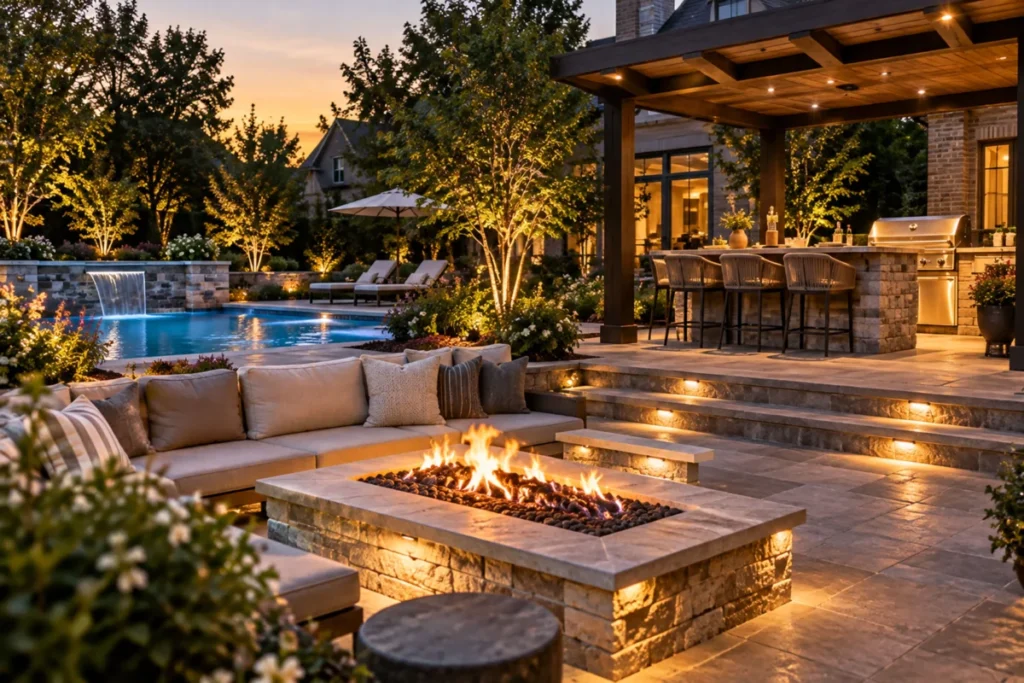
A backyard renovation is frequently misunderstood as a simple aesthetic upgrade—a new layer of mulch, a fresh set of pavers, or a few decorative shrubs. However, for homeowners looking to create a lasting, functional outdoor sanctuary, the reality is far more complex. A truly successful backyard is an engineered ecosystem that must account for soil mechanics, hydraulic drainage, circulation patterns, and the unpredictable volatility of the Midwest climate.
In Missouri, where the landscape is challenged by heavy clay soils and extreme seasonal fluctuations, a piecemeal approach to landscaping often leads to costly, recurring problems. Modern industry standards now point toward a "full-service" methodology, where design, construction, and long-term maintenance are synthesized under a single professional umbrella. By treating the backyard as a connected system rather than a collection of disjointed features, homeowners can ensure their investment remains both beautiful and structurally sound for decades.
The Chronology of a Successful Renovation
Transforming a raw plot of land into a luxury retreat is a disciplined process. When a full-service firm is involved, the project follows a rigorous timeline designed to mitigate risk and maximize utility.
Phase I: Site Analysis and Diagnostic Planning
Before a single brick is laid or a plant is selected, the property must be interrogated. A professional firm begins by evaluating the "DNA" of the land. This involves mapping out slope gradients, identifying existing canopy trees, assessing natural drainage patterns, and testing soil composition. In the St. Louis region, where dense clay is prevalent, this stage is critical. If drainage is not addressed at the inception of the project, homeowners may face foundation issues or standing water that can ruin expensive hardscaping within a few seasons.
Phase II: The Design Synthesis
Once the diagnostic data is gathered, the firm translates the homeowner’s vision into a cohesive master plan. Utilizing advanced Computer-Aided Design (CAD) and 3D modeling, architects can show clients exactly how a pool, an outdoor kitchen, and a pergola will interact with the home’s architecture. This digital visualization ensures that the scale of a structure does not overwhelm the available square footage and that traffic flow—the way residents move from the kitchen door to the fire pit—is intuitive and safe.
Phase III: The Hardscape Framework
Construction serves as the skeleton of the backyard. This phase includes the installation of retaining walls, terraces, driveways, and pavilions. A key advantage of the full-service approach here is "integrated coordination." When the same firm that designs the patio is also responsible for the underground drainage systems, they ensure that runoff is directed away from the home’s foundation, preventing the common mistake of "bottling" water against the house.
Phase IV: Softscaping and Environmental Integration
With the hardscape established, the focus shifts to the living elements. Planting is not merely decorative; it is a tool for climate control and privacy. By selecting native, drought-resistant species, firms can reduce water consumption and improve the survivability of the garden during the blistering heat of a Missouri August. Shade trees are strategically placed to lower ambient temperatures near living spaces, while shrubs act as natural noise barriers.
Phase V: The Maintenance Lifecycle
The final, often overlooked stage is the transition to long-term care. A backyard is a living, breathing entity. An integrated firm remains involved, providing seasonal cleanup, irrigation management, and structural check-ups. This ensures that the landscape evolves gracefully rather than falling into disrepair.
Supporting Data: The Science of St. Louis Soil
The technical success of any Missouri landscaping project hinges on an understanding of local geography. St. Louis is characterized by its heavy clay-based soil, which possesses low permeability. When water hits this soil, it does not drain efficiently; instead, it tends to pool or migrate laterally, often toward the lowest point of a property—frequently the house foundation.
Data from geological and botanical studies underscore the importance of soil modification. When a firm ignores the "clay factor," they risk "frost heave"—a phenomenon where water trapped beneath a patio freezes, expands, and shifts the stones, leading to uneven surfaces and cracked masonry. Furthermore, native plants are more than just a stylistic choice; their deeper root structures are better equipped to penetrate compact soil, acting as natural aerators that improve the overall health of the garden over time.
Expert Perspectives on Unified Project Management
Industry experts argue that the greatest threat to a successful project is "fragmentation of responsibility." When a homeowner hires a pool contractor, a separate masonry firm for the patio, and a third-party landscaper for the plants, the project is prone to "the blame game."
"When things go wrong—and in construction, variables always shift—you want one neck to wring," says one veteran project manager. "If the irrigation system leaks and washes out a new planting bed, a fragmented project results in the irrigation contractor blaming the landscaper, while the landscaper blames the site grading. When you have one firm responsible for the entire project, they are incentivized to ensure the drainage, the plants, and the hardscape speak the same language."
Accountability is the bedrock of professional service. By consolidating these disciplines, the firm maintains a "single source of truth." If a structural issue arises three years post-construction, the original blueprints and soil reports are on file, allowing for a precise and efficient fix that preserves the integrity of the surrounding landscape.
The Implications of a Cohesive Design
The implications of choosing a unified, full-service firm extend far beyond the initial construction phase. There is a distinct economic and functional value to this approach:
- Investment Protection: A well-drained, properly graded yard preserves the value of the home. Poorly executed landscaping is a common cause of basement water infiltration, which can lead to structural damage and significant insurance claims.
- Increased Usability: When a backyard is designed with a clear understanding of the client’s lifestyle—whether that means hosting large dinner parties in an outdoor kitchen or finding solitude by a waterfall—the space becomes an extension of the home’s interior. It moves from being a "viewing garden" to an "active space."
- Operational Efficiency: Managing multiple subcontractors is a full-time job. By outsourcing the coordination to a single firm, homeowners save significant time and stress. The firm handles the scheduling, the material procurement, and the site management, allowing the homeowner to focus on the result rather than the logistics.
- Long-Term Scalability: A master plan allows a project to be built in phases. A family might install the hardscape and pool in year one, with the lighting and detailed garden beds following in year two. Because the master plan was established upfront, every addition feels intentional, not like an afterthought.
Final Reflections: Preparing for Your Consultation
For homeowners embarking on a backyard transformation, the first step is shifting the mindset from "decorating" to "developing." Before meeting with a contractor, it is vital to prepare a comprehensive list of needs.
Do you require a space that is ADA-compliant? Are there specific drainage issues you have observed during heavy rains? What is your realistic commitment to ongoing maintenance? By coming to the table with these questions, you allow the firm to provide a design that is not only beautiful but also sustainable.
In the competitive landscape of home improvement, the difference between a project that requires constant patching and one that adds enduring value to your property lies in the integration of the parts. When you treat your backyard as a single, connected system, you are doing more than just moving dirt and stone—you are curating an environment that will serve your family and your property for years to come. Ensure that your chosen partner has the expertise to bridge the gap between architectural vision and the reality of the Missouri soil, and you will find that the true luxury of a backyard lies in its reliability.



