The horological landscape was caught off guard this September as Tudor, the Geneva-based sibling to Rolex, bypassed the traditional Watches & Wonders cycle to unveil the highly anticipated successor to one of its most enigmatic models: the Northflag. The new Tudor Northflag GMT (Ref. M9140G1A0U) arrives eleven years after the original North Flag debuted in 2015, signaling a strategic pivot for the brand. While the launch has sparked debate regarding industry marketing trends, the watch itself presents a sophisticated evolution of a design that was once deemed too experimental for the mainstream.
The Chronology of a Resurrected Design
To understand the significance of the 2026 release, one must look back to 2015. When the original North Flag was introduced, it arrived with a bold, almost clinical aesthetic. It featured an integrated-style lug design, a matte black dial, and—most notably—a power reserve indicator that became the focal point of its identity.
However, the watch faced a "brand identity crisis." Tudor struggled to market the piece effectively. While the company positioned it as a rugged tool for polar exploration, the connection between the stark, modern aesthetics and the romanticism of arctic adventure failed to resonate with the broader watch-buying public. It was a watch that felt like it had arrived from the future, yet it lacked the historical anchor that usually drives Tudor’s success.

The intervening decade saw the North Flag occupy a space of "cult appreciation." Collectors eventually grew to admire its unique case geometry and robust build, even as the model faded from the front lines of Tudor’s catalog. In 2026, the brand has decided to bridge the gap between that futuristic vision and contemporary market demands by reintroducing the platform as a dedicated GMT traveler’s watch, effectively stripping away the "quirky" complications of the past in favor of a cleaner, more utilitarian layout.
Strategic Implications: The Debate Over Release Cycles
The decision to release the Northflag GMT outside of the industry’s consolidated launch window—traditionally dominated by the spring Watches & Wonders event—has drawn criticism from industry observers.
The core of the concern is the "paralysis of choice." When heritage brands like Tudor and Rolex, which command immense market gravity, initiate product drops at irregular intervals, they risk disrupting the consumer’s decision-making process. From a journalistic perspective, there is a cynical view that brands use these "surprise" drops to artificially inflate media coverage and sustain market dominance throughout the year.

However, there is also the argument for innovation. By operating outside of the annual "big bang" window, Tudor is signaling a departure from the rigid, traditionalist structures of the Swiss watch industry. Whether this becomes a sustainable trend remains to be seen, but it suggests that Tudor is increasingly comfortable acting as an outlier, willing to disrupt its own momentum to capture a specific, targeted audience segment.
Technical Specifications: The Heart of the Northflag GMT
The new Reference M9140G1A0U represents a significant technical upgrade over its predecessor. The most notable change is the replacement of the power reserve indicator with a GMT function, a move that immediately positions the watch as a practical tool for the modern traveler.
The Movement: Master Chronometer Excellence
Powering the watch is the in-house caliber MT5652-U. This movement is a testament to Tudor’s commitment to technical vertical integration. It is a COSC-certified chronometer that further secures METAS "Master Chronometer" status, guaranteeing precision under a wide range of conditions, including exposure to magnetic fields.

- Frequency: 4Hz (28,800 vibrations per hour)
- Power Reserve: 65 hours, offering a "weekend-proof" capacity.
- GMT Capability: A dedicated 24-hour hand allows for the tracking of a second time zone, integrated with the central seconds and a date window.
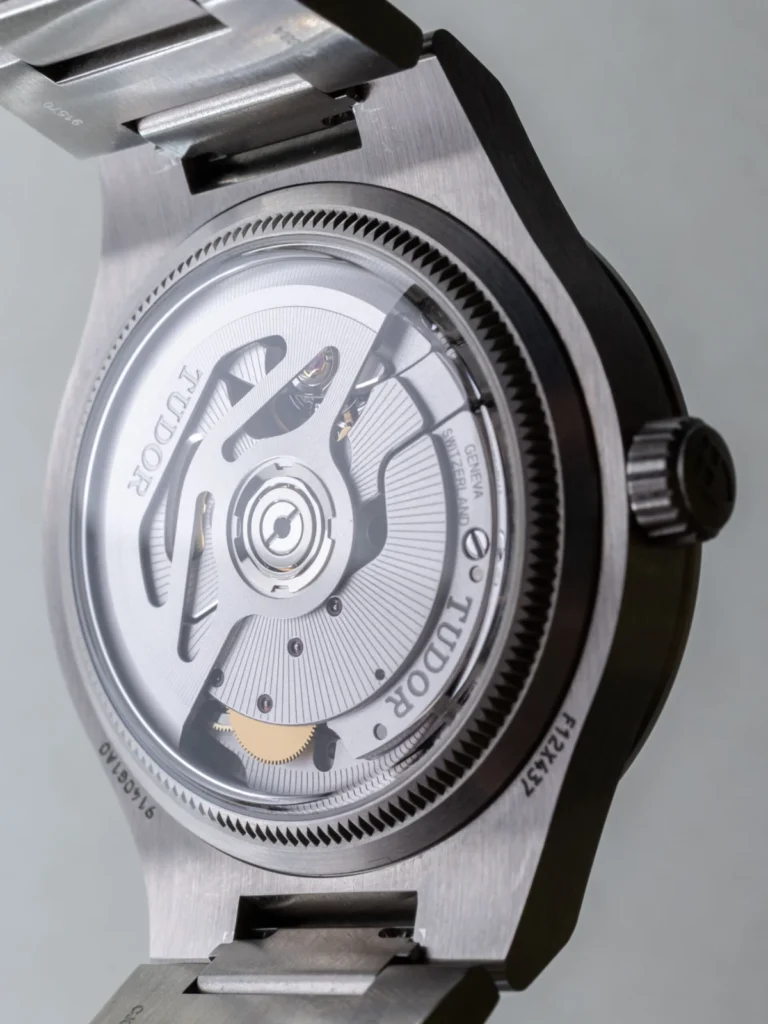
- Exhibition Caseback: In a rare move for a watch of this utility, Tudor has included a sapphire crystal caseback, allowing the wearer to observe the movement—a feature that was conspicuously absent from the 2015 original.
Case and Ergonomics
The Northflag GMT is housed in a 40mm stainless steel case with a thickness of 12.7mm. The design language is strictly utilitarian, utilizing a matte finish across the case to minimize light reflection—a nod to its "explorer" roots. The box-style, anti-reflective sapphire crystal provides excellent legibility, while the 100-meter water resistance ensures the watch is suitable for daily wear in diverse environments.
Perhaps the most functional update is the inclusion of the "T-Fit" rapid micro-adjustment system on the deployant clasp. This allows the wearer to adjust the bracelet length on the fly without tools, a feature that has become the gold standard for luxury steel watches in the current market.
The Aesthetics of Tomorrow
The dial design of the 2026 Northflag is a study in high-contrast efficiency. By removing the polished elements found in other Tudor collections, the brand has doubled down on the "instrument" aesthetic. The matte black dial, paired with stark white indices and applied hour markers, ensures legibility in low light.

The color palette is restrained, utilizing a tactical yellow for the seconds hand and the matching GMT hand. This pop of color serves a functional purpose, distinguishing the time-telling functions from the GMT tracking function. Critics may argue that the aesthetic is too industrial, yet that is exactly the point. The Northflag is not intended to be a piece of jewelry; it is a piece of equipment. It represents a "Tudor of tomorrow," a vision of what a professional tool watch should look like in a post-modern era.
Pricing and Market Positioning
Priced at $5,525 USD, the Northflag GMT is positioned to compete directly with other heavy hitters in the luxury GMT space, including the Tudor Black Bay GMT. While not a budget-friendly option, it is competitively priced given the "Master Chronometer" certification and the inclusion of the T-Fit clasp.
The question remains: will the market embrace it? The 2015 North Flag was misunderstood because it tried to be a polar watch. The 2026 version is being marketed as a modern explorer’s watch—a broader, more relatable category. By softening the "cold-weather" narrative and emphasizing the "anywhere-weather" utility of a GMT watch, Tudor has likely found the formula for success that eluded the original.

Conclusion: A Mature Evolution
The 2026 Tudor Northflag GMT is a compelling case study in brand evolution. By acknowledging the strengths of its 2015 ancestor while ruthlessly editing its weaknesses, Tudor has created a timepiece that feels both nostalgic and refreshingly new.
While the debate over the brand’s release strategy will likely continue, the watch itself is difficult to fault. It is a robust, technically superior, and aesthetically distinct timepiece that offers a genuine alternative to the more traditional silhouettes within the Tudor catalog. For those who find the standard "vintage-inspired" divers to be overly repetitive, the Northflag GMT offers a glimpse into a bolder, more modern future for the brand. Whether or not it becomes a staple of the collection or remains a niche choice for the design-forward enthusiast, the Northflag has officially returned—and this time, it is ready to be understood.