

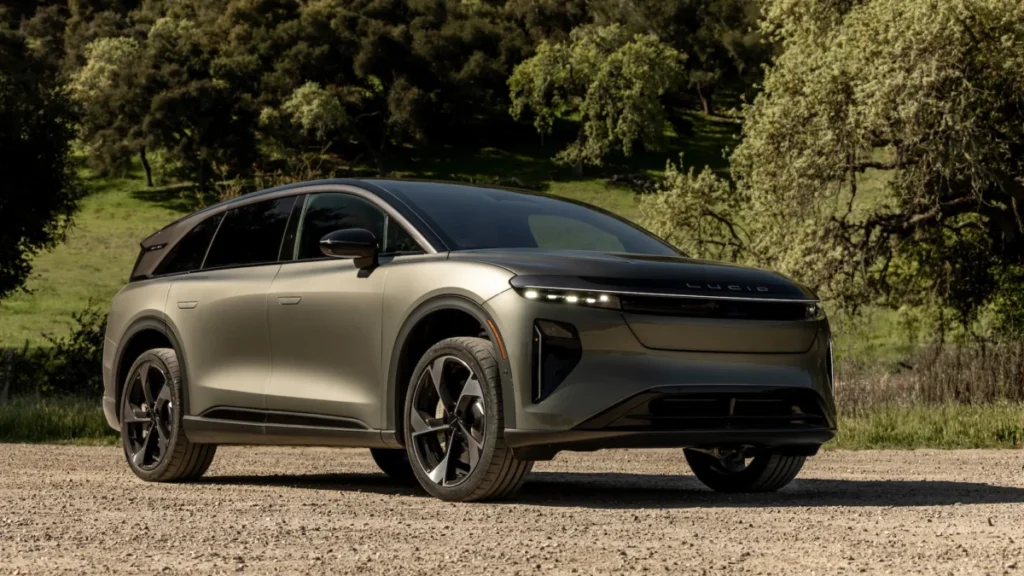
In the high-stakes world of electric vehicle (EV) manufacturing, the distance between initial public promise and operational reality can be vast. For Lucid Motors, that distance has become a defining characteristic of its current chapter. As the company reports its third-quarter production and delivery figures, the data paints a picture of a manufacturer deliberately hitting the brakes, signaling a profound shift in strategy under new leadership.
Lucid Motors produced 2,954 electric vehicles in the third quarter of this year—a stark 54% decline compared to the same period last year. While such a drop might typically signal a crisis, the company maintains that this is a calculated maneuver. By intentionally limiting production, Lucid aims to better align its inventory with actual market demand, avoiding the ballooning stockpiles that have plagued other automotive startups. However, the optics remain difficult for investors who once looked at Lucid as the primary challenger to the established EV order.
The Chronology of a Slowdown
The third quarter of this year marks the third consecutive quarter of declining production for the Newark, California-based automaker. This current output represents the lowest quarterly production volume since the first quarter of 2025, a period that followed the high-profile launch of the Gravity SUV—a vehicle intended to be the company’s second major pillar after the Air sedan.
To understand how Lucid arrived at this point, one must look at the recent timeline of its operational struggles:
- Early 2025: The company begins full-scale production of the Gravity SUV, carrying high hopes for broader market penetration.
- Mid-2026: Recognizing that the "growth at all costs" model is unsustainable, the company installs a new CEO, Silvio Napoli.
- June 2026: Napoli initiates a radical "simplification" strategy, resulting in a 18% workforce reduction—approximately 1,500 employees—and a streamlining of the company’s leadership hierarchy.
- August 2026: Lucid announces a comprehensive cost-savings plan targeting $1.4 billion in efficiency gains. A key part of this strategy involves the indefinite delay of the "Cosmos," the company’s planned affordable EV entry.
- October 2026: The Q3 production and delivery numbers are released, confirming the impact of these austerity measures.
Analyzing the Data: A Struggle for Market Traction
The gap between production and delivery has become a recurring theme in Lucid’s financial reporting. In the third quarter, the company delivered 3,806 EVs. While this figure is relatively flat compared to the second quarter, it represents a decline of approximately 200 vehicles compared to the third quarter of 2025.
The math is telling: in five of the last six quarters, Lucid has built more vehicles than it has successfully sold to customers. This inventory accumulation, even when curtailed by management, indicates a persistent struggle to find a sufficient buyer base for its luxury-tier offerings. The premium price point of the Lucid Air, while justified by the vehicle’s industry-leading battery technology and efficiency, has proven to be a high barrier to entry in a market currently shifting toward more value-conscious consumers.
The disparity becomes even more striking when viewed through the lens of the company’s 2021 SPAC (Special Purpose Acquisition Company) merger. At the time of its public debut, Lucid projected that it would be capable of shipping as many as 90,000 EVs in 2024 alone. With $4 billion in fresh capital, the company promised a rapid ascent that has, in practice, been replaced by a cautious, defensive posture.
The Contrast: Lucid vs. The Market
The landscape for EV startups is anything but uniform, a fact made painfully clear by the performance of rival Rivian. While Lucid spent the third quarter consolidating and shrinking its footprint, Rivian achieved its best quarterly performance in history.
Driven by the market success of the R2—an SUV designed with a more accessible price point—Rivian delivered nearly 20,000 vehicles in the third quarter. This is a dramatic surge from the 12,194 units delivered in the second quarter. The market’s response to the R2 demonstrates that there is still significant appetite for electric SUVs, provided the price-to-utility ratio is balanced correctly.
For Lucid, the success of the R2 serves as both a benchmark and a point of frustration. It confirms that the EV market is not "dead," as some skeptics might claim; rather, it has become increasingly unforgiving toward products that fail to meet the specific intersection of price, brand appeal, and availability.
Official Responses: CEO Silvio Napoli’s Reality Check
Perhaps the most refreshing, if sobering, aspect of Lucid’s current management is the candor of its new leadership. CEO Silvio Napoli has not attempted to sugarcoat the company’s trajectory. During the second-quarter earnings call in August, Napoli provided a candid autopsy of why the company has struggled to gain meaningful market share.
"While there is no question that Lucid brought leading innovations and outstanding products to the market, we have disappointed on several fronts, and for far too long," Napoli stated. He outlined a litany of internal failures: inconsistent execution, missed commitments, the premature launch of products that were not fully ready, underinvestment in the service infrastructure, and a sluggish response to quality control issues.
Perhaps most critically, Napoli identified "complexity" as a primary culprit in the company’s decline. By allowing administrative and operational bloat to stifle decision-making, Lucid missed the narrow window of opportunity to capitalize on its initial brand buzz. His "simplification" plan is designed to strip away the layers that have hindered agility.
Regarding the future of the "Cosmos" SUV—the sub-$50,000 vehicle that many analysts believe is necessary for the company’s survival—Napoli has struck a note of extreme caution. While the vehicle could theoretically open a vast new demographic for the brand, the CEO has signaled that there will be no rush to market. "We will not repeat the mistakes of the past by bringing a product to market before it is ready," he warned shareholders.
Implications: What Lies Ahead?
The path forward for Lucid Motors is narrow and steep. The company has successfully raised significant capital and maintains a core of technological prowess that is the envy of the automotive industry. However, technology alone does not equate to a successful business model.
1. Operational Efficiency as a Survival Tool: The $1.4 billion cost-savings goal is no longer a target; it is a necessity. By eliminating the second shift at its Arizona factory and trimming the workforce, the company is attempting to achieve a "lean manufacturing" status that it failed to secure during its growth phase.
2. The Re-evaluation of the Luxury Niche: The market has sent a clear signal that the ultra-luxury EV segment is finite. Lucid’s future will depend on whether it can successfully pivot to a mid-market consumer without diluting the brand equity it worked so hard to build.
3. The Risk of Being "Left Behind": While Lucid focuses on internal restructuring, competitors like Rivian and Tesla are continuing to iterate and scale. Every quarter spent in "turnaround mode" is a quarter that competitors use to secure customer loyalty and brand dominance.
4. The "Cosmos" Pivot: The delay of the Cosmos is the most significant strategic gamble. If Lucid takes too long, the mid-market EV space may be completely saturated by legacy automakers and established EV players. If they rush, they risk the same quality issues that defined their early years.
Conclusion
Lucid Motors stands at a critical juncture. The days of hyper-growth promises and aggressive output targets have given way to a period of pragmatic, often painful, introspection. Under Silvio Napoli, the company is attempting a rare feat: a fundamental corporate reset while remaining in the public eye.
The Q3 numbers—while disappointing to those expecting a quick rebound—are perhaps the most honest reflection of the company’s status. They show a business that is finally prioritizing sustainability over volume. Whether this new, simplified Lucid has the agility to navigate a crowded, highly competitive EV landscape remains the central question for the remainder of the decade. For now, the strategy is clear: survive the present, streamline the process, and wait for the right moment to re-enter the market with a product that is truly ready for the demands of the modern consumer.



