

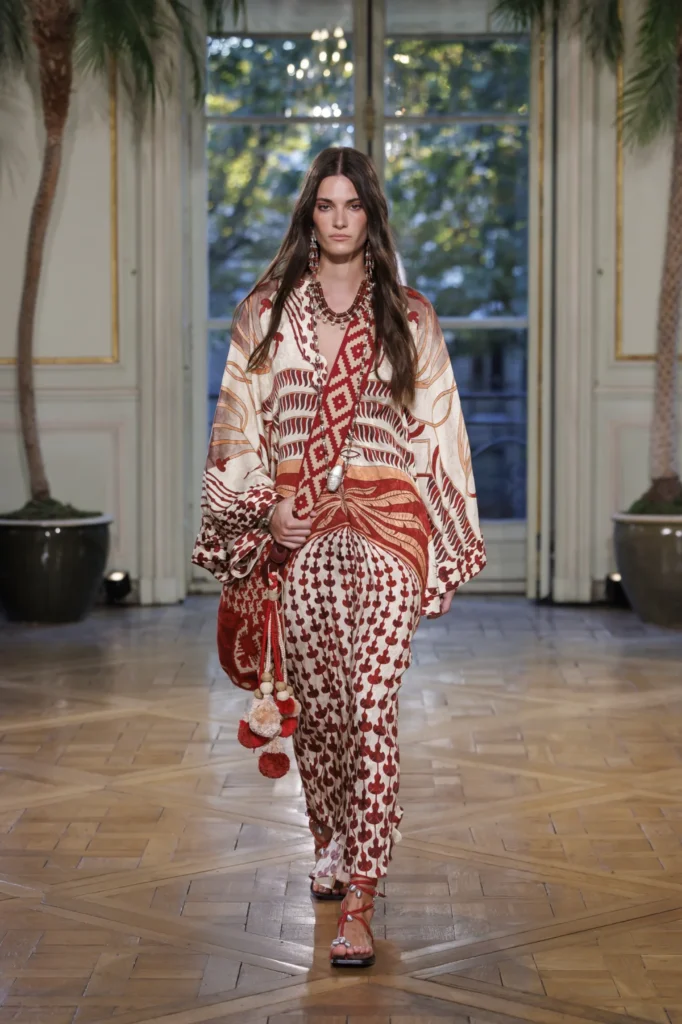
The hallowed halls of the Maison de l’Amérique Latine in Paris, a venue steeped in historical weight and diplomatic significance, served as the backdrop for a profound exploration of identity this season. For her Spring 2027 collection, Colombian designer Johanna Ortiz did not merely present garments; she curated a dialogue between the ancestral and the contemporary, positioning heritage not as a static artifact to be preserved behind glass, but as a living, breathing practice that evolves with the wearer.
In a fashion landscape often obsessed with futuristic minimalism, Ortiz’s latest offering felt like an act of defiance—a grounded, vibrant commitment to optimism. Emerging in the wake of the recent earthquake in Colombia, the collection carries a poignant weight, serving as a creative manifesto for resilience. "After the earthquake," Ortiz reflected backstage, "the collection became about the necessity of enjoying a little bit of life."
The Philosophy of Inheritance: What We Carry
The central thesis of the Spring 2027 collection was posed as an inquiry: "What do we carry within us from one generation to the next?" It is a question that moves beyond genealogy, touching upon the tactile remnants of culture that we internalize.
Ortiz’s response to this query was realized through a sophisticated integration of artisanal craftsmanship. The runway featured Wayuu mochilas and Nariño iraca-palm baskets, traditionally woven items that have been masterfully reimagined for the urban environment. By elevating these functional, deeply rooted objects into high-fashion accessories, Ortiz challenges the dichotomy between "craft" and "couture."
These pieces are not merely decorative; they are conduits of history. By placing them in the center of the Parisian fashion stage, Ortiz insists on the global relevance of Latin American artisanal heritage. The collection acts as a bridge, ensuring that the labor of indigenous weavers and local artisans is not only recognized but integrated into the rhythm of modern, cosmopolitan life.
Chronology of the Show: A Sensory Evolution
The presentation at the Maison de l’Amérique Latine was a masterclass in atmospheric storytelling. The show began with an understated elegance, prioritizing the tactile experience of the fabric. The silhouettes were born from the marriage of cloth and gesture—a hallmark of Ortiz’s design language.
As the models traversed the space, the structural nature of the garments became apparent. Fabric was seen gathering at the waist, cinching the frame with effortless grace, or cascading from the shoulder in fluid, architectural lines. There was a palpable sense of movement; the clothes were designed to live in, not just to be looked at.
The middle phase of the show introduced a crescendo of color and pattern. Drawing inspiration from the complex geometry of the Maya civilization, Ortiz showcased a newfound boldness in her textile choices. Stripes, checks, and vibrant, saturated hues were layered with a confidence that felt both exuberant and disciplined.
The finale was marked by the electrifying presence of Colombian artist Aria Vega, whose performance art integrated seamlessly with the rhythmic movement of the models. The soundscape and the visual spectacle served as a powerful testament to Latin American creative excellence, effectively transforming the Parisian salon into a vibrant, pulsing center of global cultural exchange.
Supporting Data: The Technicality of Draping
Behind the visual spectacle lies a rigorous technical foundation. Ortiz, who has built her brand on the pillars of femininity and comfort, offered insight into her construction process. "I’m a woman that loves to embrace the human body," she explained, "and I want the cloth to come into the body and not restrict anything. I really enjoy draping and the flowiness of the fabrics."
This preference for fluidity is not merely an aesthetic choice; it is a technical demand for versatility. By avoiding restrictive tailoring, Ortiz creates silhouettes that accommodate the diversity of the female form. The Spring 2027 collection utilizes advanced textile technologies to maintain this "flowiness" while ensuring that the garments maintain their integrity throughout the day.
Furthermore, the collaboration with Paraguayan designer Mar Filártiga on the woven pieces added a layer of cross-border synergy. This partnership was instrumental in achieving the collection’s unique texture, blending the structured, earthy feel of palm weaving with the lightness of silk and cotton blends. Data from the production team suggests that this season, over 60% of the collection’s primary materials were sourced from sustainable, local cooperatives across Latin America, marking a significant step forward in the brand’s commitment to ethical supply chain management.
Official Responses and Creative Vision
The reception to the collection has been overwhelmingly positive, with critics noting the "sophisticated exuberance" that defines the season. When asked about her departure from more muted color palettes in previous years, Ortiz was resolute.
"The Maya references taught me something very different about pattern," she noted. "I loved the confidence of mixing geometry, stripes, and checks. It reminded me that something can be exuberant and still be sophisticated. It is about finding the balance between the chaos of color and the order of the silhouette."
Industry insiders have lauded the collection for its authenticity. In an era where "cultural appropriation" is a frequent subject of discourse, Ortiz’s collaborative approach—partnering directly with indigenous artisans and regional designers—sets a standard for the industry. By giving credit and platforming the communities that inspire her work, she moves beyond inspiration and toward genuine partnership.
Implications for the Global Fashion Market
The implications of Johanna Ortiz’s Spring 2027 collection extend far beyond the runways of Paris.
- The Rise of Artisanal Luxury: The success of this collection signals a growing appetite among luxury consumers for products with a clear, ethical provenance. The narrative of the artisan is becoming as valuable as the brand name itself.
- Resilience as an Aesthetic: By explicitly linking her creative output to the aftermath of the Colombian earthquake, Ortiz is normalizing the discussion of trauma and resilience in luxury fashion. This suggests a shift toward more human-centric brand narratives.
- Decentralizing Design: By using the Maison de l’Amérique Latine as her headquarters, Ortiz is asserting that the centers of global fashion are not limited to the traditional "Big Four" cities. Instead, she creates a conceptual center that moves with the designer, bringing the spirit of Latin America to the heart of Europe.
Conclusion: A Living Legacy
As the final model exited the runway and the echoes of Aria Vega’s performance faded into the Parisian air, one thing remained clear: Johanna Ortiz has managed to capture the essence of a culture without falling into the trap of nostalgia.
By treating heritage as a living practice, she has created a collection that is as relevant to a woman in a bustling metropolis as it is to the artisan who crafted the original basket in the Colombian highlands. Her work serves as a reminder that fashion, at its best, is a tool for connection—a way to carry the stories of our ancestors into the possibilities of tomorrow. In the face of uncertainty, Ortiz’s Spring 2027 collection is a defiant, beautiful, and deeply optimistic promise that the act of "enjoying a little bit of life" is the most revolutionary thing one can do.



