

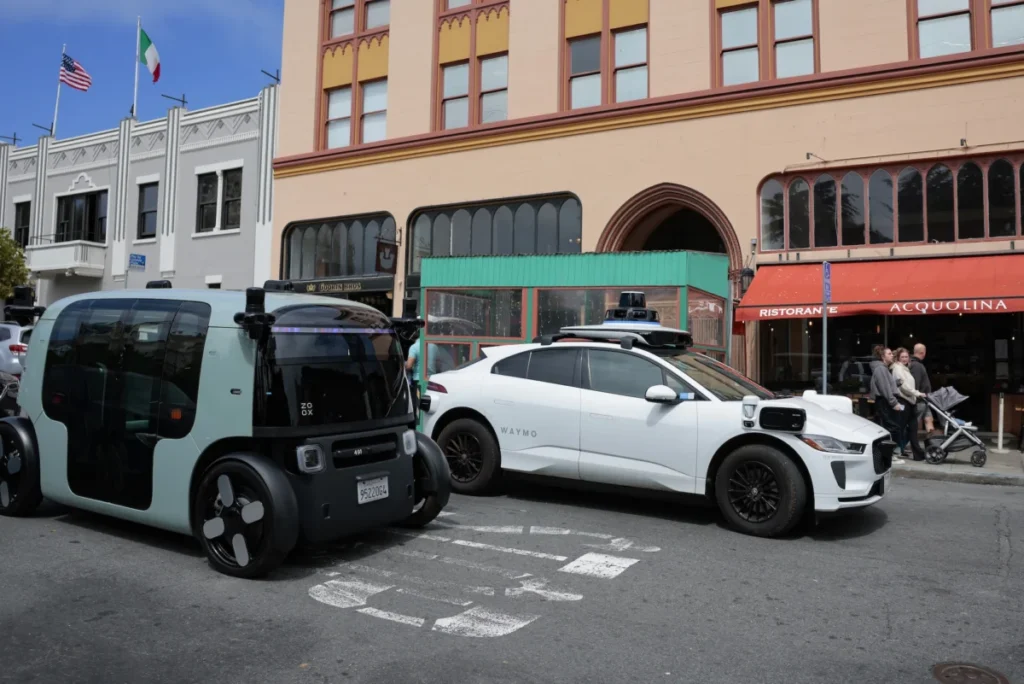
Welcome back to TechCrunch Mobility, your definitive source for the rapidly shifting landscape of transportation and the profound influence of artificial intelligence on our global infrastructure. From the bustling streets of San Francisco to the boardrooms of the world’s most ambitious tech giants, we are witnessing a fundamental rewrite of how we move.
The Main Facts: California Takes a Stand on Robotaxi Accountability
In the urban centers of California, the sight of Waymo robotaxis navigating complex traffic patterns has become a mundane reality. Yet, this convenience has come at a cost. As documented extensively by TechCrunch, the proliferation of autonomous vehicles (AVs) has led to an uptick in unintended consequences: robotaxis stalling in active traffic, drifting into sensitive crime scenes, and creating significant obstacles for first responders. In several documented instances, the burden has fallen on police and firefighters to manually clear these vehicles from the roadway.
In a proactive bid to curb these operational failures, California has enacted Senate Bill 1246, signed into law this week by Governor Gavin Newsom. This legislation establishes a rigorous regulatory framework for AV operators—including industry titans like Tesla, Waymo, and Zoox—mandating specific safety protocols and accountability measures.
Under the new law, which goes into effect in July 2028, companies must maintain local, on-the-ground support teams to resolve mechanical or software-induced obstructions. Furthermore, the legislation imposes strict penalties for any vehicle that impedes emergency services for more than 30 minutes. The law also mandates that all remote human operators be based within the United States, possessing valid U.S. driver’s licenses, and requires companies to provide local jurisdictions with real-time, granular data regarding the status of vehicles during system-wide failures.
A Chronology of the Robotaxi Era
The trajectory of autonomous driving has been marked by rapid innovation followed by inevitable regulatory friction.
- The Early Expansion (2023–2025): Companies flooded major metropolitan areas with fleets of autonomous vehicles, prioritizing scaling and data collection over local infrastructure integration.
- The "Obstruction" Phase (2025–2026): As fleet sizes grew, so did the frequency of reports regarding robotaxis interfering with emergency personnel. The industry faced public backlash as stories of stalled vehicles blocking ambulances and police cruisers became viral symbols of "tech-first, city-second" development.
- Legislative Intervention (Late 2026): California lawmakers drafted Senate Bill 1246, recognizing that existing state guidelines were insufficient to handle the scale of a fully driverless transit future.
- The Future (2028 and Beyond): The industry enters a new era of "Compliance-Driven Autonomy," where federal and state oversight will likely tighten, shifting the burden of infrastructure integration back onto the developers.
Supporting Data: The Cost of Disruption and Innovation
The push for automation is not happening in a vacuum; it is backed by massive capital inflows and a desire for dominance in the mobility-as-a-service (MaaS) sector.

Recent weeks have seen significant movement in the space:
- Harbinger secured a landmark $300 million deal to supply FedEx with 2,000 electric trucks, signaling a shift toward electrified logistics.
- Quartermaster, the Arlington-based maritime intelligence startup, raised $140 million in a Series B round, highlighting the expansion of autonomous technology beyond the asphalt and into the sea.
- Tesla, while facing scrutiny over its "Cybercab" ambitions, successfully secured $30 billion in new credit lines, providing the liquidity needed to scale its robotics and AI-driven vehicle projects.
- Lyft recently finalized a $272.5 million settlement regarding historical driver classification issues, a reminder of the legal hurdles that persist even as companies pivot toward full autonomy.
Meanwhile, the automotive industry continues to struggle with the complexities of consumer-grade EVs. Rivian, despite hitting a record-setting quarter of sales thanks to its R2 SUV, was forced to issue a recall due to poorly tightened battery pack fasteners—a sobering reminder that even in an era of software-defined vehicles, fundamental mechanical reliability remains a critical failure point.
Official Responses and Regulatory Implications
The Department of Motor Vehicles (DMV) in California now faces the arduous task of translating the broad mandates of SB 1246 into actionable, enforceable regulations. While the industry has generally expressed a commitment to safety, the reality of "local incident technicians" and US-based remote operators represents a significant increase in operational overhead for AV companies.
Critics argue that these measures might stifle innovation by imposing "legacy" requirements on cutting-edge technology. However, supporters of the bill, including municipal leaders, argue that the technology must adapt to the city, not the other way around.
The most pressing question remains: Will other states follow California’s lead? History suggests that California acts as a bellwether for the rest of the U.S. automotive market. Should other jurisdictions adopt similar "first responder protection" laws, the AV industry will be forced to pivot away from a "move fast and break things" mentality toward a highly localized, high-accountability model.
Implications: The Road to "Abundance"
The broader conversation, championed by figures like Elon Musk, centers on the concept of "amazing abundance"—a future where transportation costs are negligible and efficiency is maximized through AI. Yet, as Sean O’Kane recently pointed out, the definition of this "abundance" remains frustratingly vague a year after its introduction.

The tension between the promise of an AI-driven utopia and the reality of a stalled taxi blocking a fire engine is the central narrative of the modern mobility era. Companies like Aurora are betting on massive fleets—promising 30,000 autonomous trucks by 2030—but CFO David Maday acknowledges that this goal requires overcoming significant regulatory and technological barriers.
As we look toward Disrupt 2026, the industry’s most influential leaders, including Rivian CEO RJ Scaringe and representatives from GM and Shield AI, will converge to discuss the reality of building AI systems where "failure is not an option." The conversation is shifting from "is autonomy possible?" to "how can we build autonomy that is socially and operationally responsible?"
Notable Reads and Industry Tidbits
The landscape is not limited to robotaxis. We are seeing a revolution across multiple verticals:
- Maritime Intelligence: Startups like Quartermaster are proving that the intelligence behind autonomous navigation is as valuable as the vehicles themselves.
- Aerospace Integration: DoorDash is moving beyond the ground with its "DoorDash Air" drone strategy, signaling that the future of last-mile delivery is multidimensional.
- Corporate Accountability: A study from Northeastern University regarding vehicle data collection serves as a warning: your car is not just a mode of transport; it is a sophisticated data-harvesting node that shares personal information with a vast network of tech conglomerates.
Conclusion: A New Standard
As we count down the days to Disrupt 2026, the theme is clear: the era of unchecked experimentation is closing. The passage of California’s new law is not just about robotaxis—it is about the maturation of an industry.
For the players in this space, the message from Sacramento is simple: if you want to deploy your technology on public roads, you are responsible for the public order. Whether this results in a safer environment for our cities or a deceleration of the autonomous revolution remains to be seen. But one thing is certain: the future of mobility is no longer just about the code; it is about the community, the law, and the infrastructure that connects them all.
Join us at Disrupt 2026 for deep-dive discussions on these topics. Use code mobility30 for a 30% discount on tickets. We look forward to seeing you there.



