

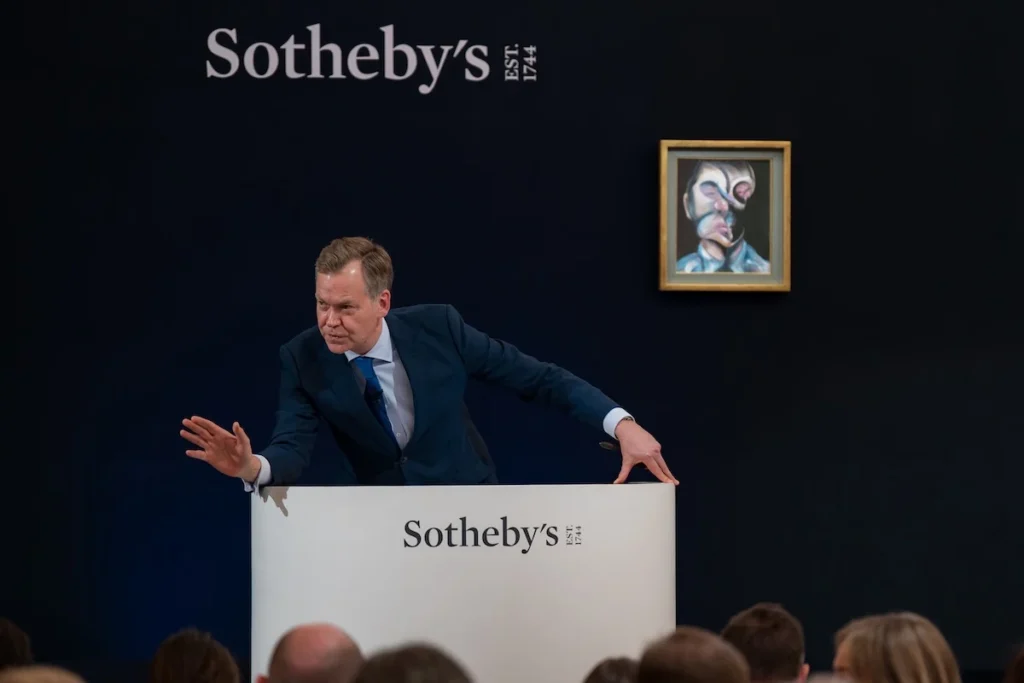
NEW YORK — In what is being hailed as the most significant single-owner sale of the decade, Sotheby’s has announced the arrival of the Carlos Pedro and Nelly Arrieta de Blaquier collection. Comprising 12 seminal works of Impressionist and Modern art that have remained largely hidden from public view for over half a century, the ensemble is expected to fetch a combined total in excess of $450 million when it heads to the auction block in New York on November 18, 2026.
The collection, headlined by a late-period Vincent van Gogh and a monumental Paul Cézanne, represents a "lost" era of collecting—a time when masterpieces were acquired through connoisseurship and quiet relationships with elite dealers rather than the high-octane, public bidding wars that define the contemporary market. For the global art world, the sale offers a rare glimpse into one of South America’s most storied private treasuries.

Main Facts: A $450 Million Modernist Trove
The centerpiece of the November evening sale is Vincent van Gogh’s Châtaigniers en fleurs (Chestnut Trees in Blossom), painted in 1890 during the artist’s final, feverish months in Auvers-sur-Oise. Estimated at approximately $180 million, the work is poised to shatter the artist’s current auction record. The painting is described by specialists as a "symphony of late-style brushwork," capturing the vibrant, turbulent energy that defined Van Gogh’s output before his death.
Following closely is Paul Cézanne’s Arlequin (Harlequin), a work from the artist’s celebrated series of commedia dell’arte figures executed in the late 1880s. With an estimate of $120 million, the painting serves as a bridge between Impressionism and the birth of Cubism, showcasing Cézanne’s revolutionary approach to form and structure.

The broader collection includes:
- Claude Monet: Significant canvases representing his exploration of light and atmosphere.
- Edgar Degas: Rare figurative works that have not been exhibited since the mid-20th century.
- Paul Gauguin: A Tahitian-period work characterized by its bold palette and symbolic depth.
- Pierre-Auguste Renoir, Camille Pissarro, and Alfred Sisley: A suite of high-Impressionist landscapes and portraits that trace the movement’s evolution from 1873 through the turn of the century.
Seven of the twelve works share a prestigious provenance, having been acquired through the legendary Lefevre Gallery on London’s Bruton Street—a detail that adds a layer of "blue-chip" security for prospective billionaire buyers.

Chronology: The Making of a Legacy
The story of the Blaquier collection is inextricably linked to the socio-economic history of Argentina. Carlos Pedro Blaquier, the longtime head of the Ledesma sugar and paper empire, and his wife Nelly Arrieta de Blaquier, were the quintessential "power couple" of the South American art world.
The 1970s: The Acquisition Phase
While the rest of the world was grappling with economic shifts, the Blaquiers were quietly building a world-class collection. In the 1970s, the market for Impressionism was robust but far more intimate than today’s globalized industry. Working primarily with London-based dealers like Lefevre Gallery, the couple acquired works that were already considered "museum-grade." During this decade, they secured the Cézanne Arlequin and the Van Gogh, effectively removing them from the public eye for the next fifty years.

1980s – 2010s: The Private Years
For decades, the works resided in the family’s private residences. While Nelly Arrieta de Blaquier was a prominent figure in the arts—serving as the president of the Friends of the Museo Nacional de Bellas Artes in Buenos Aires for over 30 years—the core of her Impressionist collection remained a closely guarded secret, known only to family members and a select circle of international scholars.
2023 – 2026: Transition and Consignment
Following the passing of Carlos Pedro Blaquier in early 2023 at the age of 95, and Nelly in 2020, the estate entered a period of transition. After years of speculation among auction house scouts, Sotheby’s successfully secured the consignment in mid-2026. The announcement on September 30 marks the beginning of a global touring exhibition that will see the works travel to London, Hong Kong, and Los Angeles before the final New York auction.

Supporting Data: Market Context and Record Potential
The $450 million estimate for just 12 lots places the Blaquier sale in the same rarefied atmosphere as the Paul G. Allen collection (which totaled $1.6 billion in 2022) and the Macklowe Collection ($922 million). However, the Blaquier sale is distinct due to its focus on "fresh-to-market" Impressionist material.
The Van Gogh Factor
The current auction record for Vincent van Gogh stands at $117.2 million (set by Verger avec cyprès during the Paul Allen sale). Sotheby’s estimate of $180 million for Châtaigniers en fleurs reflects a 50% jump in expected value. Analysts suggest this is justified by the "scarcity premium." Unlike Van Gogh’s sunflowers or self-portraits, his large-scale Auvers-sur-Oise landscapes are almost entirely held by institutions like the Musée d’Orsay.

The Cézanne Benchmark
Similarly, Cézanne’s Arlequin is expected to surpass the $137.8 million record set by La Montagne Sainte-Victoire (also from the Paul Allen sale). The Harlequin series is considered among the most "intellectual" of Cézanne’s works, highly coveted by collectors who value the artist’s influence on Picasso.
Provenance Purity
The fact that seven works come from Lefevre Gallery is statistically significant. In the 20th century, Lefevre was the primary conduit for Impressionist masterpieces entering British and American collections. Collectors today pay a premium of 15-20% for "unbroken" provenance that includes such prestigious mid-century galleries.

Official Responses: Sotheby’s and the Global Market
Sotheby’s executives have been vocal about the historical weight of this consignment. Oliver Barker, Chairman of Sotheby’s Europe and the auctioneer featured in the promotional materials, described the collection as a "time capsule of the highest order."
"To find a single collection that contains both a record-breaking Van Gogh and a definitive Cézanne Harlequin is, quite frankly, a once-in-a-generation occurrence," Barker stated. "The Blaquiers did not just buy names; they bought moments of art historical transition. These works haven’t been on the market since the 1970s. In the art world, that kind of ‘freshness’ is the ultimate currency."

Market analysts have also weighed in on the timing of the sale. "We are seeing a flight to quality," says Elena Varon, an independent art advisor. "While the mid-market can be volatile, the ‘trophy’ market—works valued over $50 million—remains incredibly resilient. The Blaquier sale is designed to tap into the liquidity of ultra-high-net-worth individuals in Asia and the Middle East who are looking for ‘anchor’ works for their private museums."
The Blaquier family estate issued a brief statement noting that the sale represents a "new chapter" for the works. "Our parents lived with these paintings for over half a century; they were part of the fabric of our home. It is now time for them to be shared with the world and to find new custodians who will cherish them as they did."

Implications: A Shift in the Auction Landscape
The upcoming sale has several profound implications for the international art market and the legacy of South American collecting.
1. The "Masterpiece Effect" on Inflation
The aggressive pricing of the Van Gogh and Cézanne suggests that auction houses believe the top end of the art market is immune to broader inflationary pressures. By positioning these works as "alternative assets," Sotheby’s is appealing to investors who view blue-chip art as a more stable store of value than traditional equities or currency.

2. The Depletion of Private "Hidden" Collections
The emergence of the Blaquier collection highlights the dwindling number of major Impressionist works still in private hands. As these paintings likely move into the hands of state-funded museums in Qatar or Abu Dhabi, or into the permanent collections of tech billionaires, the opportunity for such works to return to the market in the future decreases significantly.
3. South America’s Cultural Capital
The sale brings renewed attention to the sophisticated collecting habits of the Argentine elite during the mid-20th century. For years, the narrative of "great collections" was centered on New York, London, and Paris. The Blaquier auction serves as a reminder of the immense cultural wealth concentrated in Buenos Aires, once known as the "Paris of the South."

4. A Catalyst for the 2026/27 Season
As the first major announcement of the late 2026 season, the Blaquier sale sets a high bar for Sotheby’s rivals. Christie’s and Phillips will now be under pressure to secure equivalent "trophy" consignments to maintain market share.
As November 18 approaches, the eyes of the art world will be fixed on New York. Whether the Van Gogh reaches the $200 million mark or the Cézanne redefines the market for Modernism, one thing is certain: the auction will mark the end of an era for a collection that was, for fifty years, a beautiful secret kept at the edge of the world.



