

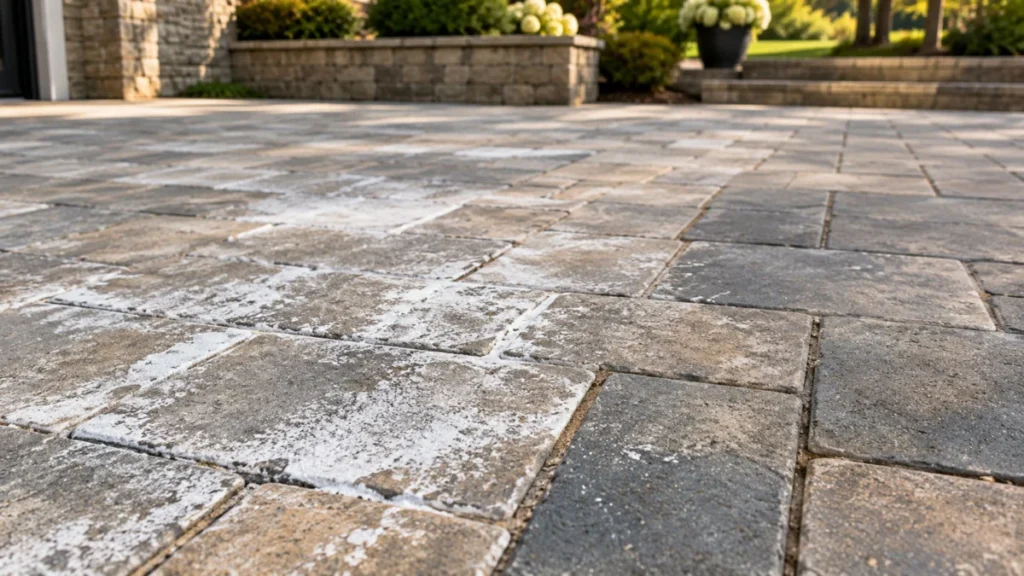
For many homeowners, the dream of a pristine, professionally installed stone or concrete patio is often marred by an unexpected aesthetic intruder: a chalky, ghost-like white film that clings to the surface of their pavers. Known in the construction and masonry industry as "efflorescence," this phenomenon is more than just a surface-level nuisance—it is a chemical process that serves as a visible reminder of the complex relationship between moisture, mineral content, and the surrounding environment.
As property owners invest increasingly in high-end outdoor living spaces, the demand for long-term durability has never been higher. Understanding why these deposits occur, how they evolve, and the proactive measures required to combat them is essential for maintaining the beauty and structural integrity of your hardscaping investment.
Main Facts: The Chemistry of the White Bloom
At its core, efflorescence is a natural, albeit unsightly, chemical reaction. It occurs when soluble salts—inherent in the composition of cement, concrete, and certain natural stones—are transported to the surface of a material by moisture.
The process is deceptively simple: water enters the porous structure of a paver. As this moisture moves through the material, it acts as a solvent, dissolving the internal salts. When the sun warms the surface and causes the water to evaporate, it leaves the dissolved salts behind. As the water transitions into vapor, the salts crystallize, resulting in that telltale white, powdery coating.
While the aesthetic impact is significant—often making vibrant, dark-toned pavers appear faded, dusty, or aged—the good news for homeowners is that efflorescence is generally not a structural threat. It is a surface condition. However, it is a symptom of an underlying issue: persistent moisture migration. If left unaddressed, the cycle of wet and dry can contribute to the long-term degradation of the material’s finish, making it vital to distinguish between a temporary post-installation bloom and a systemic drainage failure.
Chronology: The Lifecycle of Efflorescence
Efflorescence rarely appears spontaneously. It is a process of accumulation that follows a distinct timeline, often catching homeowners off guard after a fresh installation.
Phase 1: The Initial Bloom (Installation to 6 Months)
During the curing process of new concrete pavers, there is an abundance of free lime and soluble salts. As the new materials settle and reach chemical equilibrium, it is common to see a widespread, light dusting of white powder. This is often referred to as "new masonry bloom." In many cases, if the environment is dry and well-drained, this initial bloom may simply fade away as the paver cures and the supply of soluble salts near the surface is exhausted.
Phase 2: The Cycle of Migration (Seasonal Shifts)
Once the initial curing phase passes, efflorescence becomes a function of the weather. During rainy seasons or winter thaws, the ground becomes saturated. If the paver base lacks adequate drainage, the moisture is drawn upward through capillary action. This is the "migration" phase, where the material acts like a sponge, pulling water—and salts—from the sub-base up to the surface.
Phase 3: Chronic Deposition (Year 2 and Beyond)
If efflorescence persists year after year, it moves from a curing issue to a chronic condition. This indicates that water is consistently finding its way into the base layer. Without intervention, this phase often leads to "deep-seated" staining, where the mineral deposits become harder to remove as they interact with environmental pollutants or organic debris that settle into the porous surface of the stone.
Supporting Data: Why Drainage and Sealing Matter
Industry experts and hardscape engineers point to two primary variables that dictate the severity of efflorescence: soil saturation and the presence of a protective barrier.
The Drainage Equation
The sub-base of a patio is the most critical component for preventing efflorescence. A properly engineered installation requires a compacted gravel base that allows water to percolate downward into the soil rather than pooling directly beneath the pavers. When soil is graded toward the patio rather than away from it, the pavers sit in a constant state of saturation. Data suggests that installations with poor slope management are three times more likely to develop recurrent, heavy efflorescence than those with professional-grade drainage design.
The Role of Advanced Sealants
The use of specialized paver sealants, such as those formulated by TSS Pro Sealant Solutions, provides the most effective chemical defense. A high-quality sealant creates a breathable but hydrophobic barrier. This barrier serves two purposes:
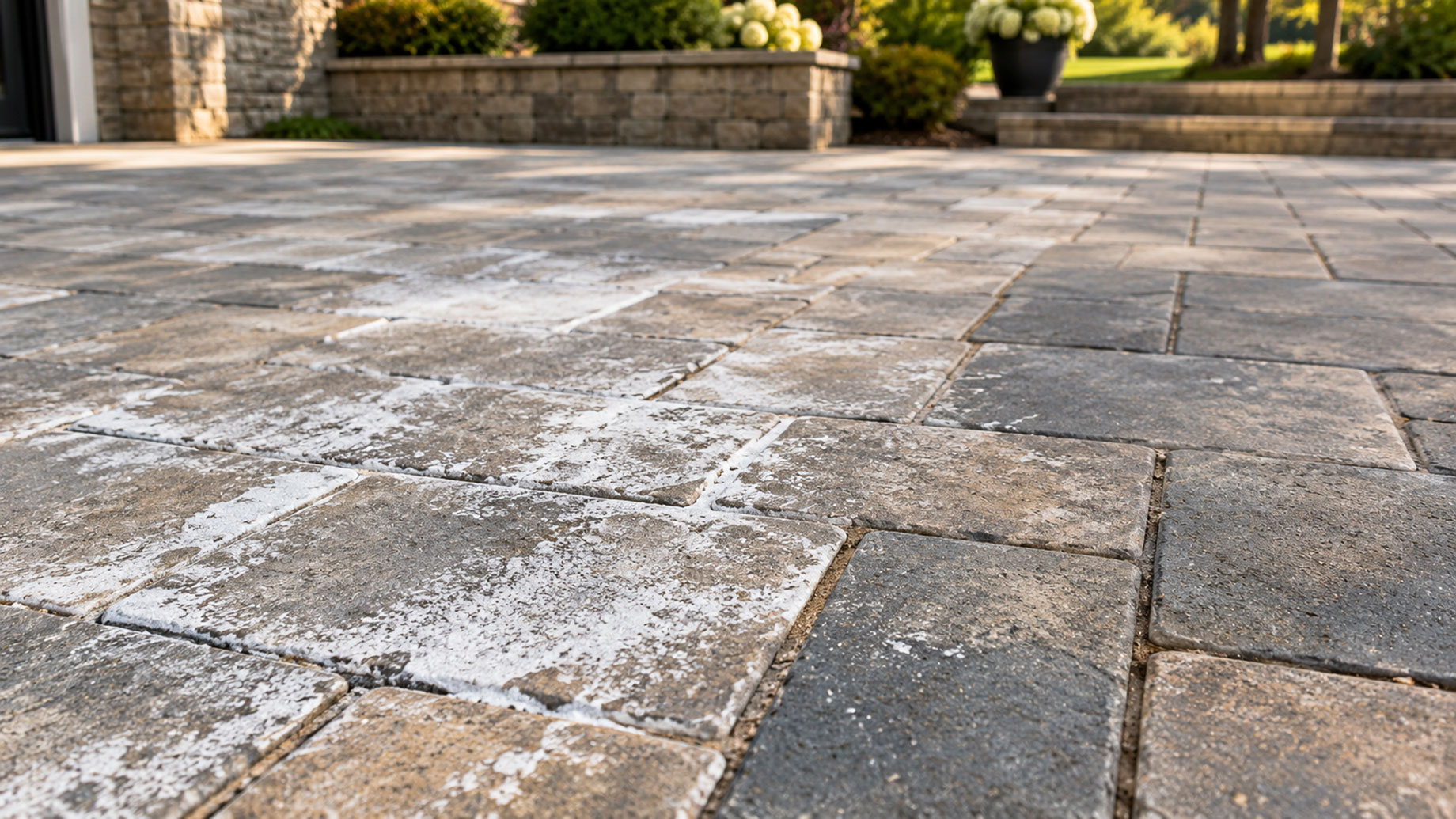
- Moisture Repellence: It prevents surface water (rain, sprinklers) from entering the paver pores.
- Vapor Permeability: Modern, high-end sealants allow trapped moisture vapor to escape from underneath while blocking liquid water from entering from above.
By preventing the "soaking" effect, these sealants break the chain of migration, effectively stopping the mineral transport process before it can reach the surface.
Official Perspectives and Industry Standards
Professional masonry contractors emphasize that while efflorescence is "natural," it is not "inevitable." The Masonry Institute and various hardscape associations often categorize efflorescence as a maintenance concern rather than a defect in the material itself.
According to industry maintenance guidelines, the key to success lies in early detection. "If you see the white powder, don’t wait," notes one industry consultant. "The longer the salts sit on the surface, the more they react with carbon dioxide in the air to become carbonated, which makes them significantly harder to remove with simple cleaning agents."
Furthermore, manufacturers of concrete pavers are increasingly incorporating water-repellent additives directly into the mix design. These internal admixtures reduce the rate at which water can travel through the paver, offering a first line of defense. However, even with these advancements, professional installers maintain that a topical sealant is a "must-have" to preserve the aesthetic vibrancy of high-end installations.
Implications for Homeowners
The presence of efflorescence is a signal that your outdoor living space requires attention. For the homeowner, this leads to several strategic implications:
1. The Cost of Neglect
Ignoring efflorescence does more than just ruin the view. The constant cycle of salt crystallization inside the microscopic pores of the paver can, over many years, lead to "spalling," where the surface of the paver begins to flake off. Regular cleaning and timely sealing represent a minor maintenance cost that prevents the much larger expense of replacing damaged stone or concrete units.
2. Aesthetic Preservation
Darker-colored pavers—such as charcoal, deep reds, or natural slate tones—show efflorescence much more dramatically than lighter-toned stones. For homeowners who have invested in premium, high-contrast hardscaping, a proactive sealing schedule is essential to maintain the color intensity and architectural design intent of the project.
3. The Need for Professional Assessment
If a patio continues to bloom white despite regular cleaning and sealing, it is an implication of a deeper structural problem. This might involve a compromised base, a lack of edge restraint, or a high water table. In such cases, the implication is that the "fix" is not just cleaning the surface, but potentially regrading the surrounding landscape to divert water flow.
Conclusion: A Proactive Maintenance Strategy
The battle against efflorescence is won through a combination of design, material choice, and consistent care. By ensuring proper drainage, opting for quality sealants, and maintaining a schedule of seasonal inspections, homeowners can keep their patios looking as pristine as the day they were installed.
Maintenance is not merely a chore; it is an investment in longevity. By cleaning the surface with mild, pH-balanced solutions and reapplying protective sealants every two to three years, you disrupt the lifecycle of mineral migration. Whether you are dealing with a new installation or a long-standing patio, understanding the science behind the white bloom is the first step toward reclaiming your outdoor space from the elements.
Ultimately, the goal is to enjoy the structural beauty of your hardscape without the distraction of its chemical byproducts. Through professional guidance and the right protective solutions, the "invisible enemy" can be kept firmly at bay, ensuring your patio remains a hallmark of luxury and durability for years to come.



