

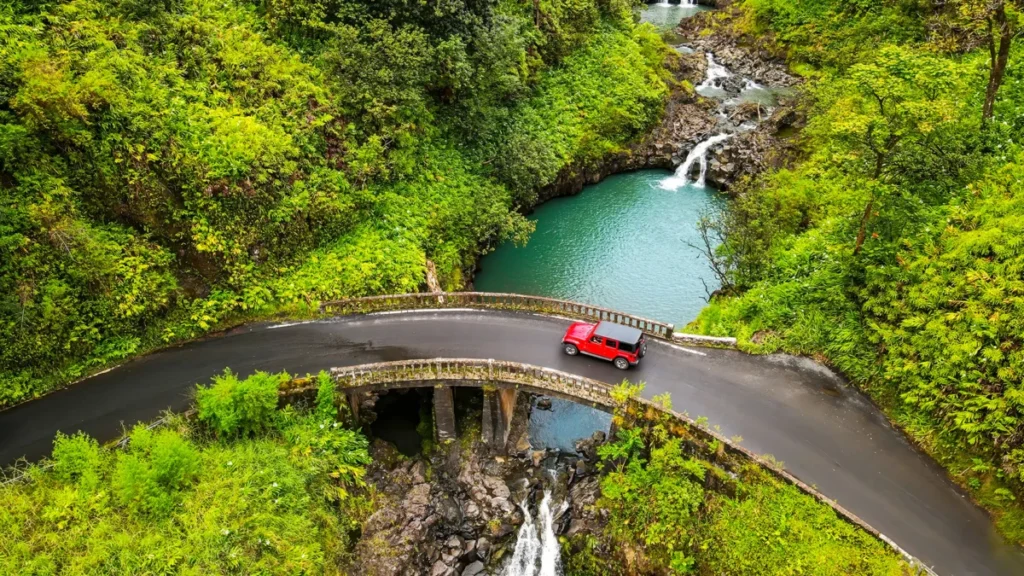
The Road to Hana is more than a scenic drive; it is a rite of passage for millions of visitors to Maui. Stretching along the island’s eastern coastline, this legendary route is defined by its dramatic topography: lush tropical rainforests, cascading waterfalls, and sheer volcanic cliffs. However, behind the postcard-perfect imagery lies a logistical challenge that demands careful planning. The central question for every traveler is not whether the scenery is worth the effort—it universally is—but rather whether to shoulder the burden of the drive themselves or entrust the journey to a professional operator.
Choosing between a self-drive adventure and a guided tour is a decision that impacts everything from your physical stamina to the spontaneity of your itinerary. As travelers weigh their options, they must navigate a complex landscape of reservation requirements, strict time management, and the nuanced realities of rental car contracts.
The Core Dilemma: Autonomy vs. Expertise
The Road to Hana is not a leisurely commute; it is an endurance test. The route features over 600 individual coastal turns and nearly 60 bridges, the vast majority of which are one-lane crossings. These bottlenecks require constant vigilance and a "yield-to-the-local" etiquette that can quickly drain the energy of even the most experienced driver.
When you drive yourself, you are essentially signing up for a full day of high-concentration navigation. The driver, by necessity, must focus on the narrow pavement, the oncoming traffic, and the hairpin turns, often missing the very vistas the passengers are there to admire. Conversely, a guided tour removes this burden, allowing the entire group to engage with the landscape. However, this convenience comes at the cost of the "clock." Guided tours operate on rigid schedules to ensure they hit the required stops within a 10- to 12-hour window. If your priority is spending two unhurried hours at a hidden waterfall, a guided tour will likely frustrate you. If your priority is stress-free observation and historical context, the driver’s seat is the wrong place for you to be.
Chronology of a Marathon: What the Day Actually Looks Like
Regardless of how you choose to traverse the road, the time commitment remains constant. A trip to Hana is rarely a "quick excursion"; it is an all-day commitment that begins long before sunrise.
The Early Start
Guided tours are the most transparent about the temporal demands of the journey. Most operators begin their pick-up cycles between 6:00 a.m. and 7:30 a.m. For travelers staying on the west side of the island (Lahaina, Ka‘anapali, or Kapalua), the alarm often rings well before dawn to account for the transit to the start of the route.
The Mid-Day Pivot
By mid-morning, most tours are hitting their stride, oscillating between breakfast stops at local institutions like Cafe O’lei at the Plantation and scenic pauses at the Ke‘anae Peninsula. This is where the difference between guided and self-driving becomes most apparent. A guided tour is a choreographed performance; there are designated windows for photos, food, and restroom breaks. If a site is crowded or the weather shifts, the tour operator makes an executive decision to pivot to alternatives like Koki Beach or Hana Bay.
The Evening Return
The return journey is arguably the most exhausting part of the day. As the sun begins to dip, the winding, narrow roads remain, and the collective fatigue of the group begins to settle in. Most tours aim to have guests back at their hotels between 5:00 p.m. and 6:30 p.m. Operators are often blunt in their warnings: do not book a luau, an early dinner, or an evening flight on the same day you attempt the Road to Hana. The risk of delay due to traffic, weather, or road work is simply too high.
Supporting Data: The Logistics of the Route
Data regarding the route can be surprisingly contradictory, highlighting the organic and evolving nature of the landscape. Some guides cite the route as a 52-mile excursion, while others suggest it is significantly longer. Similarly, counts of curves and bridges vary between 600 and 617, and 54 to 60, respectively.
The Reservation Mandate
One non-negotiable factor in modern planning is the Wai‘anapanapa State Park reservation system. This black sand beach, once a spontaneous stop, now requires advance booking. Hawaii State Parks stipulates that reservations open 30 days in advance and are strictly enforced. Visitors who arrive without a confirmed time slot are turned away. For those on a guided tour, this is rarely an issue, as the operator manages the logistics. For self-drivers, missing this administrative step can be the difference between a highlight of the trip and a wasted journey.
The "Beyond Hana" Factor
Beyond the town of Hana lies the "backcountry" road, a stretch often prohibited by standard rental car contracts. Guided tours frequently utilize this route, claiming it as a unique selling point. Travelers attempting to drive this section must consult their specific rental agreement, as many companies explicitly forbid traversing unpaved or poorly maintained sections of the road. Ignoring these terms can lead to a voided insurance policy, leaving the driver liable for any vehicle damage incurred in remote areas.
Professional Perspectives and Booking Realities
When booking a trip, it is vital to understand the difference between a concierge service and a booking platform. Many websites, such as HawaiiGuide, operate as affiliate partners. They provide essential information but do not physically conduct the tours. Their role is to aggregate options, and while they are excellent resources, they are not the ones operating the van.
Conversely, services like Blue Hawaiian Activities often handle the booking directly for the operators they represent. When you have specific questions—such as the seating capacity of a van or the availability of specialized accessibility equipment—you must ensure you are speaking to the entity that is actually managing the vehicle and the driver.
The Implications: Making the Right Choice
The "right" way to experience the Road to Hana depends on your group’s dynamic.
Choose to self-drive if:
- You have a member of your party who finds joy in technical, high-focus driving.
- Your primary goal is spontaneity—the ability to linger at a waterfall for an hour or turn around when the light hits a cliff face just right.
- You are comfortable navigating local traffic, managing complex reservations, and assuming the risk of vehicle damage on rugged terrain.
Choose a guided tour if:
- You want everyone in your group to experience the scenery without the stress of the road.
- You value historical and cultural context, which local guides provide in abundance.
- You want the logistics of meals, parking, and state park reservations handled by professionals.
- You are concerned about the length of the day and prefer to be a passenger while someone else navigates the 600+ turns.
Frequently Asked Questions
Is it possible to combine Hana with Haleakala?
Yes, there are "Best of Maui" itineraries that cover both. However, this is a grueling day. These tours often include a visit to the 10,023-foot summit of Haleakala. Visitors must be prepared for extreme temperature shifts; while it might be 80 degrees at sea level, the summit can drop to 30 degrees Fahrenheit. Dressing in layers is not just a suggestion—it is a necessity.
What happens if the weather turns?
Tropical weather is unpredictable. If a stop becomes inaccessible due to rain or road conditions, professional tours have pre-planned alternatives. A self-driver must be prepared to make these same decisions independently, often without the benefit of real-time road reports that tour operators share via radio.
Do residents have an advantage?
Yes. At state-run locations like Wai‘anapanapa, residents of the State of Hawai‘i are often exempt from certain reservation requirements, provided they can present valid proof of residency. This ensures that locals retain access to their own natural resources, while visitors are encouraged to plan ahead to avoid overcrowding.
Ultimately, whether you hold the steering wheel or settle into a passenger seat, the Road to Hana remains one of the world’s most spectacular journeys. By understanding the logistical realities and planning accordingly, you ensure that the only thing you leave behind is footprints, and the only thing you take home are memories of a truly extraordinary landscape.



