"You’ve been wearing more suits lately," a colleague remarked to me a couple of years ago. His tone was a curious blend of intrigue and bewilderment. He wasn’t mistaken. For the better part of a decade, my daily uniform had been firmly rooted in the "middle-aged skater" aesthetic: plaid overshirts, crisp white tees, relaxed trousers, and pristine sneakers. It was a comfortable, low-friction cycle. And yet, I found myself increasingly reaching for tailoring.
When asked why, I initially offered the pragmatic defense: it’s a uniform. It removes the decision fatigue of "what goes with what." It is convenient. But that was only half the truth. The deeper reality is that in an era of bottomless casualization, the suit has undergone a radical transformation. It is no longer an obligation of the corporate ladder; it has become an act of defiance.
The Evolution of the "Rebellious Garment"
For many, the suit was once the uniform of conformity—a mandatory tax paid to the workplace. But as the traditional office dress code evaporated, replaced by the ubiquity of athleisure and the "endless casual Friday," the suit was liberated.
Ryan Devens, the founder of San Francisco’s Tailors’ Keep, characterizes the modern suit as a "rebellious garment." In a landscape where wearing a jacket and trousers is no longer required, choosing to wear them becomes a deliberate, aesthetic power move. It is a subversion of the default setting. It can be swaggering, louche, and theatrical, or simply an excuse to elevate an otherwise mundane Tuesday.
This sentiment is echoed by a growing demographic of men who have no professional mandate to dress up. They are buying suits not because they have to, but because they want to. This marks a pivotal shift in the American menswear lexicon: the suit has transitioned from office furniture to an instrument of personal expression.
A Chronology of Casualization and Return
The trajectory of the American suit has been a rollercoaster of social necessity.
- The Mid-Century Standard: The suit was the non-negotiable uniform of the professional class. It represented stability, hierarchy, and adulthood.
- The Dot-Com Disruptions (1995–2010): The rise of tech culture, specifically in Silicon Valley, accelerated the "casual Friday" phenomenon into a "casual every day" standard. The suit became viewed as stuffy, archaic, and performative.
- The Athleisure Hegemony (2010–2020): The merger of high fashion and sportswear dominated the market. Performance fabrics, hoodies, and sneakers became the peak of luxury, rendering the structured jacket largely obsolete.
- The Post-Pandemic Rebound (2021–Present): Following the isolation of the pandemic, a "re-enchantment" with dressing up emerged. As social events returned, men began seeking ways to differentiate themselves from the sea of monochromatic hoodies. Tailoring, once left for dead, became the ultimate differentiator.
The New American Vanguard: Diversity in Design
One of the most compelling aspects of the current American tailoring boom is the lack of a singular, monolithic "American style." Just as the country is a melting pot of cultures, American tailors are synthesizing global influences into a bespoke landscape that refuses to be categorized.
Key Players in the Current Renaissance:
- J. Mueser (New York): By masterfully blending the soft, unstructured shoulders of Neapolitan tailoring with a distinct, gritty downtown New York sensibility, Mueser represents the modern urbanite’s approach to elegance.
- Haitch (Los Angeles/National): Taking a more architectural, rigid approach, Haitch leans into long lines and bold, square shoulders. It is a nod to power dressing, modernized for a contemporary silhouette.
- Angel Ramos (New York): Ramos is a purveyor of Southern Italian ease, infusing his designs with the bravado of Golden Age Hollywood. It is tailoring that feels cinematic, designed for the man who understands the value of a dramatic entrance.
- Richfresh (Los Angeles): Perhaps the most radical of the bunch, Richfresh applies the high-level language of bespoke tailoring to unconventional materials, such as scuba fabric, creating color-blocked tracksuits that demand to be taken seriously.
These makers do not agree on what an "American suit" should look like, which is arguably the most American attribute of all. There is no preciousness about lineage; there is only a relentless pursuit of personal style.
Supporting Data: The Shift in Consumer Priorities
While the "suit as a status symbol" narrative is anecdotal, the market data suggests a genuine pivot. According to recent luxury retail trends, the "formalwear" category—which had plummeted to record lows in 2020—has seen a consistent double-digit growth year-over-year since 2022.

Furthermore, the demographic of the bespoke client has skewed younger. Millennials and Gen Z, having grown up in the era of peak casualization, are now the primary drivers of the "new tailoring" movement. For these consumers, a suit isn’t a return to the past; it is an exploration of identity. The demand for customization—choosing fabrics, lapel widths, and construction methods—has replaced the desire for mass-produced, branded leisurewear.
The Global Context: Naples and Beyond
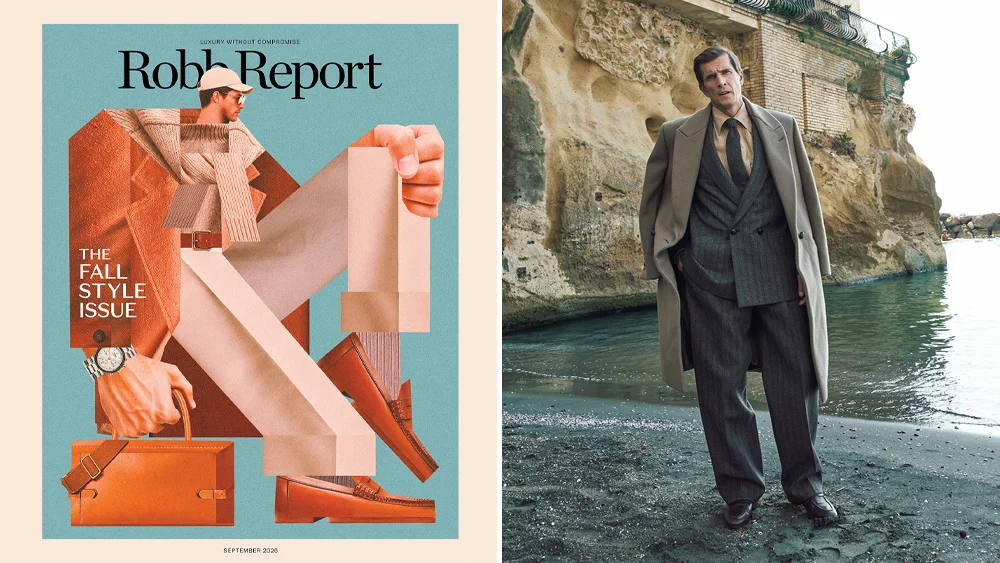
While the American scene is finding its voice, we cannot ignore the origin of the current "soft" revolution: Naples, Italy. For generations, Neapolitan tailors have perfected the art of the spalla camicia (shirt-sleeve shoulder) and the unstructured jacket.
This influence has permeated global wardrobes, shifting the expectation of what a suit feels like. The modern suit is no longer a suit of armor; it is a second skin. It possesses an "easy elegance" that avoids the trap of looking careless. The influence of this silhouette has provided a blueprint for American tailors looking to balance the structure of the past with the comfort requirements of the future.
Implications: The Death of the "Default"
What does this return to tailoring imply for the future of menswear? Primarily, it signals the death of the "default" wardrobe. We are entering an era of intentionality.
The decline of the hoodie-and-sneaker hegemony in high-fashion circles is becoming evident in the latest runway collections. Designers from Louis Vuitton to Kiton and Canali are increasingly focusing on knitwear that refuses to play a supporting role. We are seeing a resurgence of bold Fair Isle patterns, aggressive Nordic graphics, and luxury knits that are designed to "steal the show."
The jacket is no longer the only way to be "dressed up." Whether it is a perfectly tailored blazer or a high-end, graphic-heavy sweater, the modern man is being invited to curate his appearance rather than simply defaulting to the most comfortable option available.
Conclusion: The Power of Choice
Returning to my colleague’s observation, I realize now that my shift toward tailoring was a reaction to the loss of nuance in modern dress. When everything is casual, nothing is special. By wearing a suit, I am reclaiming a piece of my day. I am deciding how I want to be perceived, rather than letting the environment dictate my comfort.
The beauty of the current state of menswear is that there are no longer rules, only options. You can be the man in the Richfresh scuba suit, or the man in the classic, Neapolitan-inspired blazer. You can embrace the architectural, sharp-shouldered American aesthetic, or opt for the relaxed, autumnal layers of luxury knitwear.
The suit is no longer a uniform of the office. It is a uniform of the individual. And in that sense, American tailoring has never been in better hands. The rebellion is not in the fabric—it is in the choice to wear it.