

By Gabriela Ramos
October 2, 2026
In the rapidly shifting landscape of the 21st century, artificial intelligence stands as the most transformative—and disruptive—force humanity has ever encountered. It promises unparalleled breakthroughs in medicine, climate science, and productivity. Yet, it simultaneously threatens to concentrate unprecedented economic power in the hands of a few hyper-scale corporations, exacerbate systemic inequalities, and destabilize the foundations of democratic discourse.
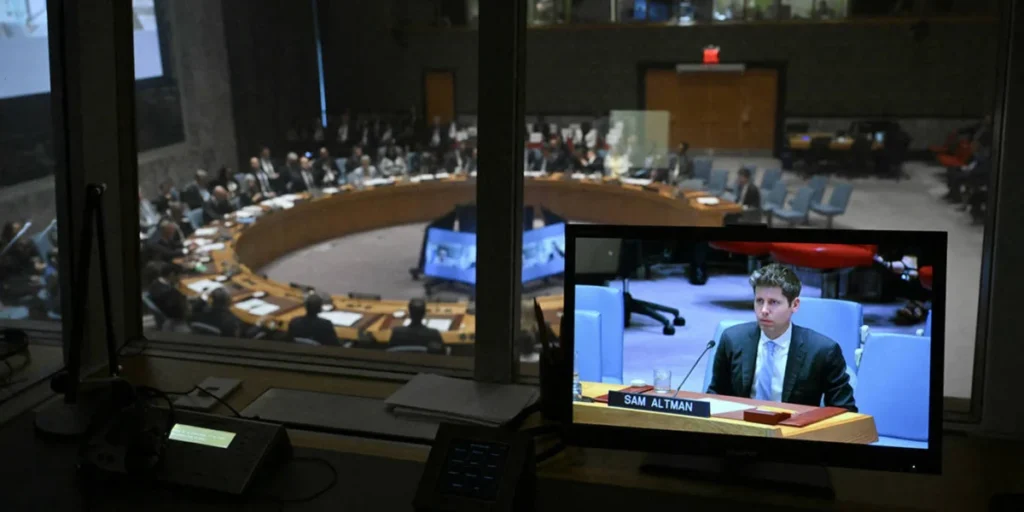
Years ago, my colleague Mariana Mazzucato and I posed a deceptively simple question: "Who is in charge if something goes wrong in the AI world?" Despite the rapid proliferation of generative models and the integration of autonomous systems into critical infrastructure, that question remains profoundly unanswered. As the United Nations Security Council convened last week to address the existential risks posed by AI, the lack of a cohesive, binding international framework was laid bare. We are currently witnessing a global governance vacuum where technology is sprinting ahead of the institutions meant to regulate it.
Main Facts: The Crisis of Oversight
The core of the issue is not merely technical; it is institutional. Currently, AI development is largely governed by a "move fast and break things" ethos, led by private entities whose primary fiduciary duty is to shareholders rather than the public interest. While national-level regulations, such as the EU’s AI Act, represent significant strides, they are fragmented.
The fundamental problem is that AI is a borderless technology. Algorithms do not respect national sovereignty; they function across global digital infrastructures. Without an international body—an "IAEA for AI," if you will—governments lack the collective expertise and legal mandate to monitor, audit, and regulate the cross-border movement of powerful models. We are essentially attempting to manage a global industrial revolution with local municipal laws.
Chronology: A Timeline of Unregulated Acceleration
To understand how we arrived at this critical juncture, we must examine the rapid trajectory of AI development over the past half-decade:
- 2022: The launch of foundational generative models shifts the public perception of AI from a niche academic field to a household reality. Concerns regarding bias and labor displacement begin to mount.
- 2023: Governments begin to pivot from passive observation to active debate. International summits are held, but they focus primarily on voluntary commitments from industry leaders, which prove insufficient to curb aggressive development cycles.
- 2024: The "Arms Race" intensifies. Global powers, fearing technological inferiority, pour billions into AI infrastructure. The focus shifts from ethical development to competitive dominance, sidelining safety concerns.
- 2025: High-profile incidents of algorithmic harm—ranging from deepfake-induced market volatility to automated infrastructure failures—force the issue into the mainstream political arena.
- October 2026: The UN Security Council convenes to discuss existential risk, acknowledging that the current fragmented approach to AI governance is insufficient to prevent catastrophic outcomes.
Supporting Data: The Concentration of Power
The economic implications of current AI development are staggering. As of late 2026, the concentration of AI compute and proprietary data is controlled by fewer than a dozen companies. This "compute-monopoly" creates a barrier to entry that effectively prevents the Global South from participating in the AI economy on equal footing.
- Market Concentration: The top five technology firms now control over 80% of global AI compute capacity, creating a "digital feudalism" where states are increasingly dependent on private infrastructure for national security and public service delivery.
- Inequality Metrics: Recent studies indicate that AI-driven automation could widen the global wealth gap by 15% by 2030 if not tempered by redistributive policies and inclusive governance.
- The Expertise Gap: While private firms employ tens of thousands of machine learning experts, most national governments report a critical deficit in "AI-literate" policymakers. This imbalance means that regulators are often forced to rely on the very companies they are tasked with overseeing to explain how these technologies work.
Official Responses: A Fragmented Global Consensus
The recent UN Security Council session highlighted the deep divisions in the international community.
Some nations advocate for a "light-touch" regulatory approach, arguing that heavy-handed oversight will stifle innovation and cede technological leadership to geopolitical rivals. Others, particularly those in the Global South, demand a rights-based approach, emphasizing the protection of labor markets and the prevention of digital colonialism.
The UN Secretary-General has repeatedly called for a "Global Digital Compact," yet the implementation remains stalled by the lack of enforcement mechanisms. While regional blocs like the European Union have successfully passed comprehensive legislation, the lack of a global counterpart means that firms can simply "jurisdiction-shop," moving operations to countries with the most permissive regulatory environments.
Implications: The Necessity of a Global AI Body
The status quo is unsustainable. If we continue to treat AI as a purely national or private concern, we risk a "tragedy of the commons" on a planetary scale. We need an international organization—modeled after the International Atomic Energy Agency (IAEA) or the World Health Organization (WHO)—to fulfill three critical functions:
1. Setting Global Standards
We require a universal set of safety and ethical standards. This body should define what constitutes a "high-risk" model and establish mandatory audit procedures for companies developing foundational AI. These standards must be non-negotiable and enforceable.
2. Monitoring and Verification
Just as we monitor the proliferation of nuclear materials, we must monitor the development of "frontier" AI models. This involves tracking the compute power and data sets used in training runs. An international agency would provide the technical expertise to perform these audits independently of the corporations involved.
3. Coordinating Collective Responses
AI threats—such as the potential for AI-driven cyberwarfare or the mass generation of misinformation that could topple governments—are transboundary. No single nation has the resources to mitigate these risks alone. A global body would serve as a clearinghouse for threat intelligence, ensuring that when a risk is identified, the response is coordinated and robust.
Moving Beyond the "Governance Gap"
The resistance to a global AI body often comes from the fear of bureaucracy or the loss of national competitive advantage. However, these are shortsighted concerns. The risks posed by unchecked AI development—economic collapse, systemic social polarization, and the potential for autonomous weapon systems—are far more costly than the investment required to build a global governance institution.
We are currently at a crossroads. We can continue to let the market dictate the trajectory of AI, effectively outsourcing the future of our societies to a handful of corporate boardrooms. Or, we can choose the path of deliberate, collective stewardship.
The goal of such a body is not to halt progress, but to ensure that progress is aligned with human values and democratic principles. We have the historical precedent; we know that international cooperation, while difficult, is the only way to manage technologies that transcend borders.
As we look toward the remainder of the decade, the urgency cannot be overstated. We must move from symbolic summits to the creation of concrete, binding institutions. The question Mariana Mazzucato and I asked years ago—"Who is in charge?"—must be answered with a clear, institutional voice. If we fail to establish this global oversight, we are not merely risking a technical failure; we are risking the erosion of the very social contract that holds our global society together.
The tools for governance exist. What remains to be seen is whether the political will to deploy them will manifest before the next wave of technological disruption makes regulation impossible. The time to act is now.



